Category
Health
Mortality, disease burden, healthcare access, and how Canadian outcomes compare across provinces and against peer countries.

Are Driscoll's berries safe? Why some imported berries exceed Canada's pesticide limits
A whistleblower says half of Driscoll's shipments to Canada broke pesticide limits. Seven years of government tests on imported berries show why fruit can pass US rules and still fail Canada's.
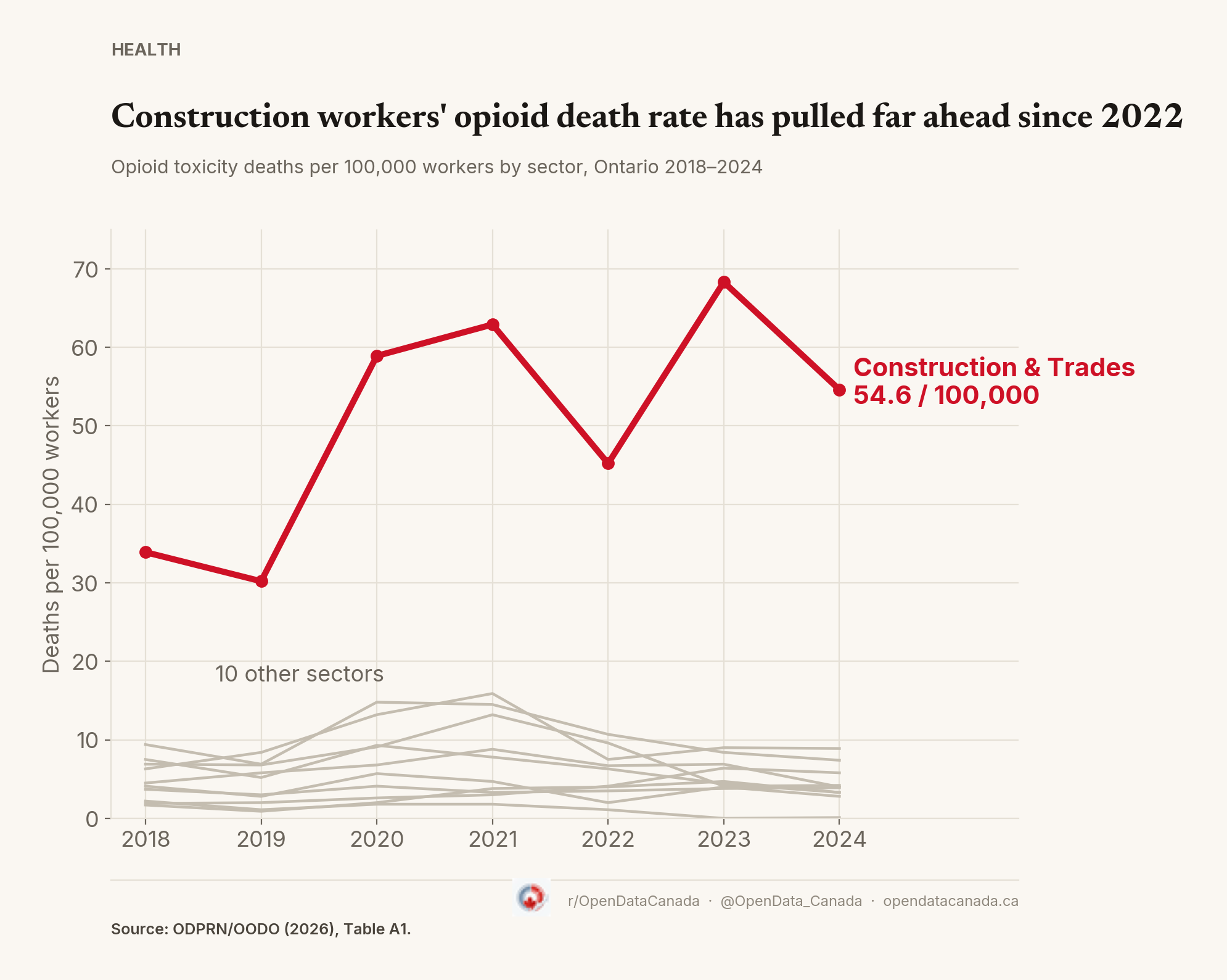
Construction Workers' Opioid Death Rate Is Now Far Ahead of Every Major Ontario Sector
A new study using linked Ontario health records tracked opioid toxicity deaths across the province's workforce from 2018 to 2024. Construction and trades workers now die from opioids at more than 6 times the rate of Hospitality, the next-largest sector, and the gap has grown sharply since 2018.
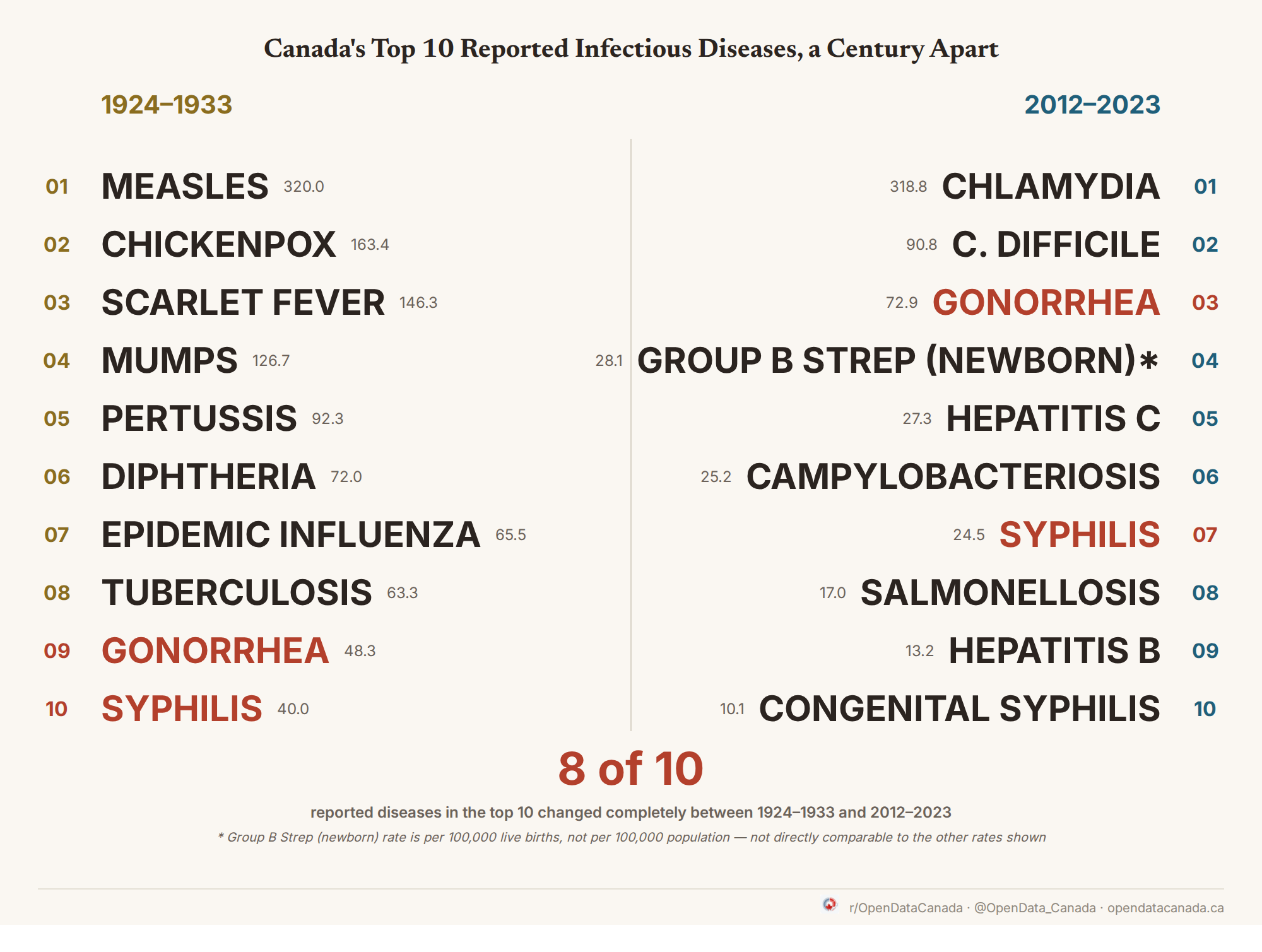
Canada's Top 10 Reported Infectious Diseases, 100 Years Ago and Today
Comparing Canada's leading reported notifiable diseases from the 1920s and 30s to the last decade, only two names appear on both lists. The disease that currently tops the list is reported at almost the exact same rate as the disease that topped it a century ago.
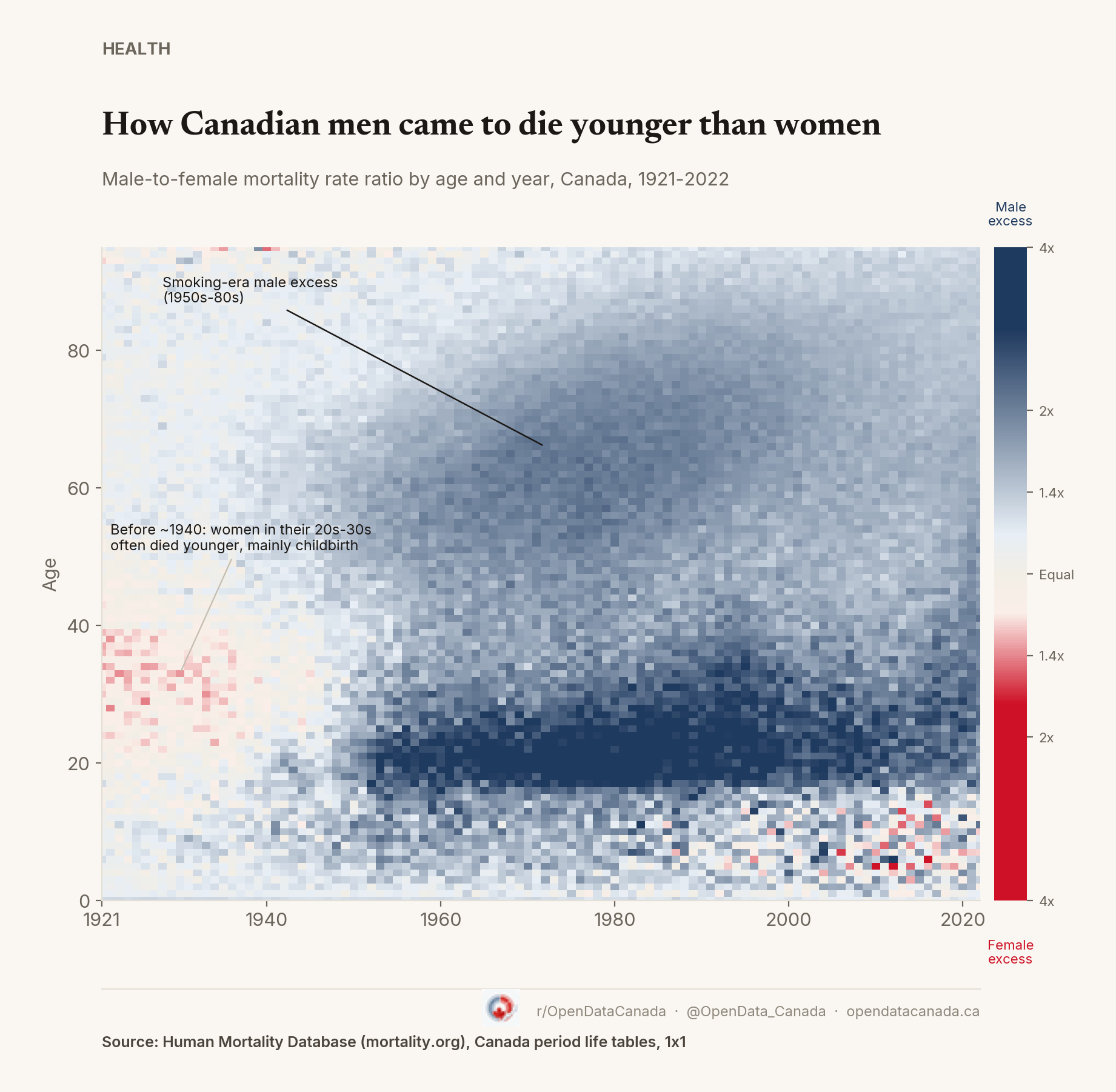
How Canadian Men Came to Die Younger Than Women
A century of mortality records shows the opposite was once true. Before 1940, women in their 20s and 30s often died younger than men, mainly from childbirth. Every year since the 1940s, men have died younger, and by the 1980s a 22-year-old man was more than four times as likely to die as a 22-year-old woman.
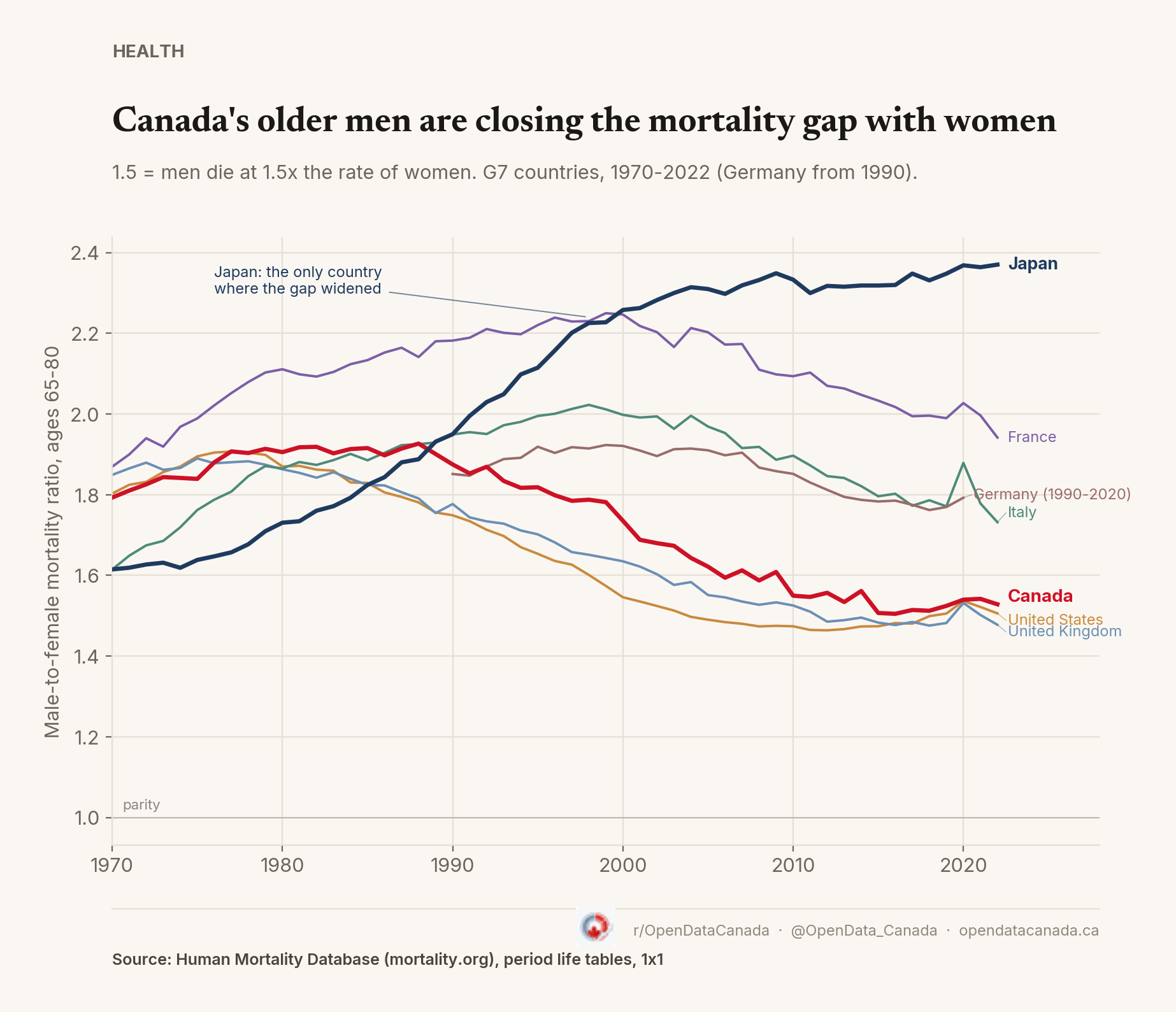
Canada's Older Men Are Closing the Mortality Gap With Women
Canada's 65-80 male-to-female death rate ratio has fallen from 1.79 in 1970 to 1.53 in 2022, the lower end of a plateau it has held since the early 2010s. Most of the G7 closed a similar gap over the same period. Japan went the other way: its ratio rose from 1.61 to 2.37, the sharpest widening in the group.
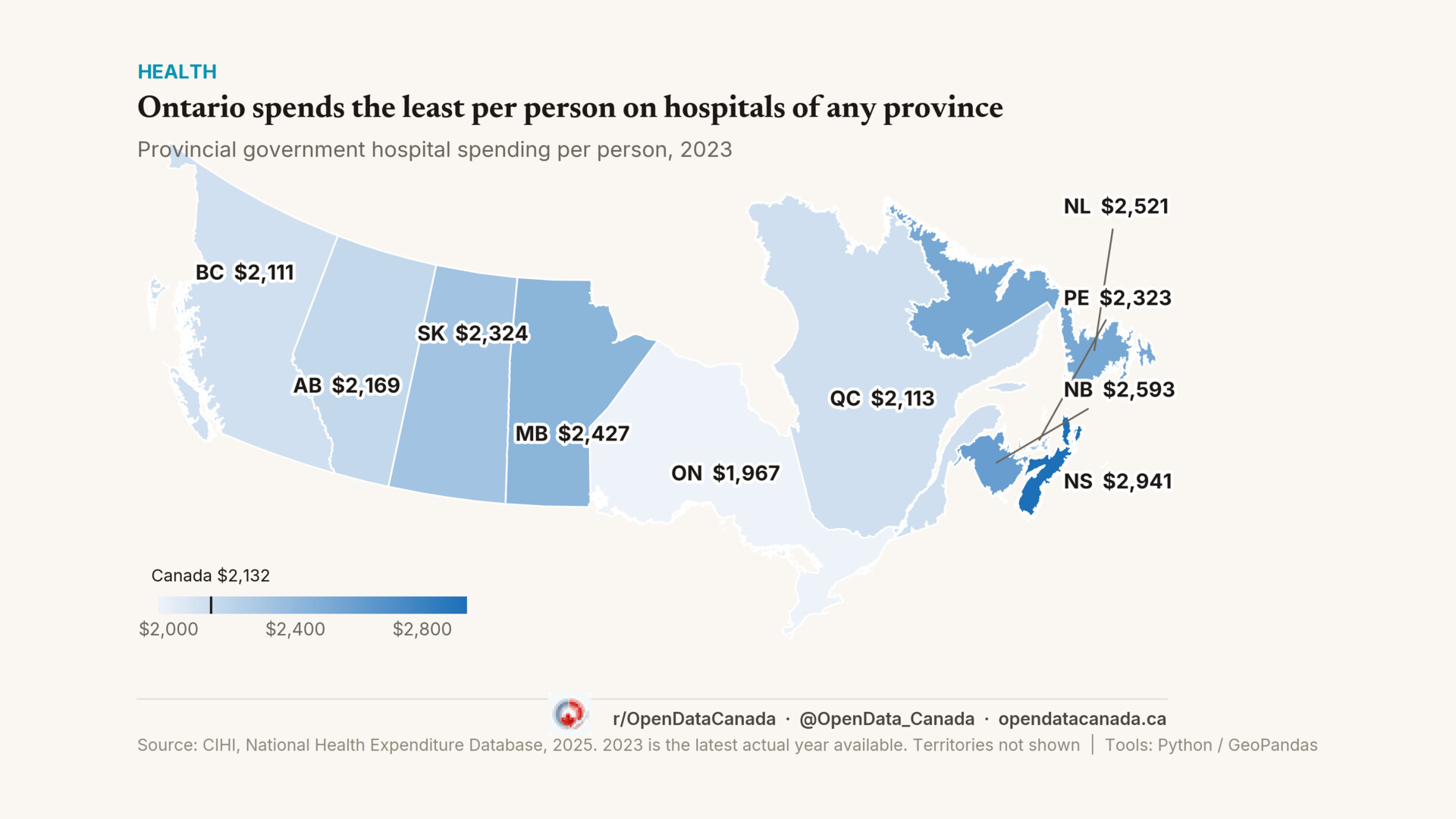
Ontario spends the least per person on hospitals. Age doesn't explain it.
Ontario's government spent 1,967 dollars per resident on hospitals in 2023, the lowest of any province and about 974 dollars less than Nova Scotia. The obvious defence is that Ontario has a younger population. Adjusting for age barely moves the number.

BC's opioid deaths are falling everywhere but one Vancouver neighbourhood
British Columbia's illicit-drug deaths fell 21% in 2025, to 1,826. But one Vancouver neighbourhood still loses people at ten times the provincial rate. Mapped by all 88 Local Health Areas.
![[object Object]](/posts/thunder-bay-hero.jpg)
Ontario's opioid crisis is concentrated in the North — Thunder Bay's death rate is nearly 4× the provincial average
Ontario as a whole had 2,242 opioid toxicity deaths in 2024 — a rate of 13.9 per 100,000, well below Canada's 17.7 national rate. But the provincial average hides a sharp split: five northern Public Health Units sit between 35 and 54 per 100,000, while Toronto and Peel sit near or below the average.
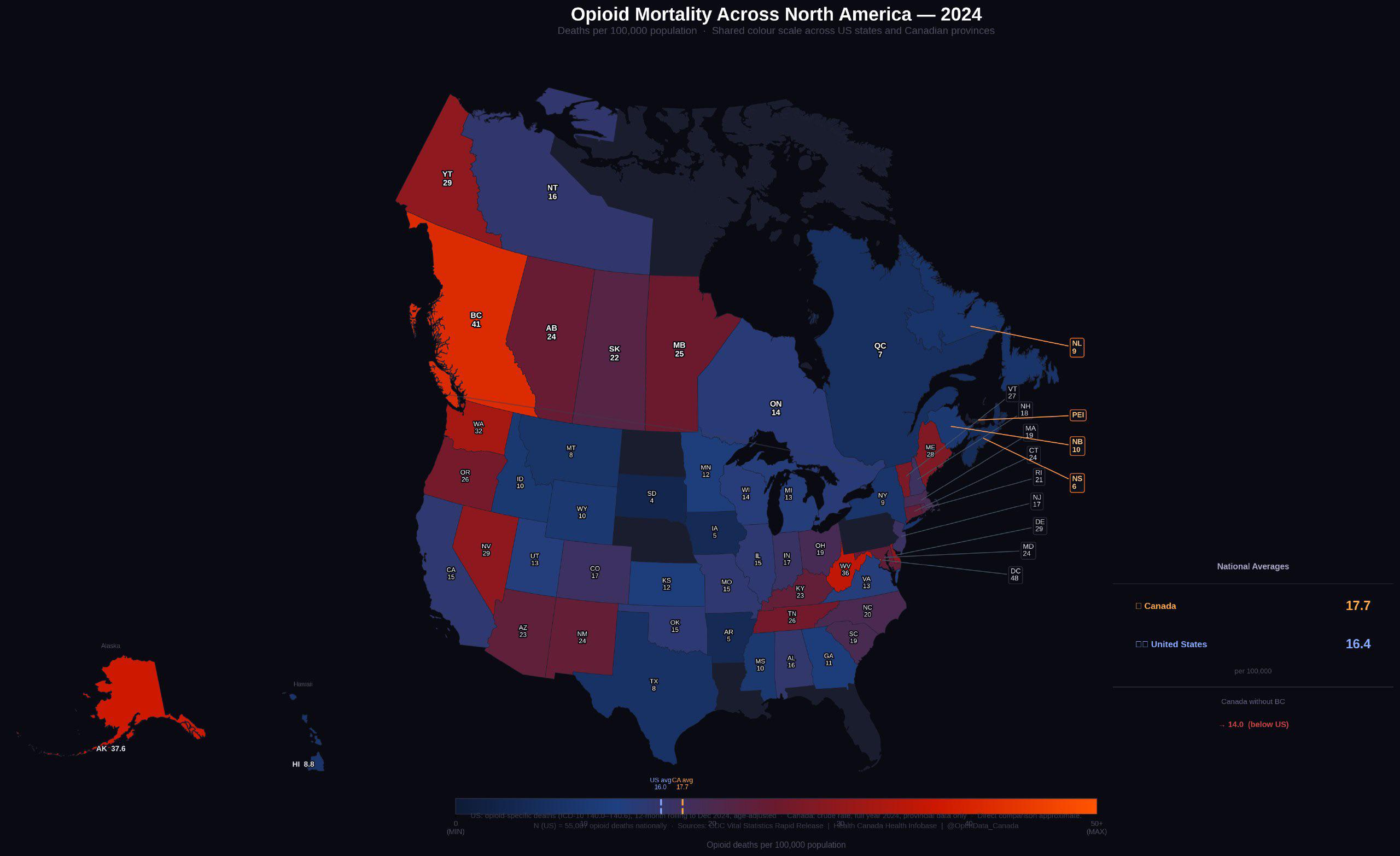
Why Canada's opioid death rate just passed the US
17.7 vs 16.4 per 100,000 in 2024 — but the headline depends on whether you count British Columbia. Strip BC out and Canada drops to 14.0, well below the US rate.
Canada vs US opioid death rates
Canada's 2024 rate of 17.7 per 100,000 surpassed the US — but only because of British Columbia. Strip BC out and Canada drops to 14.0, well below the US rate of 16.4.
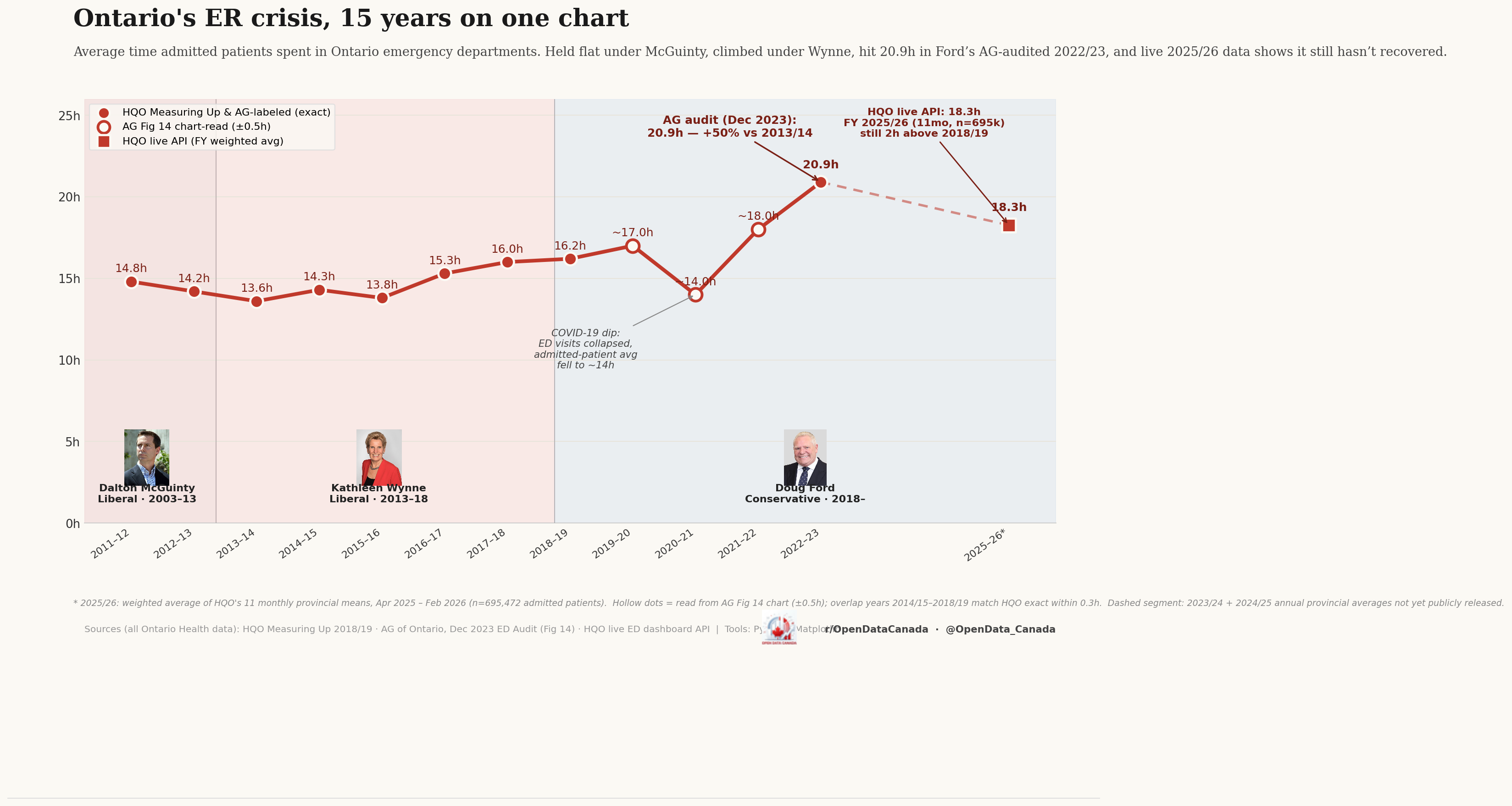
Ontario's ER crisis, 15 years on one chart
Average admitted-patient ED length-of-stay rose from 13.6 hours (2013/14) to an Auditor-General-confirmed 20.9 hours (2022/23) before partially recovering to 18.3 hours in live 2025/26 data.