
Category
Population
How many Canadians there are, where they live and how that is changing. Growth by province, age, births and deaths, and the census. Immigration stories are on the Immigration page.
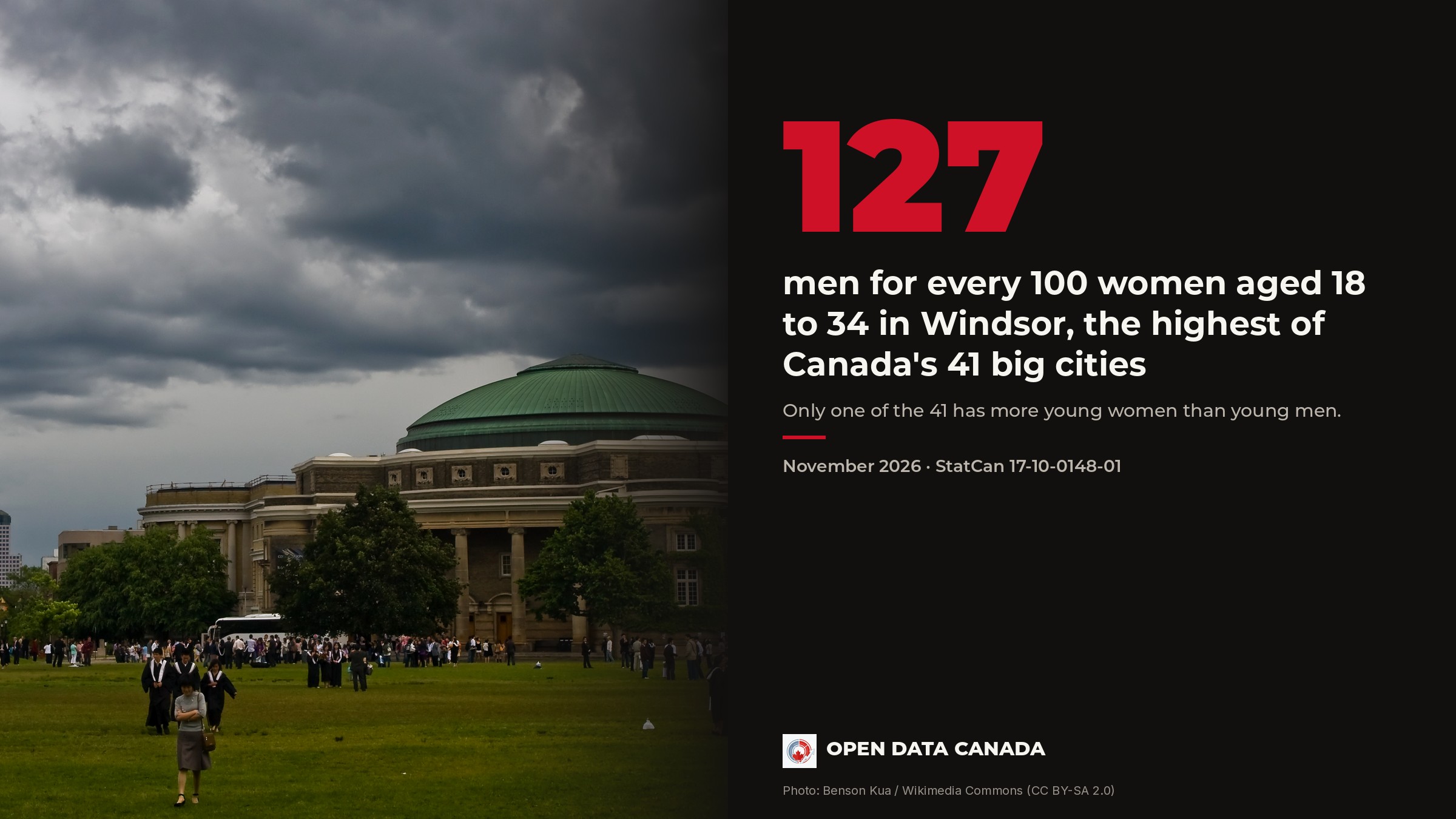
Young men outnumber young women in 40 of Canada's 41 big cities
In Windsor, there are 127 men for every 100 women aged 18 to 34. Only one big city has more young women than young men. Here's how your city compares.
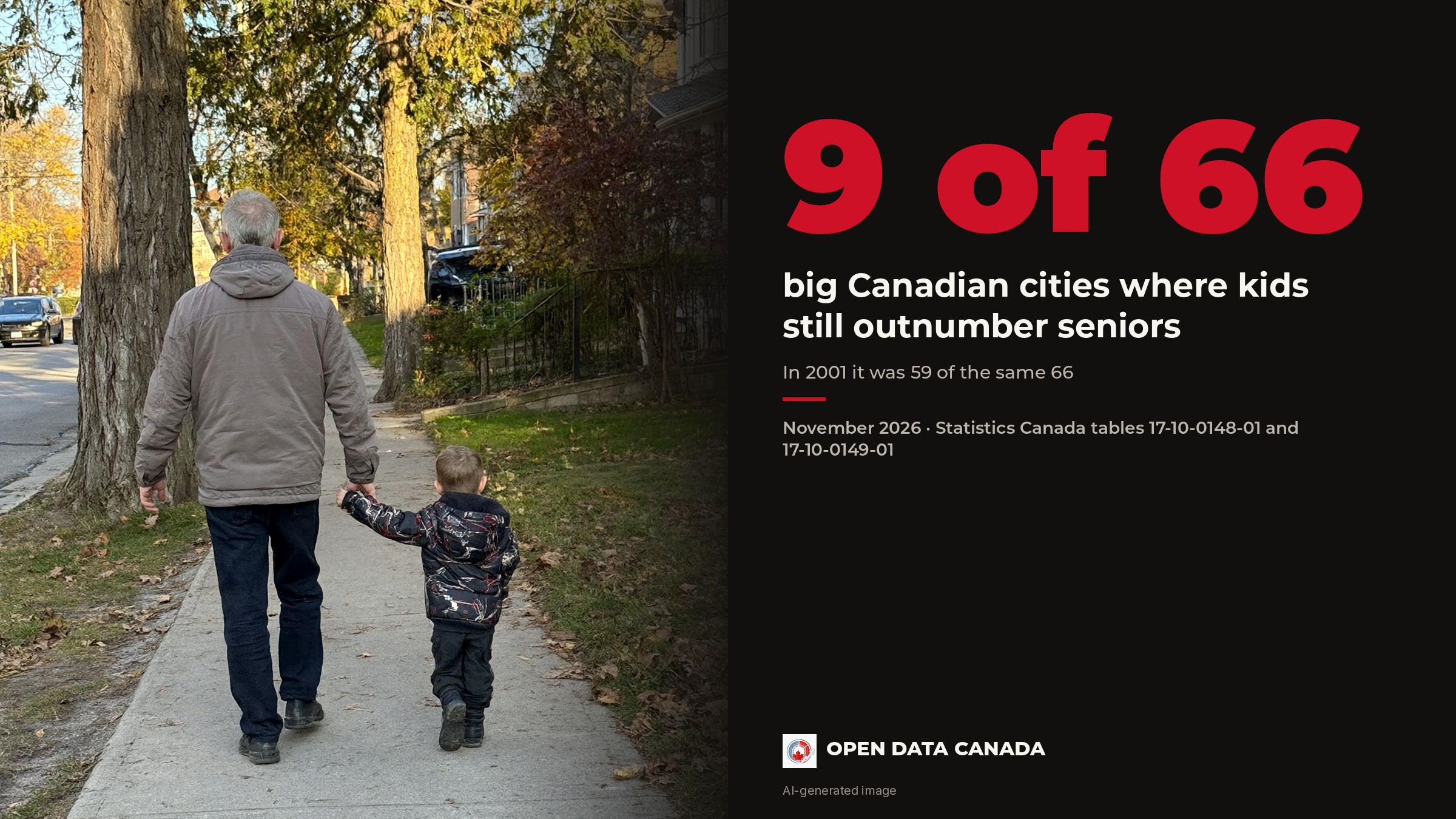
Kids outnumber seniors in only 9 of Canada's 66 biggest cities
In 2001, kids under 15 outnumbered seniors in 59 of Canada's 66 biggest urban areas. By 2025, only nine were left, seven of them on the Prairies. At the pace of the past five years, those nine run out by 2033.
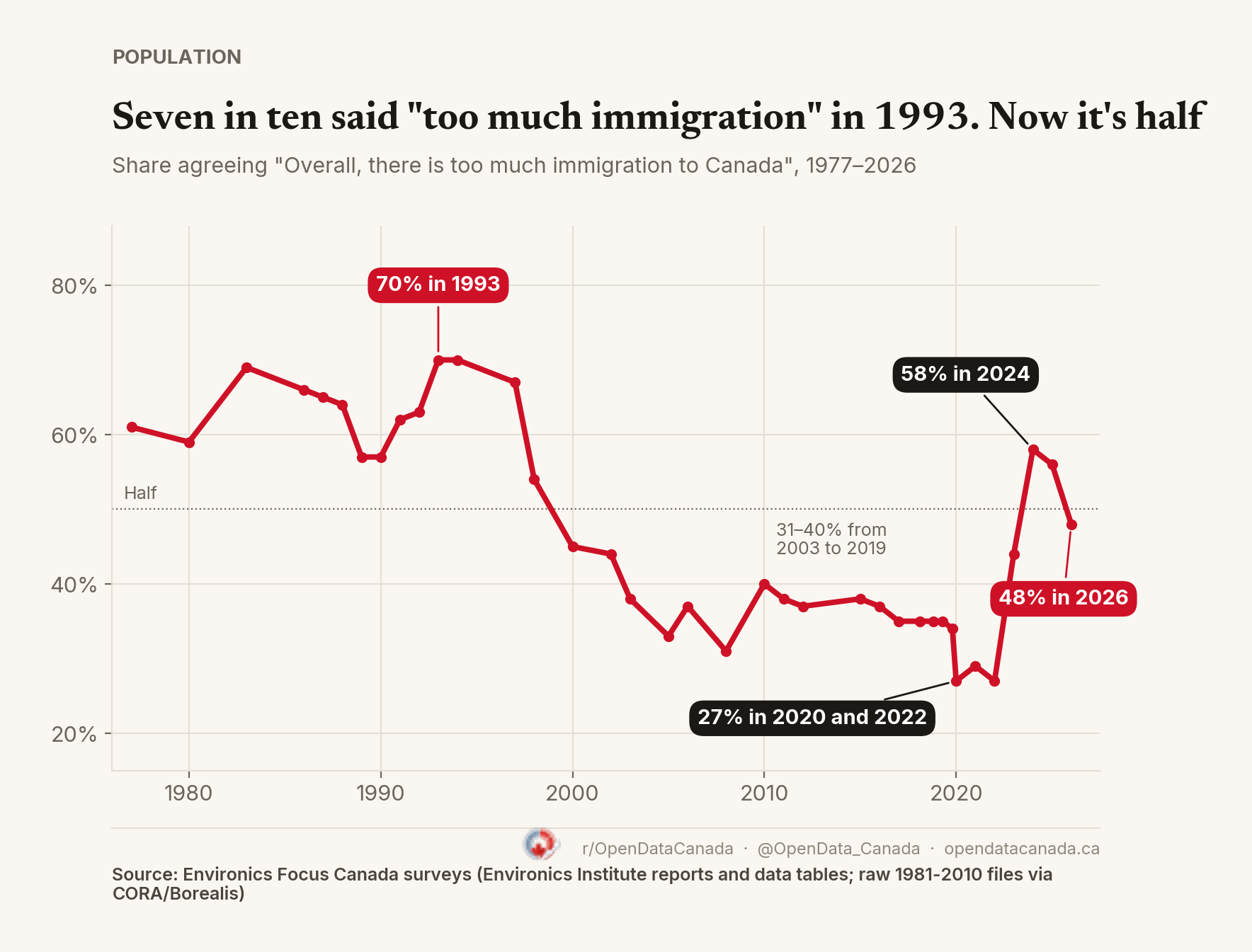
Conservative and Liberal voters used to agree on immigration. Now they're 44 points apart
In 1993, seven in ten Canadians said there was too much immigration. In 2026, opinion is evenly split. What has changed is who says it: Conservative and Liberal voters gave similar answers for decades and are now 44 points apart.
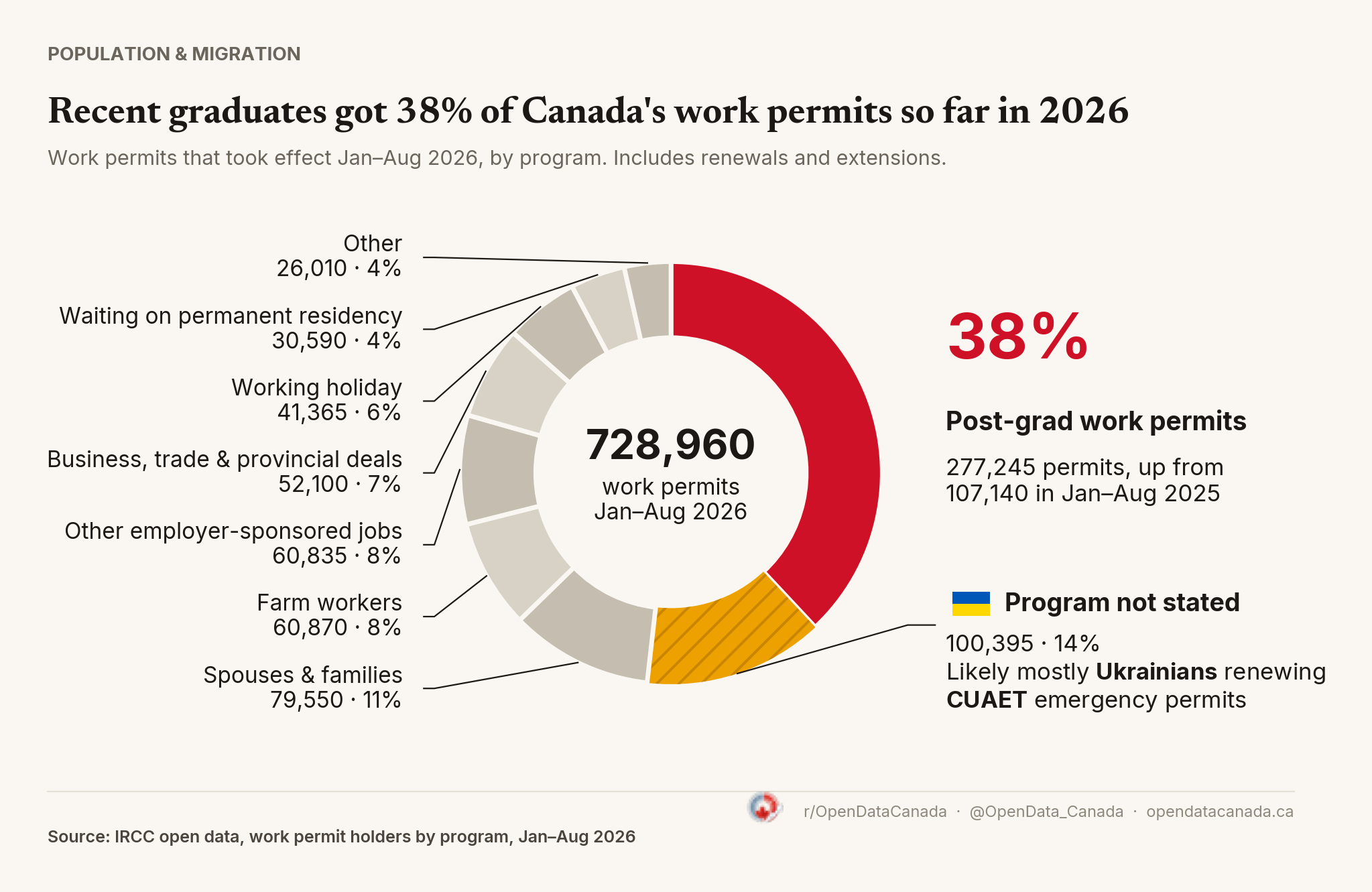
How many work permits did Canada issue in 2026? A record 728,960, but not 728,960 new workers.
From January to August 2026, 728,960 work permits took effect in Canada, the most for those months in IRCC data going back to 2015. The count includes renewals and extensions, so it isn't a count of new workers. Statistics Canada's count of people holding a work permit fell from January 1 to July 1.

Only 1 in 5 Canadians have a plan to care for aging family
A Sunlife survey found 19% of Canadians have a full plan for caring for an aging or sick relative. By 2045, Canada will have about half as many people aged 45 to 64 per person aged 85 and older.

Students at Ontario's private career colleges got more OSAP grant money than university students
Students at private career colleges received 1,331 million dollars in OSAP grants in 2024-25, more than university students. Ontario has since moved career-college students to loans only and paused all OSAP payments associated with private postsecondary institutions during an audit.
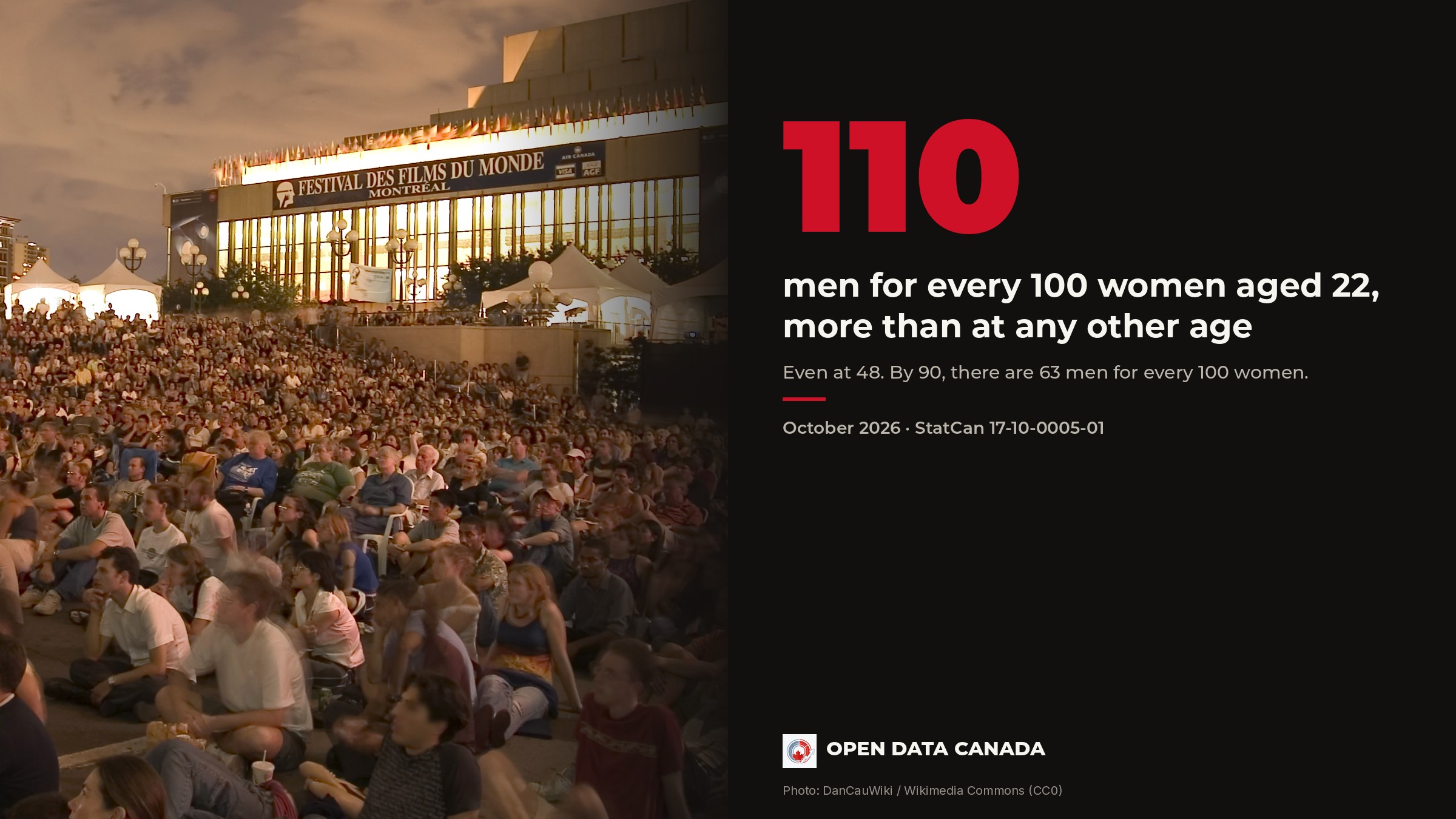
Men outnumber women until 48
At 22, there are 110 men for every 100 women in Canada. The two are even at 48. From 49 on, women outnumber men, and by 90 there are 63 men for every 100 women.

Alberta Added More People Than Ontario This Year. That Hasn't Happened Since 1981.
Canada had 41,798,407 people on July 1, 2026. The country grew by 0.46% over the year, its slowest growth since Statistics Canada's quarterly series began in 1946, and Alberta added 76,419 people while Ontario added 45,160.
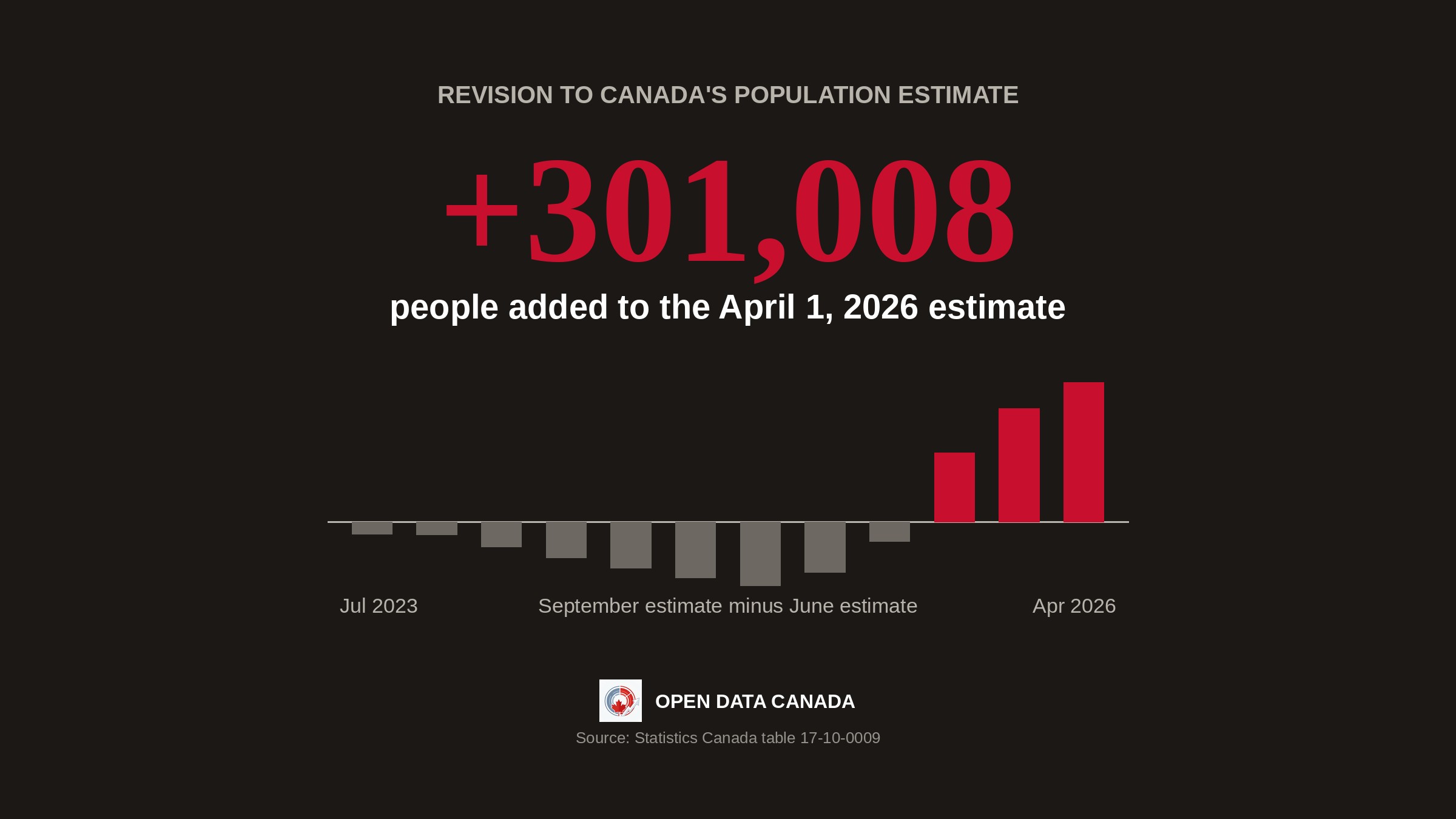
Canada's Population Decline Vanished After a 301,008-Person Revision
Three months ago, Statistics Canada's preliminary estimates showed Canada's population falling for three straight quarters. Today's revision adds 301,008 people to the April estimate, turning that apparent decline into a brief pause. Canada's population reached a record 41.8 million on July 1.
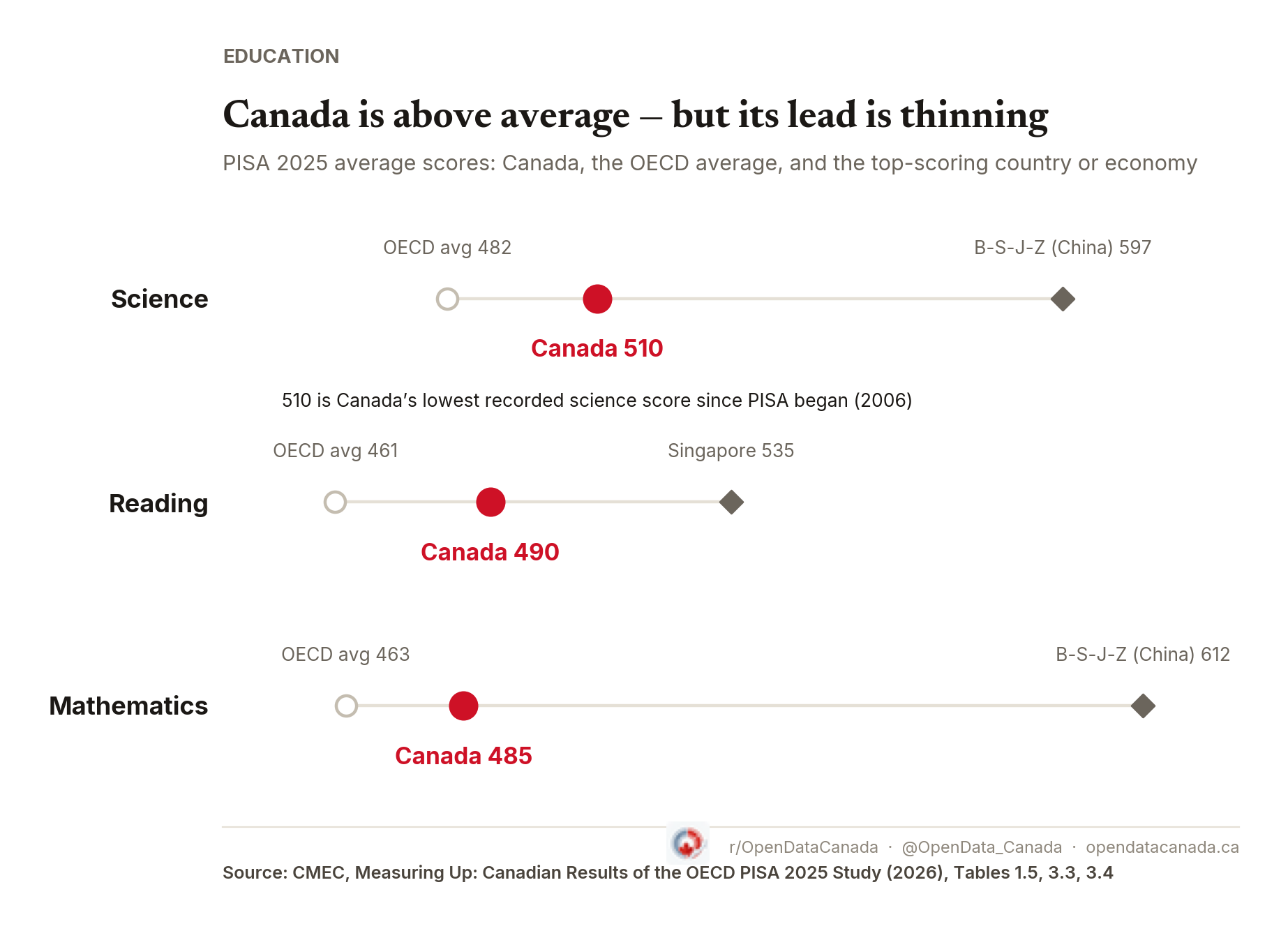
Canada's science scores hit a record low in PISA 2025
Canadian 15-year-olds scored above the OECD average in science, reading, and math on the 2025 Programme for International Student Assessment, but science, the assessment's focus this cycle, fell to its lowest recorded level since testing began in 2006, and reading and math are down sharply too. Provincial results vary by as much as 51 points depending on subject.

Canada's 2026 Census is being collected now — here's when each result lands, and what's worth watching
The fieldwork started in May. Statistics Canada hasn't published its 2026 release calendar yet, but the 2021 cycle gives a tight template — first headline counts about nine months after census day, full picture about eighteen. Ten things the new data is set up to settle.
Canadian millennials are twice as likely to live with their parents as boomers were
16.3 percent of millennials aged 25 to 39 lived with at least one parent in 2021. Boomers at the same age in 1991 — 8.2 percent. The rate has roughly doubled, and the figure is from the last census, before mortgage rates and rents climbed further.