
Category
Immigration
Who comes to Canada, through which program, and how many. Express Entry, permanent residents, temporary foreign workers, international students and refugees, from IRCC and Statistics Canada data.
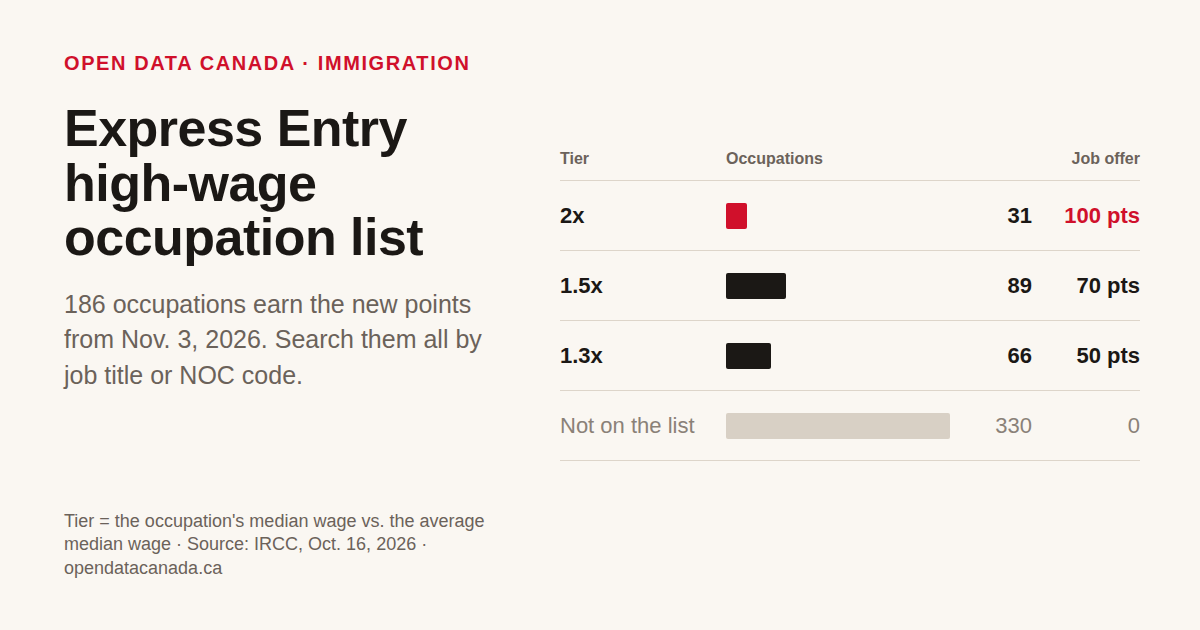
Express Entry high-wage occupation list
Search all 186 occupations that earn the new points from November 3, 2026, by job title or NOC code.

Express Entry will award up to 100 points for a high-wage job offer from Nov. 3
From November 3, 2026, a qualifying job offer in a high-wage occupation can earn up to 100 Express Entry points. Canadian work in a high-wage occupation can earn up to 70 points on top of work-experience points. Candidates get the higher option, not both.

89% of Ukrainians who came under CUAET are still in Canada — and 61% of Ukrainian newcomers aren't planning to go back
Two 2025 surveys of Ukrainians in Canada point the same way, most aren't leaving. The one dedicated path to permanent residence closed in 2024. Temporary status keeps getting extended, but four years after the program launched as a temporary "safe haven," no broad path to stay permanently has replaced it.

After 306 Million Dollars in Federal Funding, Bombardier Asks to Hire Record 40 Foreign Workers
The request coincides with 306.5 million dollars in federal funding for Bombardier's aerospace business, and lands during a technical recession, with manufacturing unemployment rising.
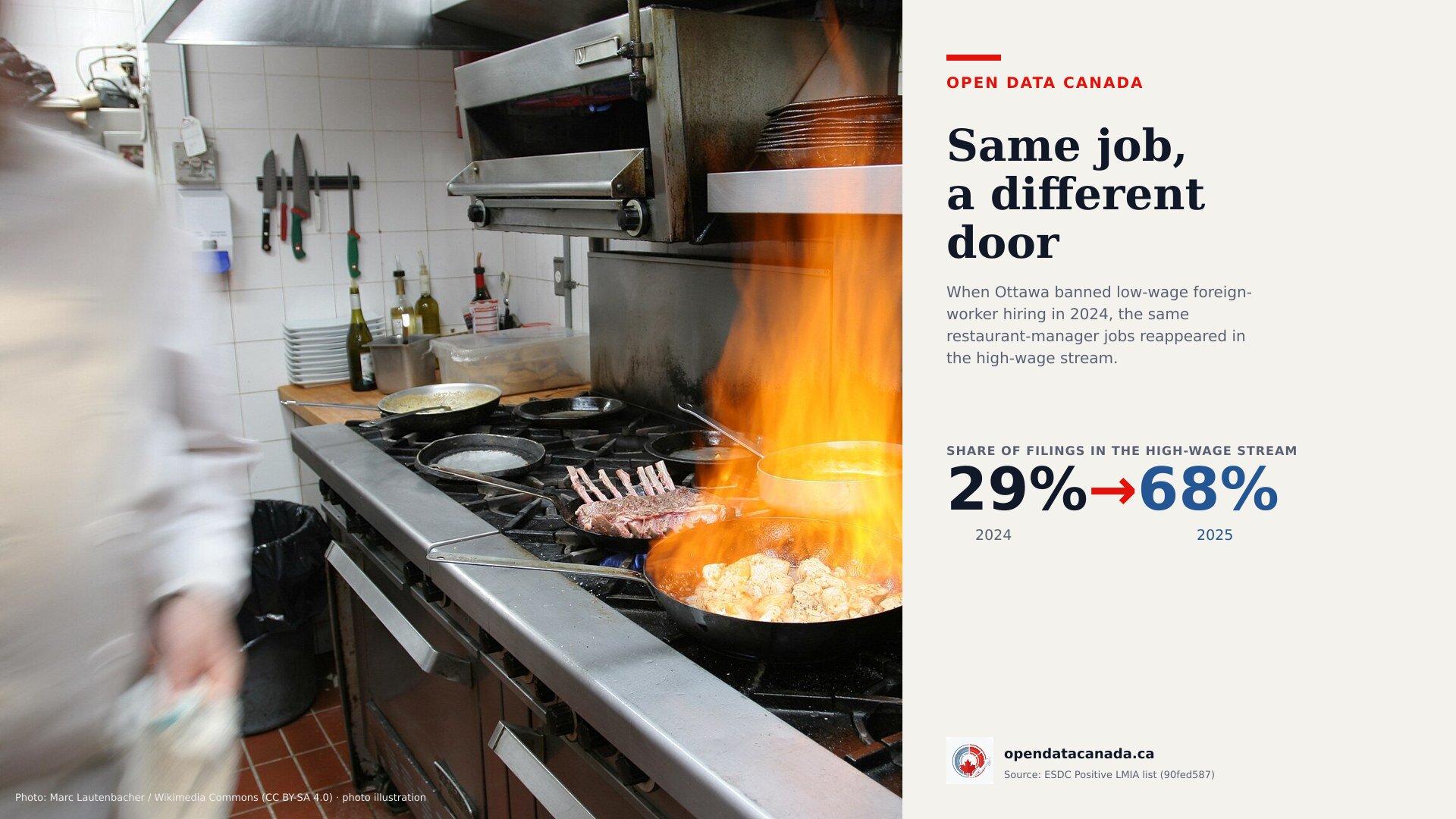
Canada TFW: How a Low-Wage Hiring Ban Pushed Restaurant Managers Into the High-Wage Stream
When Ottawa banned low-wage foreign-worker hiring in struggling cities in September 2024, approvals for low-wage restaurant managers collapsed. The same job reappeared in the high-wage stream, which the ban does not cover.
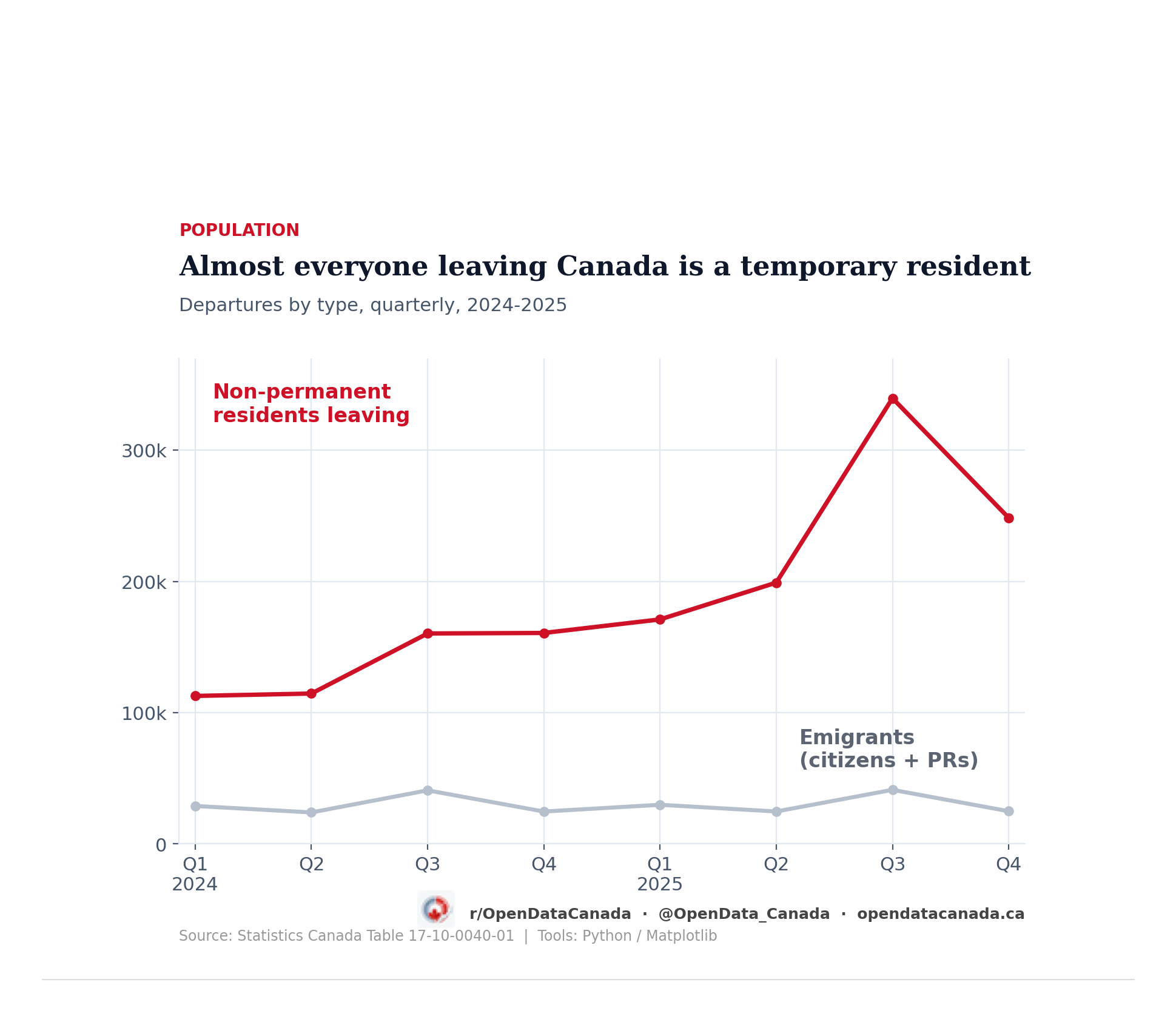
Canadians aren't leaving in record numbers
A viral headline says 120,640 people emigrated in 2025, a record. They did. But as a share of the population the rate barely moved — and the real exodus is nearly a million temporary residents leaving as their permits expire.

As Dunkin' prepares for its Canadian relaunch via Foodtastic, public LMIA data shows the master franchisee hires foreign workers at nearly the same rate as Tim Hortons
Foodtastic, the Montreal company that just signed an exclusive deal to bring Dunkin' back to Canada with "hundreds of locations," has approved 109 Temporary Foreign Worker positions across its existing portfolio over the past two years. Normalized by workforce, that works out to roughly 5.7 per 1,000 employees — about 85 per cent of Tim Hortons' rate. Tim Hortons got every front page for promising to cut its TFW use. Foodtastic, with a similar per-worker rate, is opening hundreds of new stores under a "Dunkin' is back" headline.

Canada blamed Tim Hortons. McDonald's hired more foreign workers — and stayed quiet.
Tim Hortons said this morning it will cut Temporary Foreign Workers and hire 10,000 Canadians instead. The chain's full franchise network — every "12345 Ontario Inc o/a Tim Hortons" plus the two big franchisee groups whose corporate names don't carry the brand — has 747 LMIA-approved positions for 2024-2025. Roll up McDonald's the same way and you get 907. The chain making headlines about foreign-worker cuts isn't even Canada's biggest fast-food user of the program.
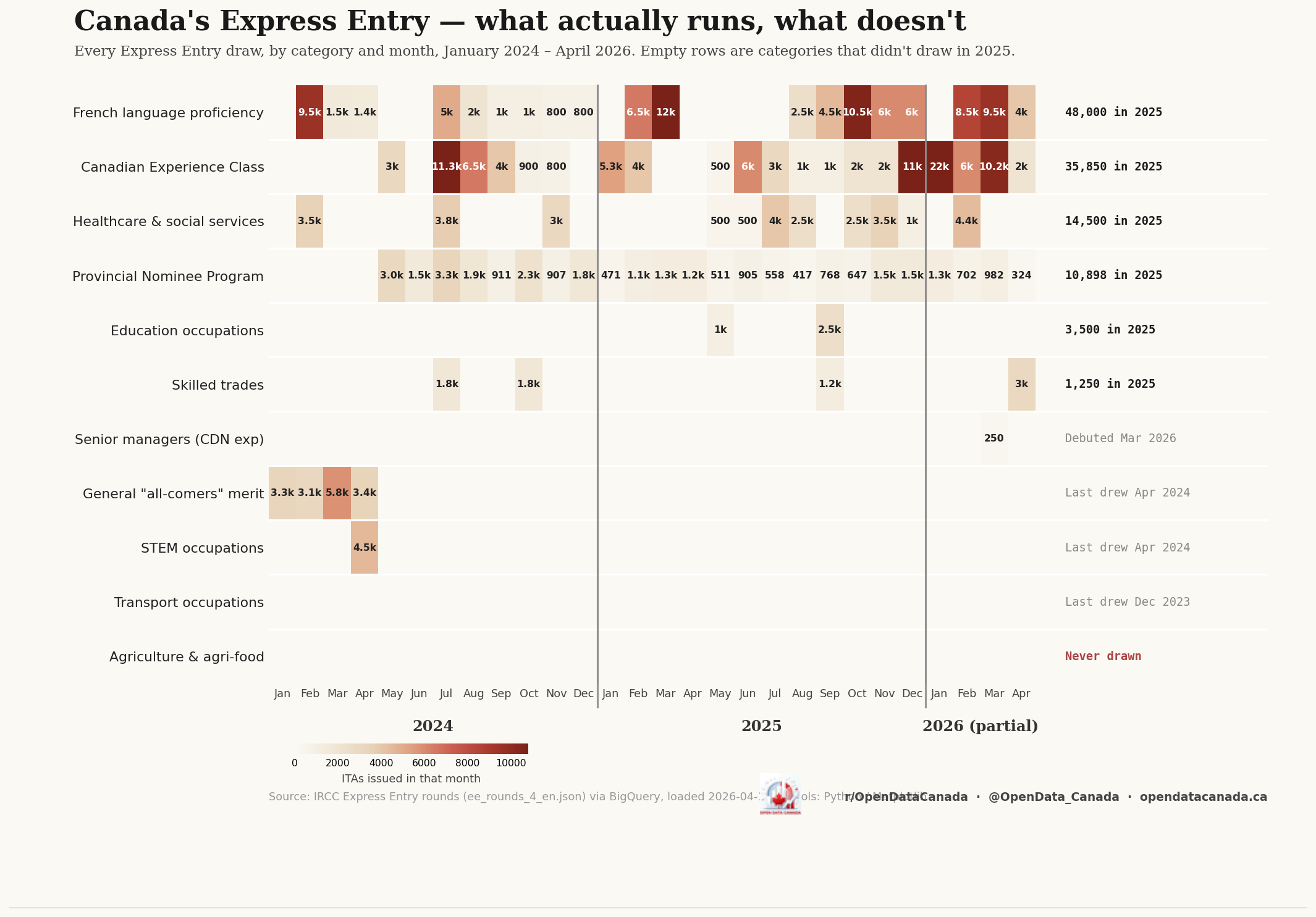
Three categories did 86% of Express Entry's 2025 invitations. Three more were dormant. One has never drawn.
Canada lists seven federal "priority" categories on its Express Entry page. In 2025, French, CEC, and Healthcare did 86,350 of the 113,998 invitations issued. STEM hasn't drawn since April 2024. Agriculture has never drawn at all.
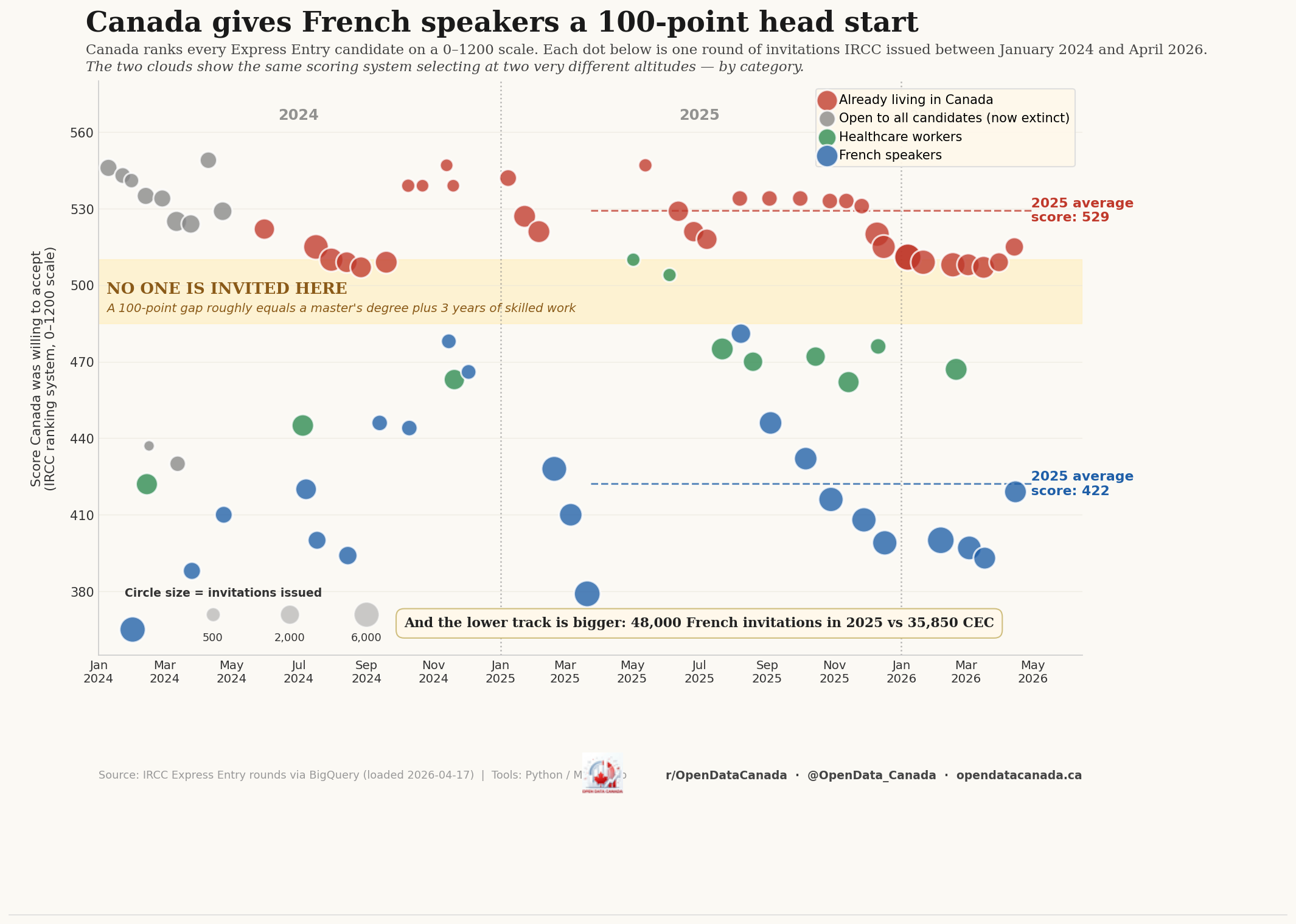
Canada will pay 107 CRS points for a French speaker
A French-speaking Express Entry candidate gets accepted at a score 107 points lower than an otherwise-equivalent candidate. The gap is the policy, and almost nobody is talking about it.
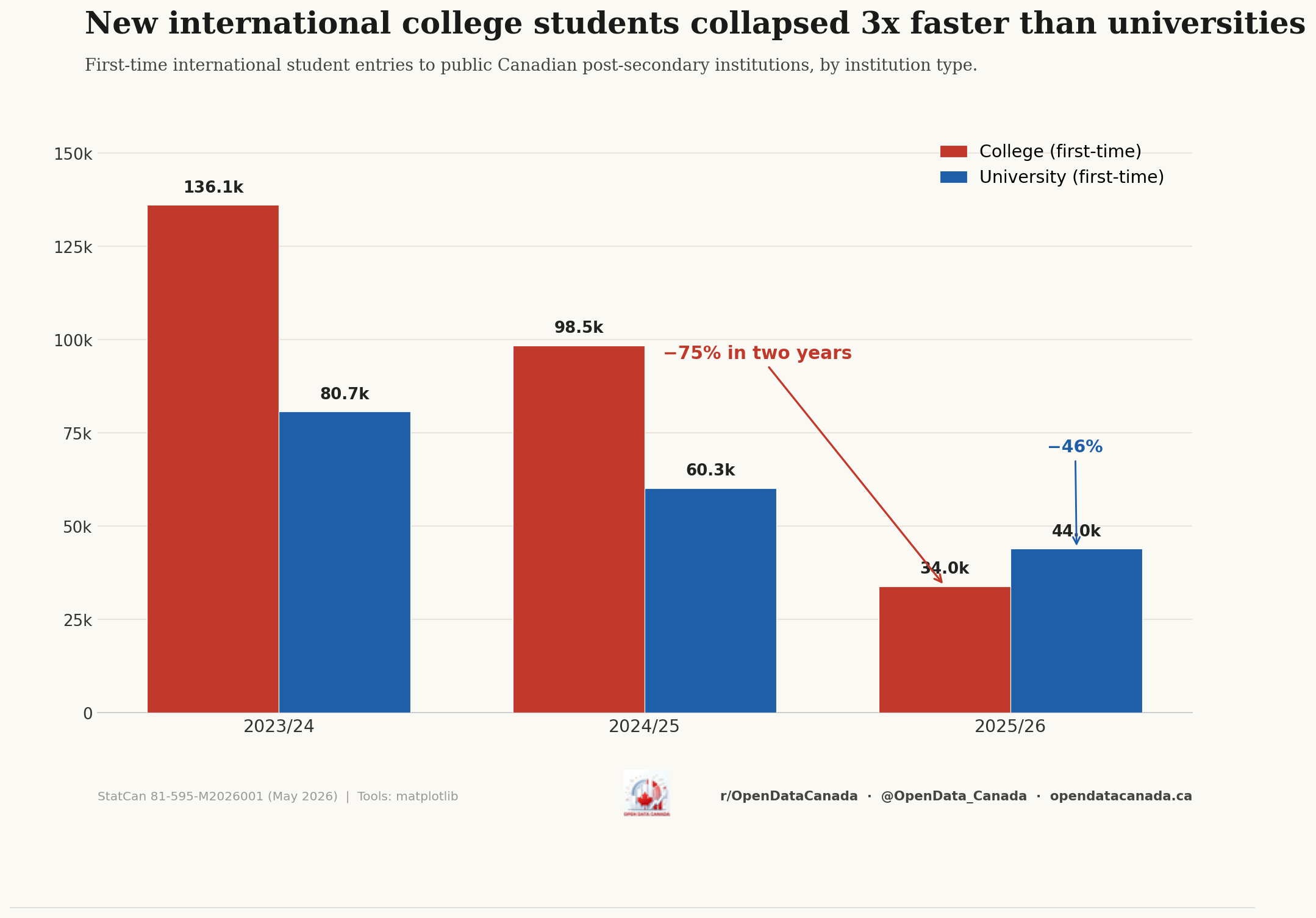
When Canada closed the side door to permanent residency, 100,000 'students' vanished
New first-time international college entries fell 75 percent in two years. Universities fell 46 percent. The gap is the story.
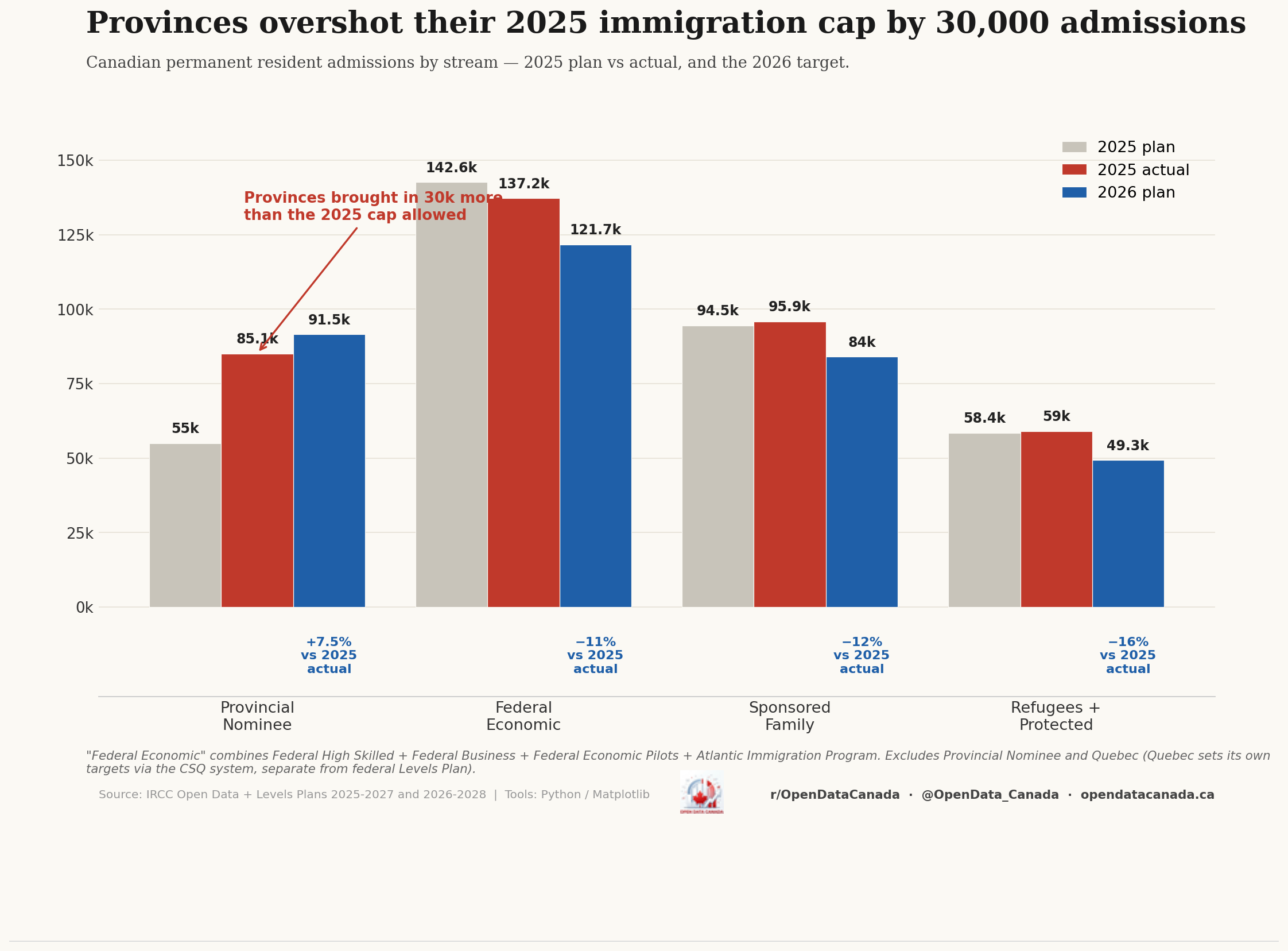
How Canadian provinces took control of immigration policy — and what got cut along the way
Ottawa called the 2026 Provincial Nominee expansion "historic." Provinces had already overshot their 2025 cap by 30,000 admissions. The 2026 plan formalizes it — and cuts family reunification, refugees, and federal merit selection to keep the total flat.
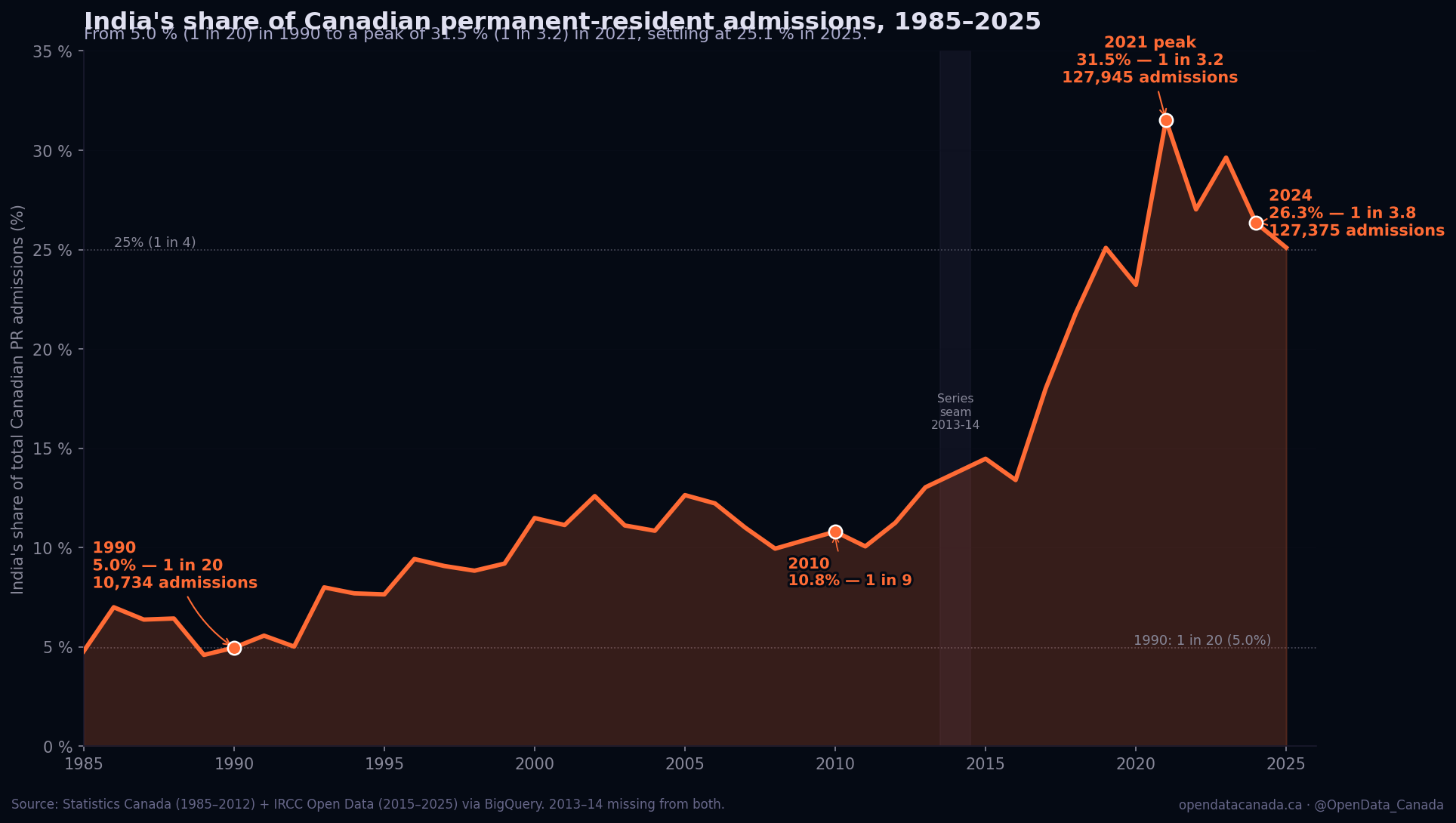
1 in 4 — how India became Canada's dominant immigration source
From 5 % of PR admissions in 1990 to a 31.5 % peak in 2021. Holding at 25 % even as the total falls. Four mechanisms explain the shift, including Express Entry's 2015 launch.
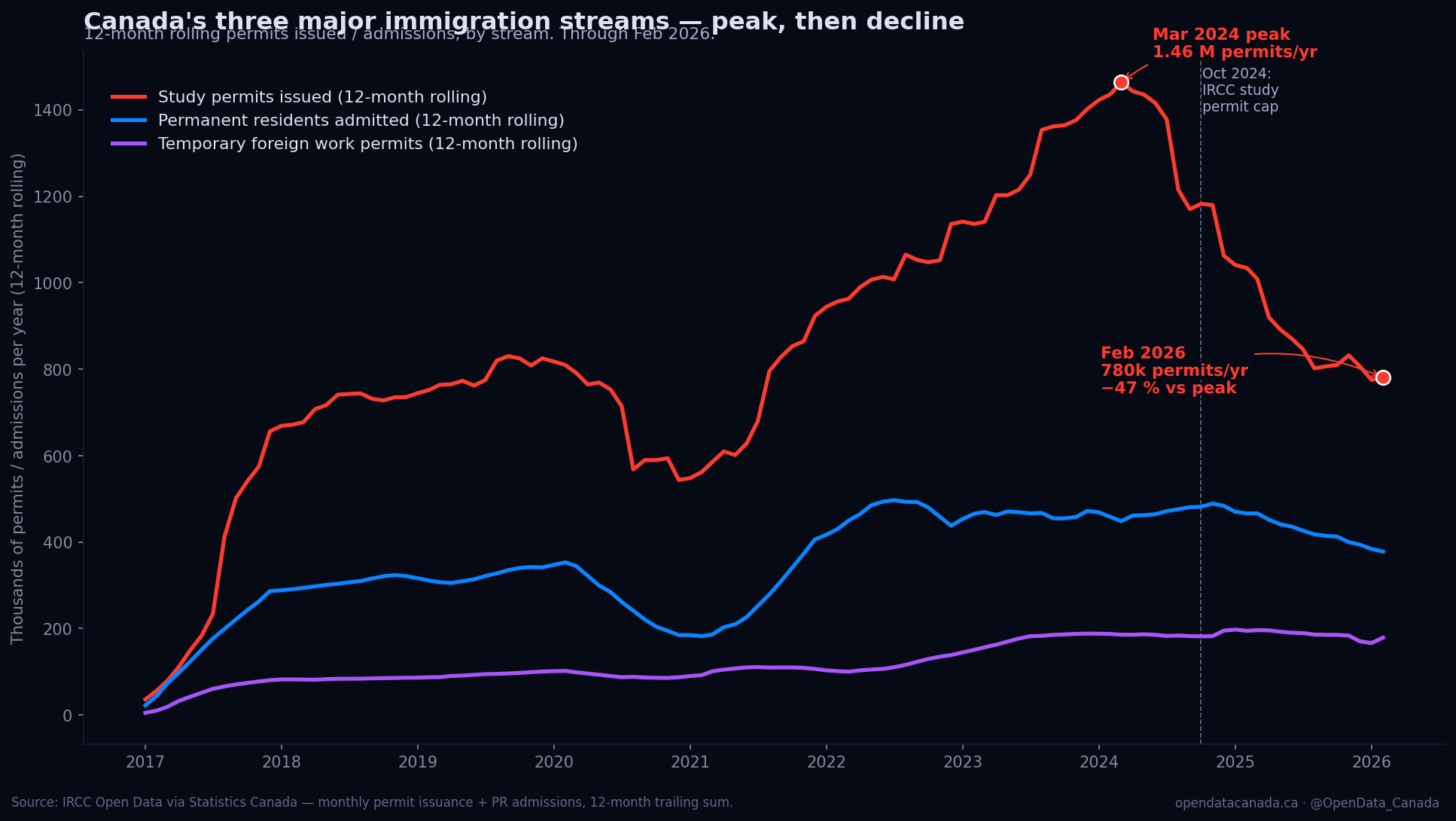
The boom is over — every immigration stream is now declining
Study permits −47 %. PR admissions −24 %. TFW work permits −9 %. The October 2024 cap is hitting its target faster than the announced trajectory required.