Health · 4 min read
Life Expectancy Is 7.8 Years Lower for Indigenous People in Canada
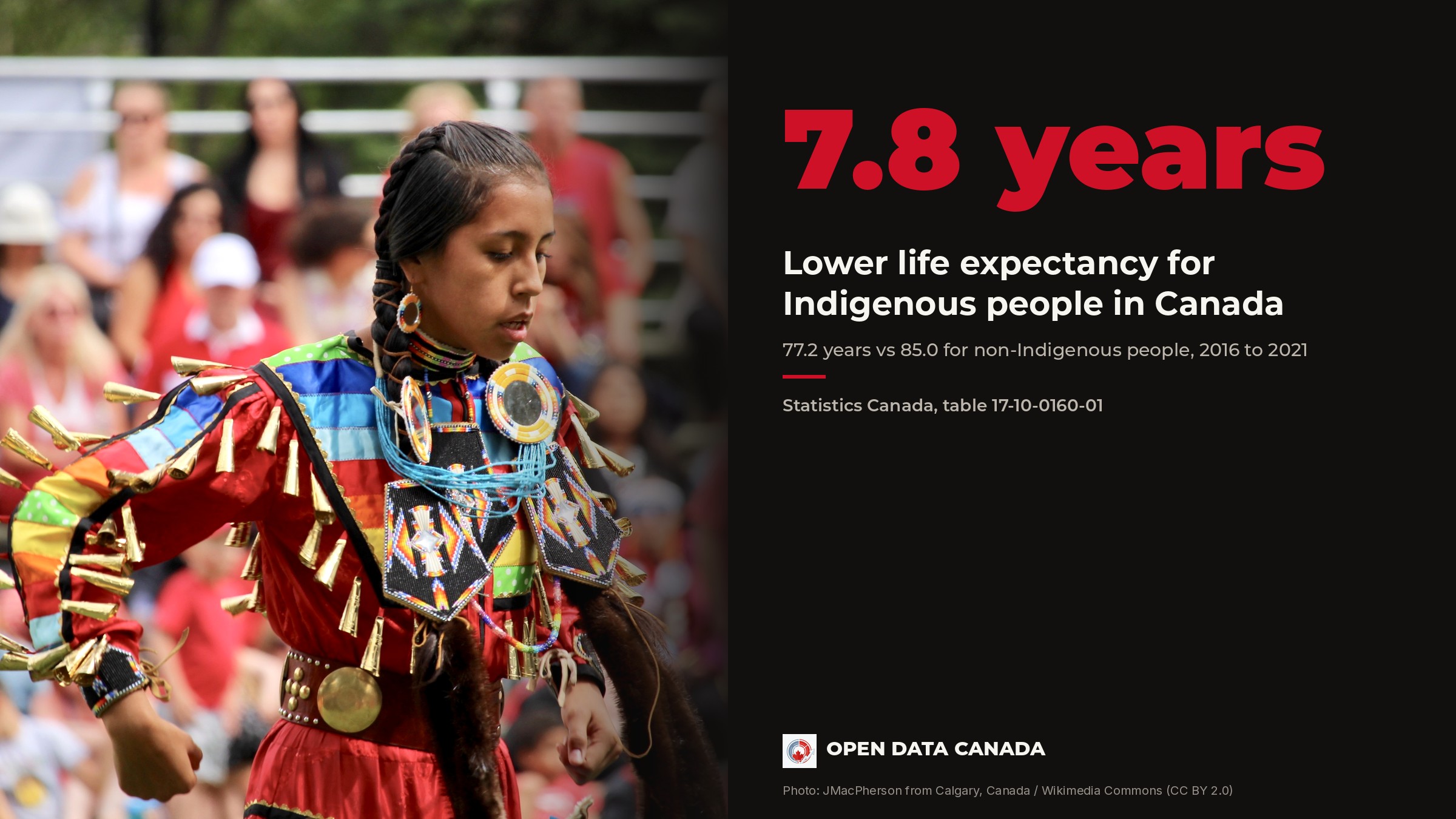
Statistics Canada's census-linked estimate for 2016 to 2021 puts Indigenous life expectancy at 77.2 years, against 85.0 for non-Indigenous people. The gap is 11.0 years for registered First Nations people, 13.1 for Inuit and 4.5 for Métis.
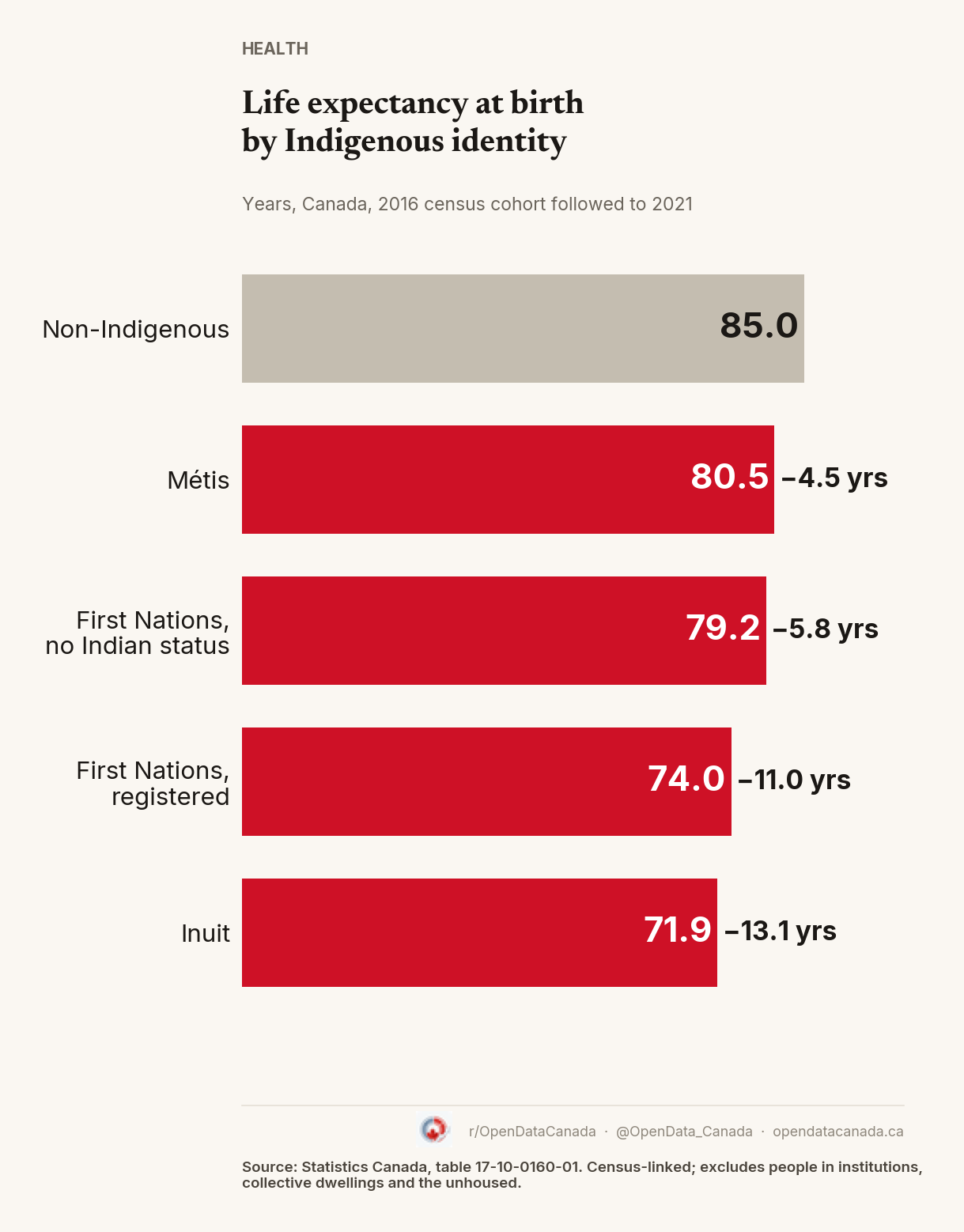
Life expectancy at birth was 74.0 years for First Nations people with Registered or Treaty Indian status in 2016 to 2021, compared with 85.0 years for non-Indigenous people. That is a gap of 11.0 years.
For Inuit, the gap was larger: 71.9 years, or 13.1 years below the non-Indigenous population. Métis life expectancy was 80.5 years, a gap of 4.5 years. First Nations people without Registered or Treaty Indian status had 79.2 years, a gap of 5.8.
Among registered First Nations people, those living on reserve had a life expectancy of 71.4 years. Those living off reserve had 76.0.
Across all Indigenous people
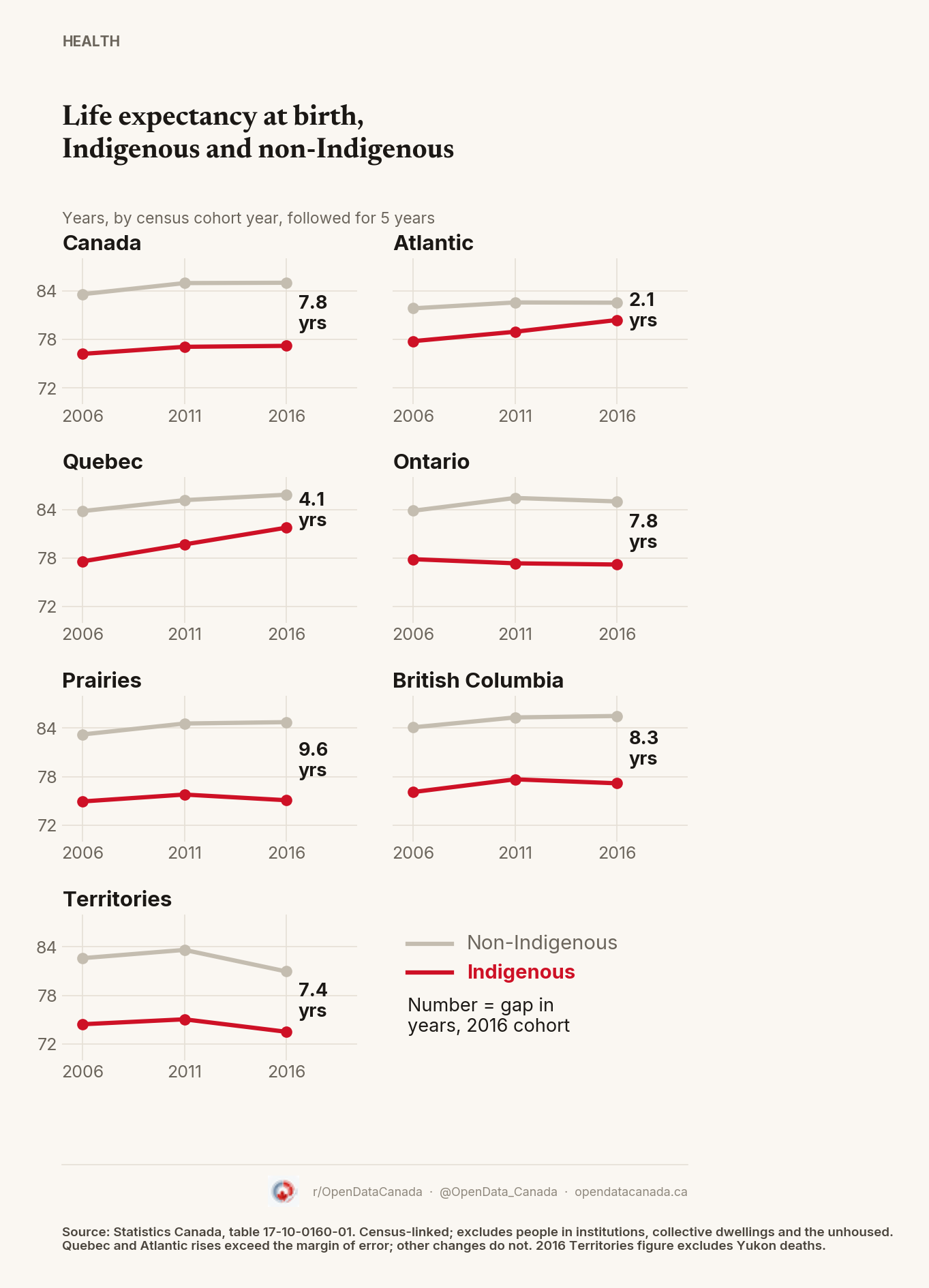
For all Indigenous people combined, life expectancy was 77.2 years, 7.8 years below the non-Indigenous figure. The gap has stayed around eight years across the three periods Statistics Canada publishes: 7.4 years in 2006 to 2011, 7.9 in 2011 to 2016 and 7.8 in 2016 to 2021. These are three five-year snapshots, not yearly figures.
It varies by region
For the 2016 to 2021 period, the gap ranges from 2.1 years in Atlantic Canada to 9.6 years on the Prairies:
- Prairies: 9.6 years
- British Columbia: 8.3
- Ontario: 7.8
- Territories: 7.4
- Quebec: 4.1
- Atlantic: 2.1
Indigenous life expectancy rose from the 2006 to 2011 period to the 2016 to 2021 period in Quebec (77.6 to 81.8) and Atlantic Canada (77.8 to 80.4), by more than the margin of error. In British Columbia it rose from 76.1 to 77.2. In Ontario, the Prairies and the Territories it stayed flat or slipped. Those changes, and the one in B.C., are within the margin of error. The 2016 to 2021 Territories figure leaves out Yukon, because Yukon death records were not available to Statistics Canada for that period.
How to read these numbers
Statistics Canada links census records to death records. It follows people counted in the census for five years and records who died. The latest period follows people counted in 2016 through 2021. Infant mortality is estimated separately from published rates. The results are estimates, each published with a 95% confidence interval, and they describe a population, not any one person's expected lifespan.
Two limits matter most:
- Who is left out. The figures exclude people living in institutions (such as nursing homes and correctional facilities), in collective dwellings such as shelters and rooming houses, and people with no fixed address. Statistics Canada notes that research shows Indigenous populations tend to be overrepresented in these groups.
- Comparing over time. Changes between periods can reflect changes in how reserves are defined, in who is counted in each group, and in how people answer the census identity question, not only changes in deaths.
Statistics Canada says the groups followed may be healthier than the general population, so the numbers should not be set directly beside official life tables or other countries' figures.
The data shows the size of the gap. It does not show why it exists.