Labour · Jobs report
Quebec lost 49,000 jobs in September. That is 72% of Canada's drop
Canada lost 68,000 jobs in September, the second monthly fall in a row. Quebec alone lost 49,000 of them. Outside Quebec, the country has still added jobs this year.
The headline from today's jobs report is a national one: employment fell by 68,000 in September (0.3%), after a fall of about 42,000 in August. It follows a July report that showed private employers carrying the gain. The unemployment rate rose to 6.5% from 6.4%.
The headline hides where the jobs went. Quebec lost 49,000, which is 72% of the national drop. The other nine provinces combined lost about 19,000. Alberta added 23,000.
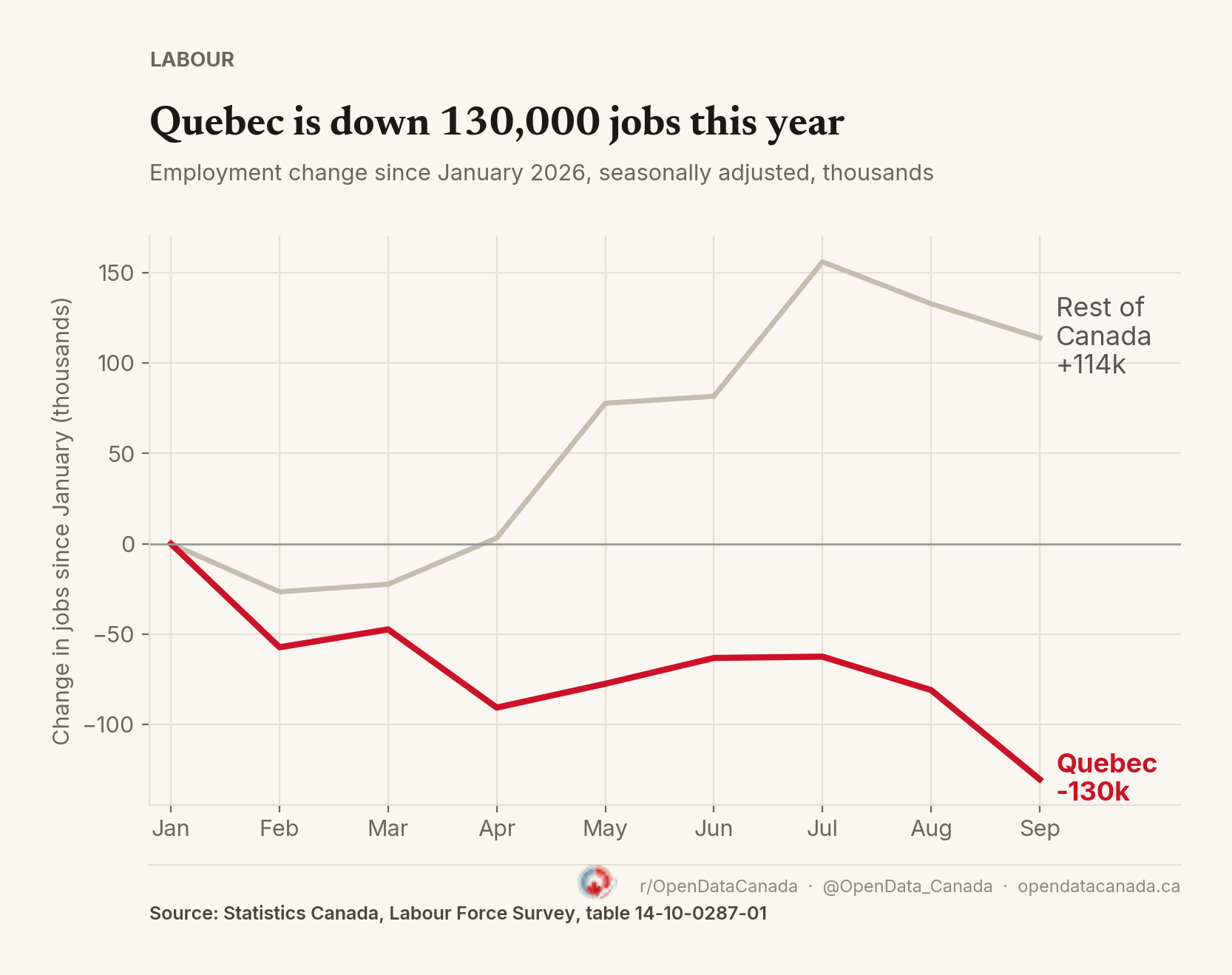
Quebec has lost 130,000 jobs since January
Quebec employment is down 130,000 (2.8%) from January to September, according to Statistics Canada. Its unemployment rate is 6.0%, up 0.8 points since January and up 0.4 points in September alone. Its 4.54 million employed is the lowest since July 2024.
Subtracting Quebec from the national total, the rest of Canada has about 114,000 more jobs than in January. It peaked in July at about 156,000 above January and has slipped since.
Monthly survey numbers are noisy, so the size of the September fall matters. Statistics Canada's own margin for Quebec's month-to-month change is 17,000 (one standard error). A 49,000 drop is about three times that, a much larger move than the survey's normal noise. The national drop of 68,000 is only about twice its margin of 33,000, a much weaker signal.
What the report does and does not explain
Statistics Canada does not say what drove Quebec's September fall. Its monthly report gives industry detail for the country as a whole, not for each province.
What it does show:
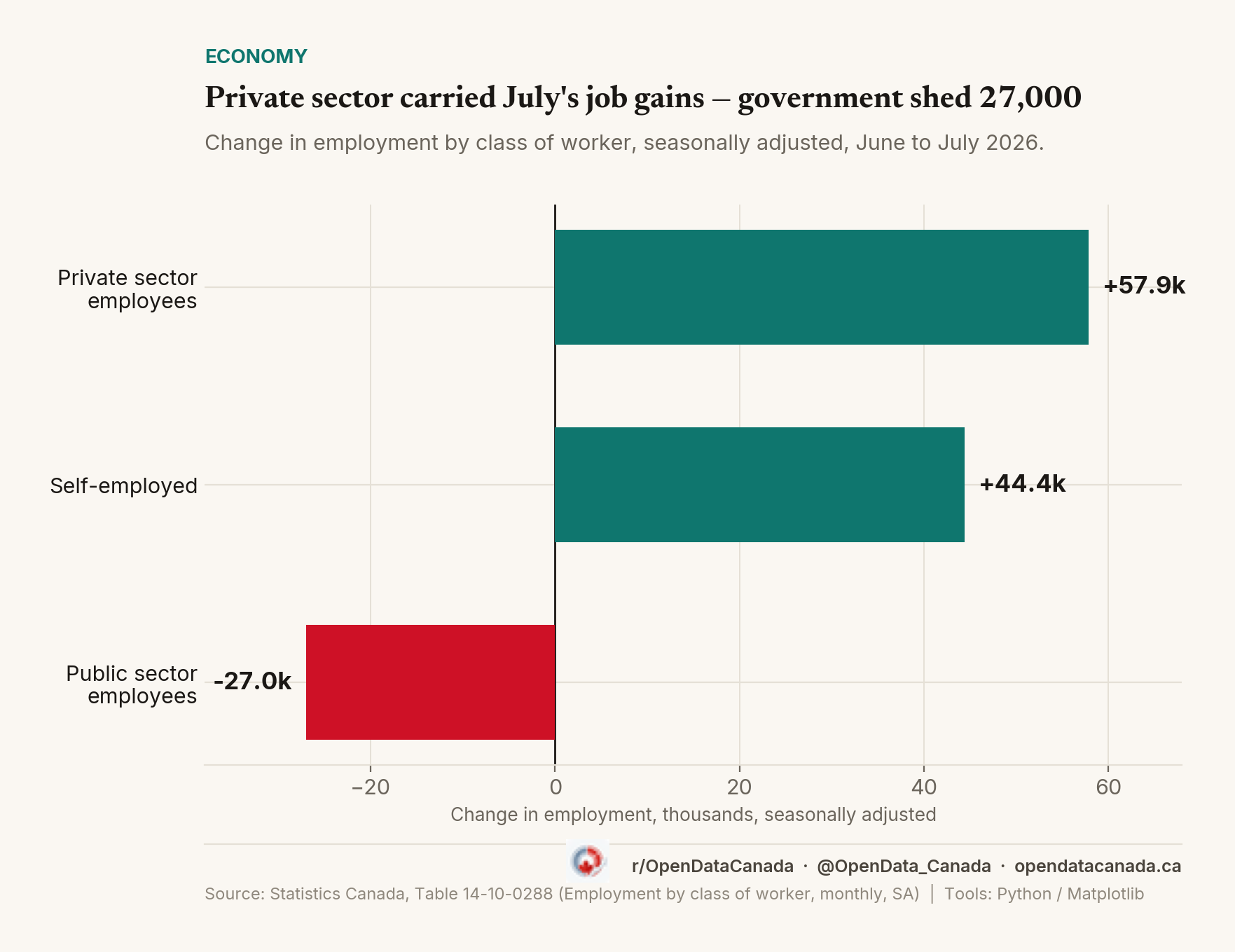
- Public-sector employment fell 70,000 in September, the fourth monthly drop in a row. Over the year it is down 119,000, mostly in schools. Private-sector jobs are up 163,000 over the year.
- Jobs in educational services are down 67,000 over the year. Quebec accounts for 27,000 of that, a 7.0% fall in the province.
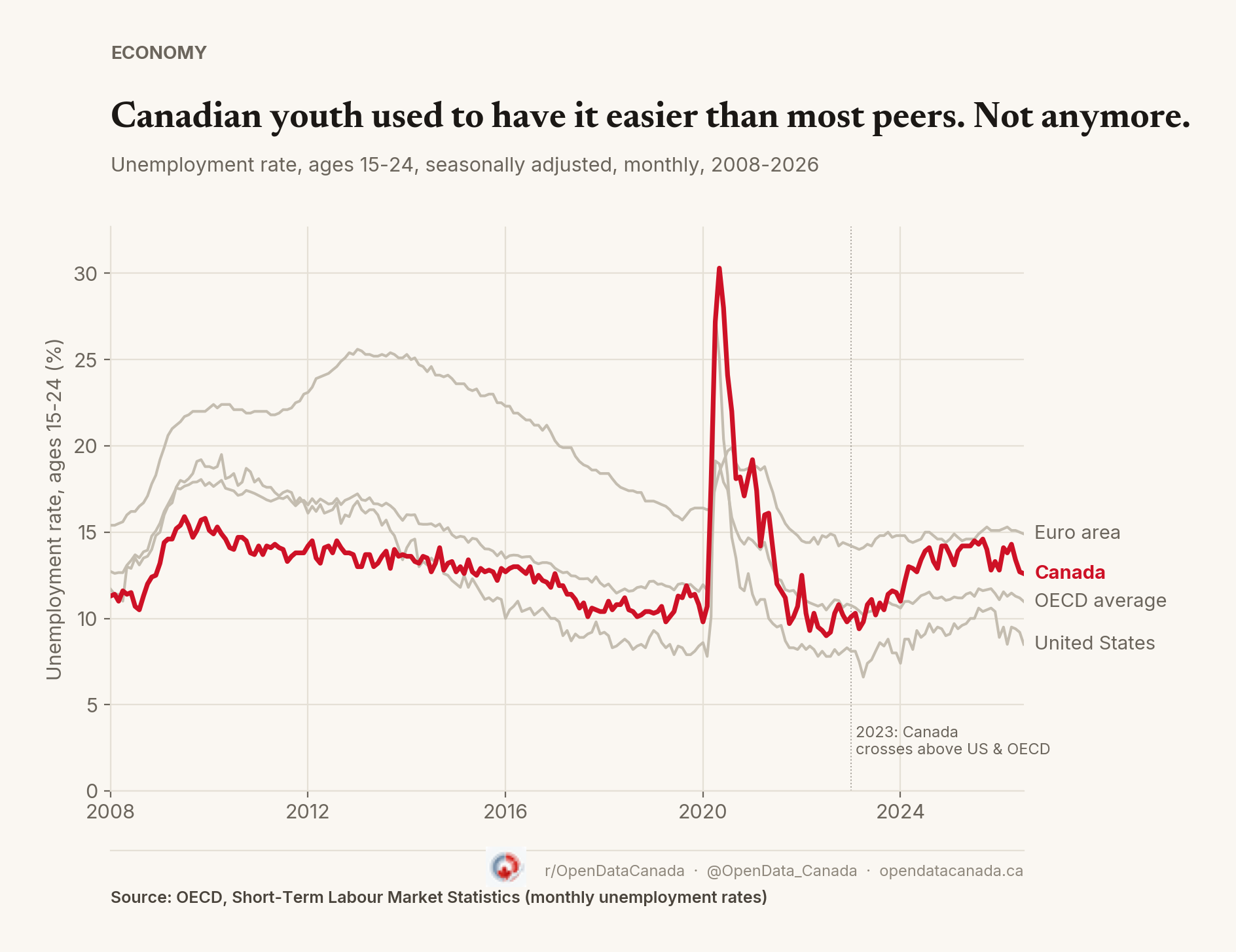
- Youth (15 to 24) employment fell 48,000, the second monthly drop in a row.
Whether Quebec's weakness is schools, tariffs on manufacturers or something else is not answered by this release.
The unemployment rate fell, but it is not all good news
The employment rate (the share of adults who are working) is 60.6%, the same as a year ago. Nationally, the unemployment rate fell from 7.1% to 6.5% over the year. The share of adults working or looking for work, the participation rate, fell to 64.8%. Statistics Canada says that is the lowest since December 1997, outside the pandemic.
Most of that is the population getting older. People 65 and over are now 23.2% of adults, up from 20.5% in 2019. Holding the age mix at its 2019 level, Statistics Canada says participation is little changed from a year ago. So the lower unemployment rate is not mainly people giving up.
The report does show people are finding jobs more slowly. Of those unemployed in August, 30.6% had a job in September. A year ago it was 32.8%.
Canada is not shedding jobs everywhere. It is shedding them in one province, and that province is the one to watch in next month's report.