Labour · 3 min read
Young Canadians face more than twice the unemployment rate of older workers
Youth unemployment hit 13.7 percent in October. The bigger story is the gap. Young Canadians are jobless at 2.4 times the rate of workers aged 25 to 54, and Ontario's young workers are far behind Quebec's.
Canada's unemployment rate for 15- to 24-year-olds rose to 13.7 percent in October, Statistics Canada reported Friday. Put simply, about one in seven young people who want a job and are looking for one can't find it.
The 0.7-point jump in a month is within the survey's normal swing, and the rate was slightly higher a year ago, at 14.0 percent. The bigger problem is how far young workers have fallen behind everyone else.
More than twice the jobless rate
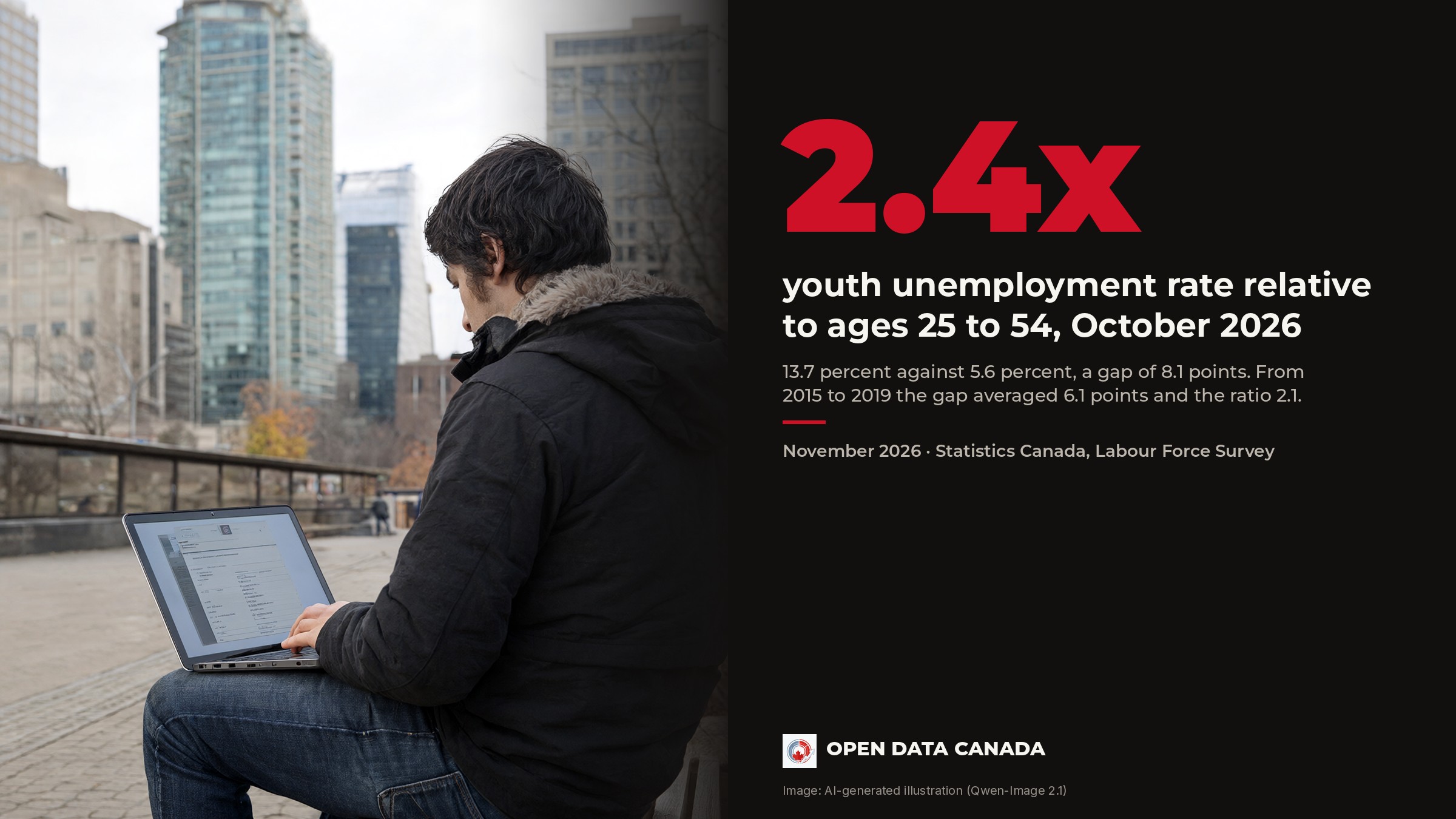
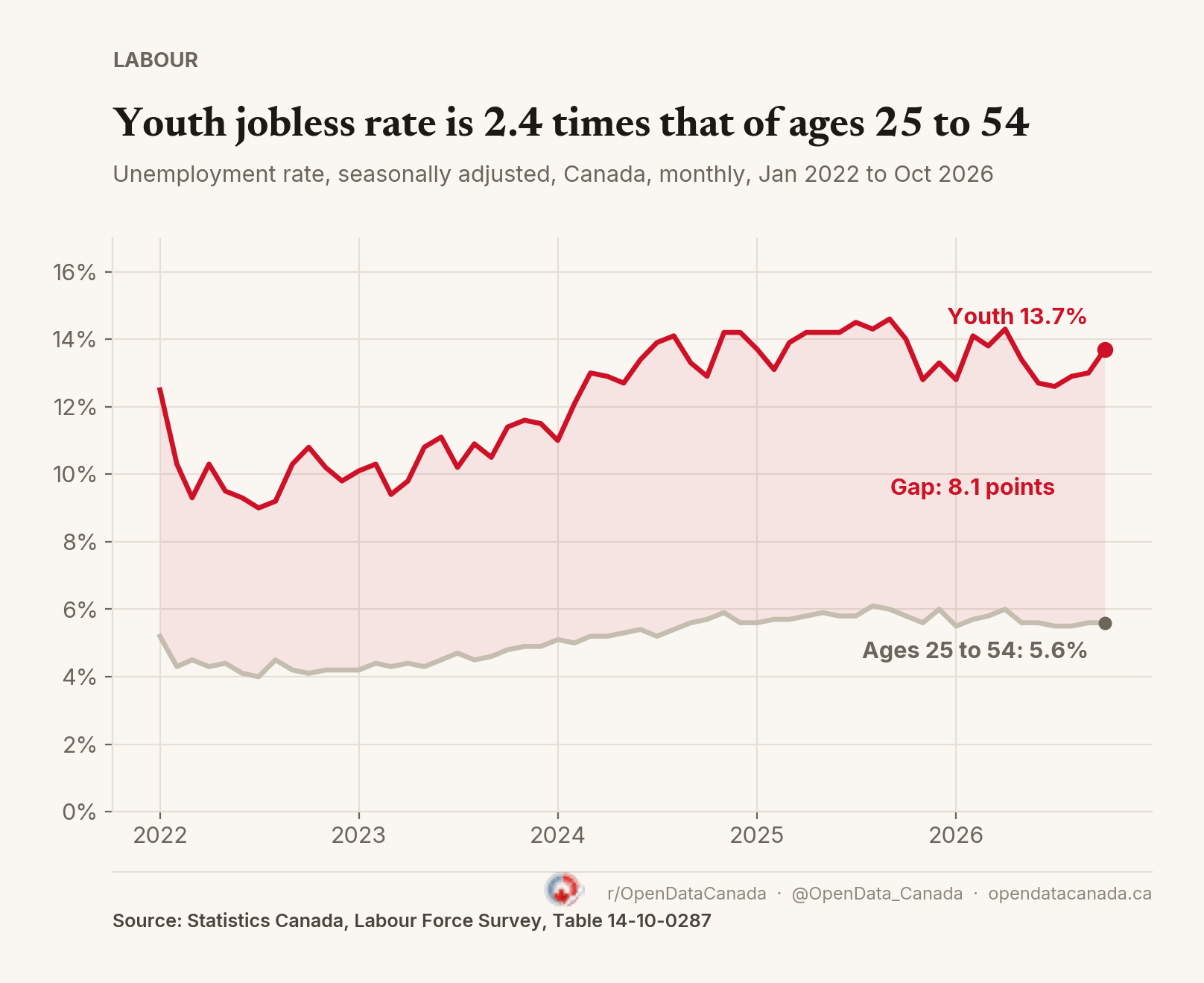
For workers aged 25 to 54, the unemployment rate was 5.6 percent. Young people were 8.1 points worse off, at 2.4 times the rate. From 2015 to 2019, the gap averaged 6.1 points.
 Download chart · Download data (CSV)
Young workers have always had it harder. In October 2019 the youth rate was also about two and a half times the core-age rate. What changed is that both rates climbed and the young started from higher up: the youth rate is 2.4 points above October 2019, the core-age rate 1 point.
The more telling number is how many young people have a job at all. In October 2019, 58.3 percent of 15- to 24-year-olds were working. Now it is 54.0 percent. About two-thirds of that drop comes from young people who have stopped looking for work, which means they don't show up in the unemployment rate at all. Some may have gone back to school; the survey doesn't say. For those who finish a degree, the pay edge over high school is now the smallest on record.
Ontario's young workers are falling behind Quebec's
From August to October, Ontario's youth unemployment rate averaged 15.2 percent. Quebec's was 9.5 percent.
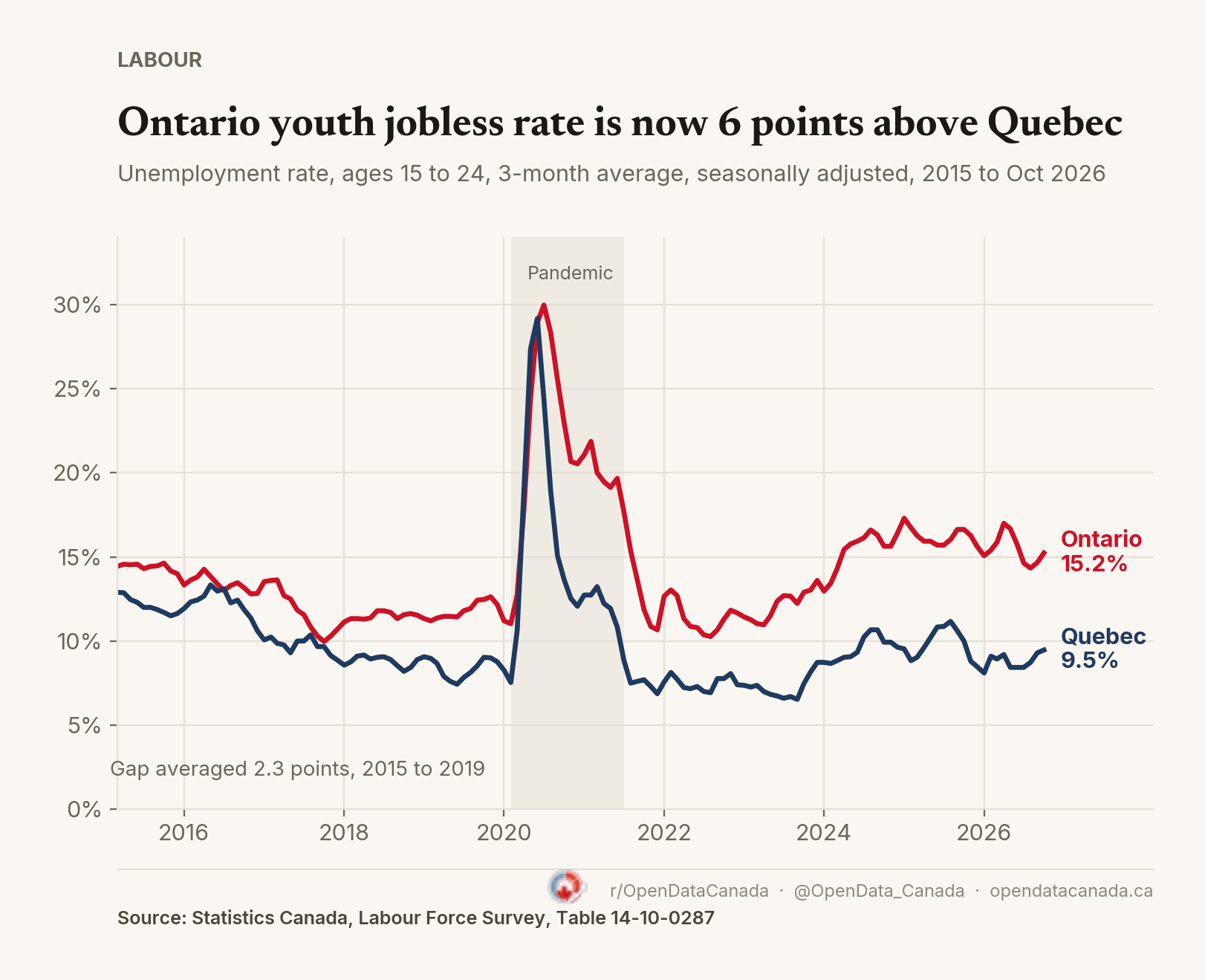 Download chart · Download data (CSV)
This isn't one bad month. Ontario's youth rate has been at least 4 points above Quebec's every month since February 2024. From 2015 to 2019, the gap averaged 2.3 points and reached 4 points in only 4 of 60 months.
October widened the split for everyone. Ontario's overall unemployment rate rose to 7.3 percent, while Quebec's fell to 5.7 percent.
What to watch
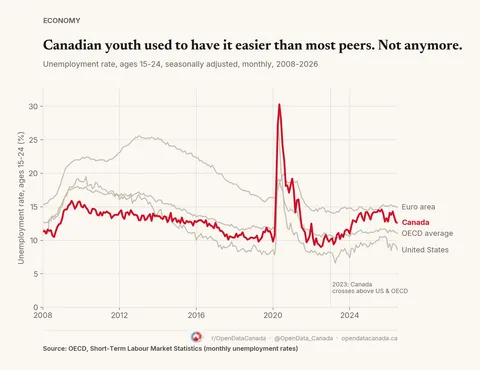
The next jobs report is due December 4. One month back near 13 percent would change little. The two gaps matter more, young against older workers and Ontario against Quebec, and both are still far from where they were before the pandemic. For the longer slide, see how Canada's youth rate now compares with the US and OECD.