Article · Technology · 3 min read
Young Canadians are more likely to think AI data centres will hurt the economy
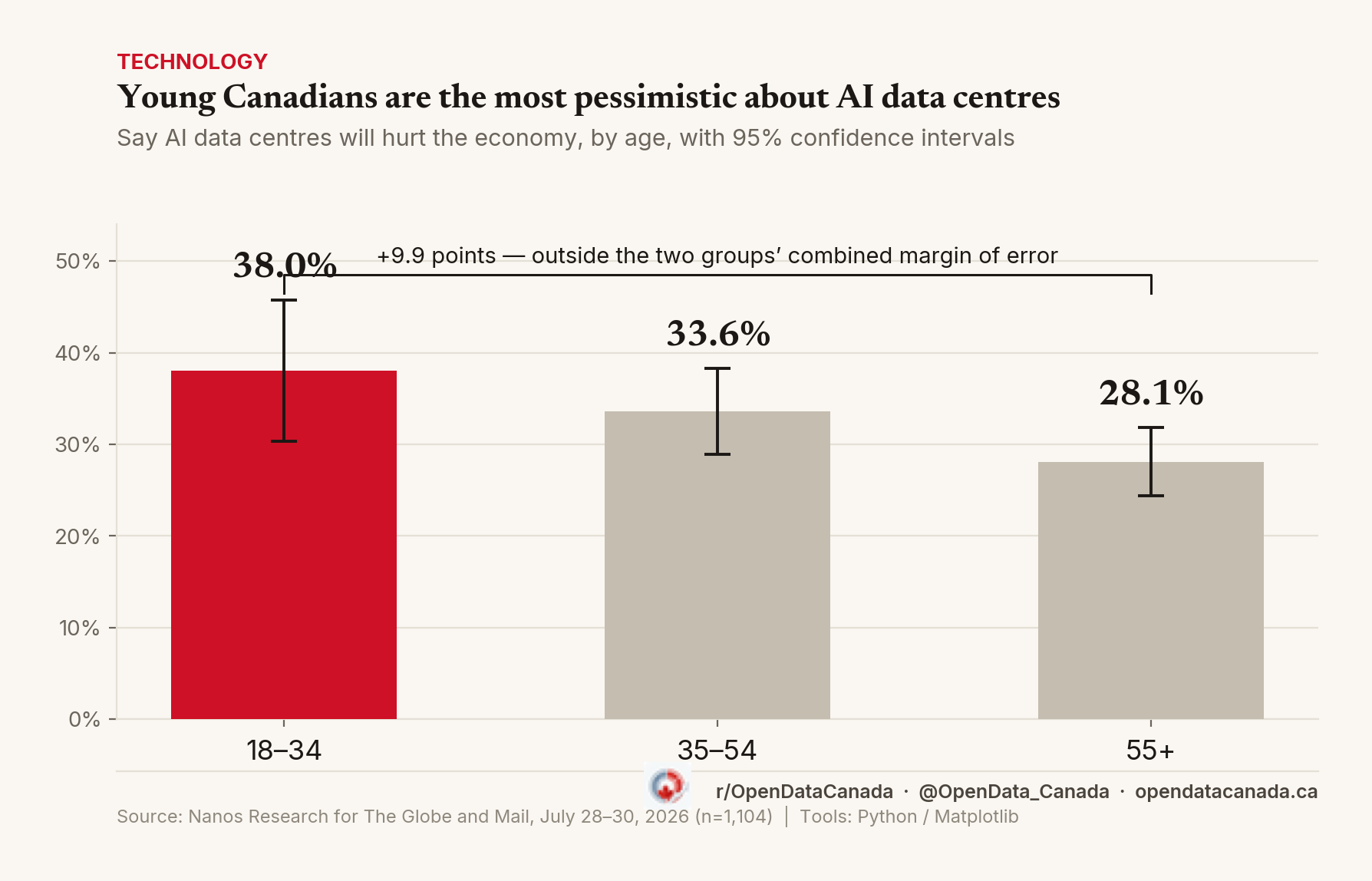
A Nanos poll finds a real generational split on whether AI data centres will hurt the economy, 38% of Canadians 18-34 versus 28% of those 55+. Opposition to government subsidies for building them is a separate story, high at every age, with no meaningful age gap at all.
Why this gap is real and the other one isn't
Age subgroups are smaller than the full sample, so their individual margins of error are wider than the survey's topline ±3.0 points, as much as ±7.7 points for the youngest group alone. Comparing the 18-34 and 55+ groups directly, the 9.9-point gap on economic impact sits just outside their combined 95% confidence interval (±8.6 points), so it clears the bar for a real difference. A generational split shows up on a different topic too: seniors report more concern about climate change than Gen Z. Nanos's own significance testing, described in its report, doesn't flag either age group on this question; the difference it does flag is by gender, and separately, one region stands out on this same question, Quebec residents are less pessimistic than the national average.
A second question in the same survey, on government subsidies for data centre construction, tells a different story.
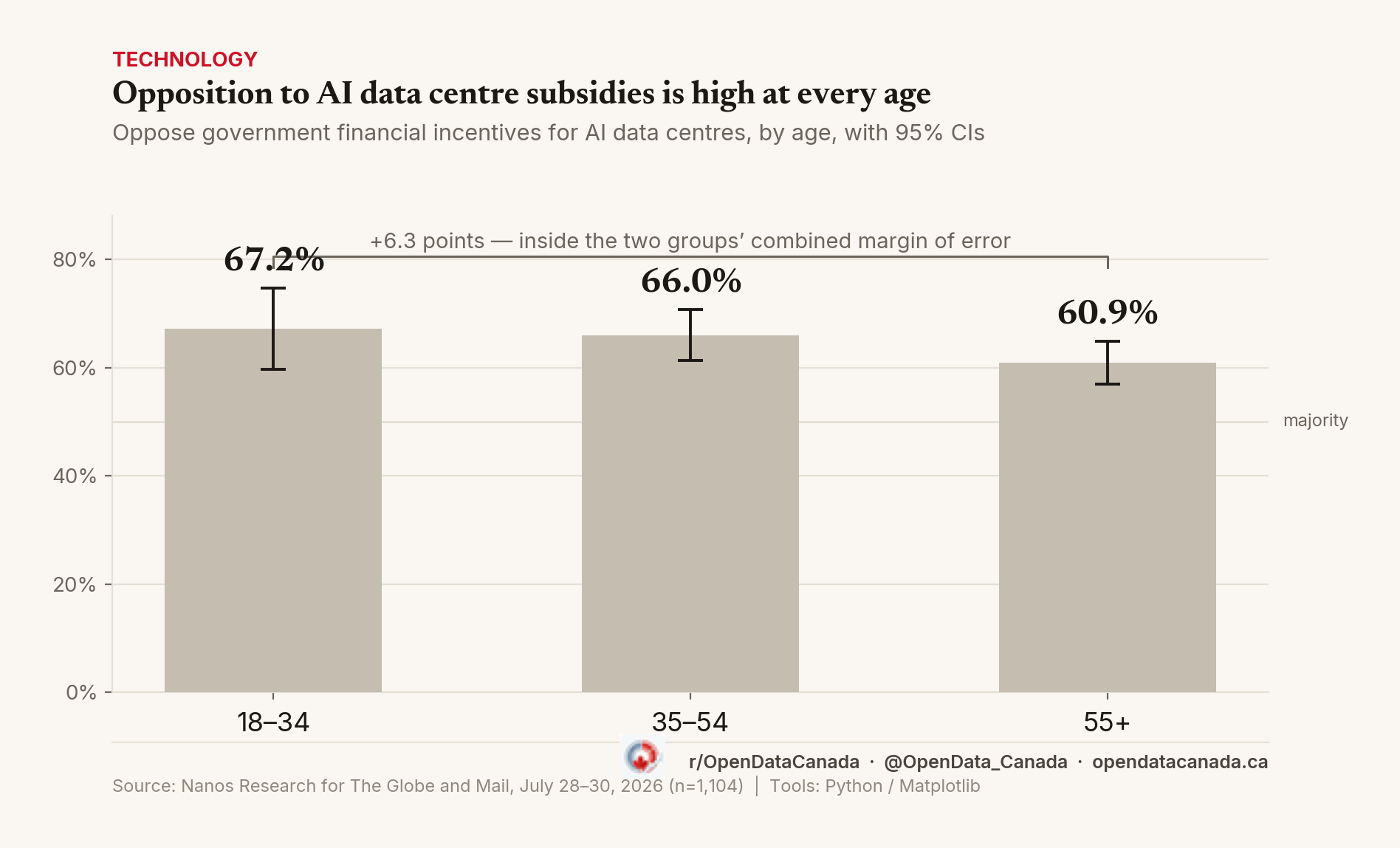
Opposition to subsidies is high in every age group: 67.2% among 18-34, 66.0% among 35-54, 60.9% among 55+. The 6.3-point spread between the youngest and oldest groups is inside their combined margin of error, not distinguishable from chance. This is a near-consensus across generations, not a generational fight.
Two different attitudes, not one
The two questions aren't measuring the same thing. Believing AI data centres will hurt the economy is a minority view at every age, 28% to 38%. Opposing government subsidies for them is a majority view at every age, 61% to 67%, roughly double.
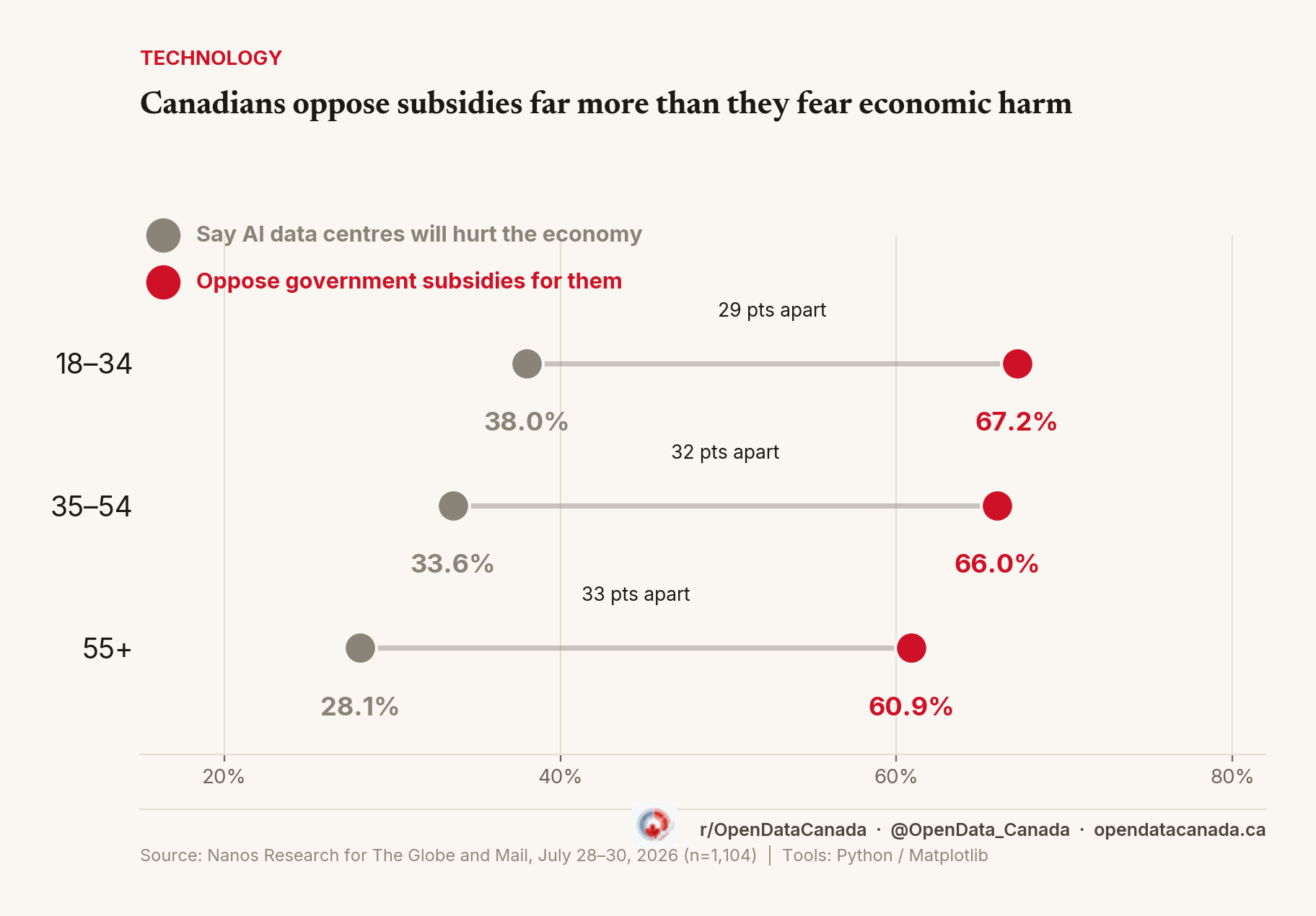
Nanos doesn't publish a joint breakdown of the two questions, but a gap this size implies a large share of subsidy opponents don't actually think the centres will hurt the economy. The opposition looks rooted at least partly in a broader skepticism of subsidizing private industry with public money, not only AI-specific pessimism.
The sharpest divide is regional
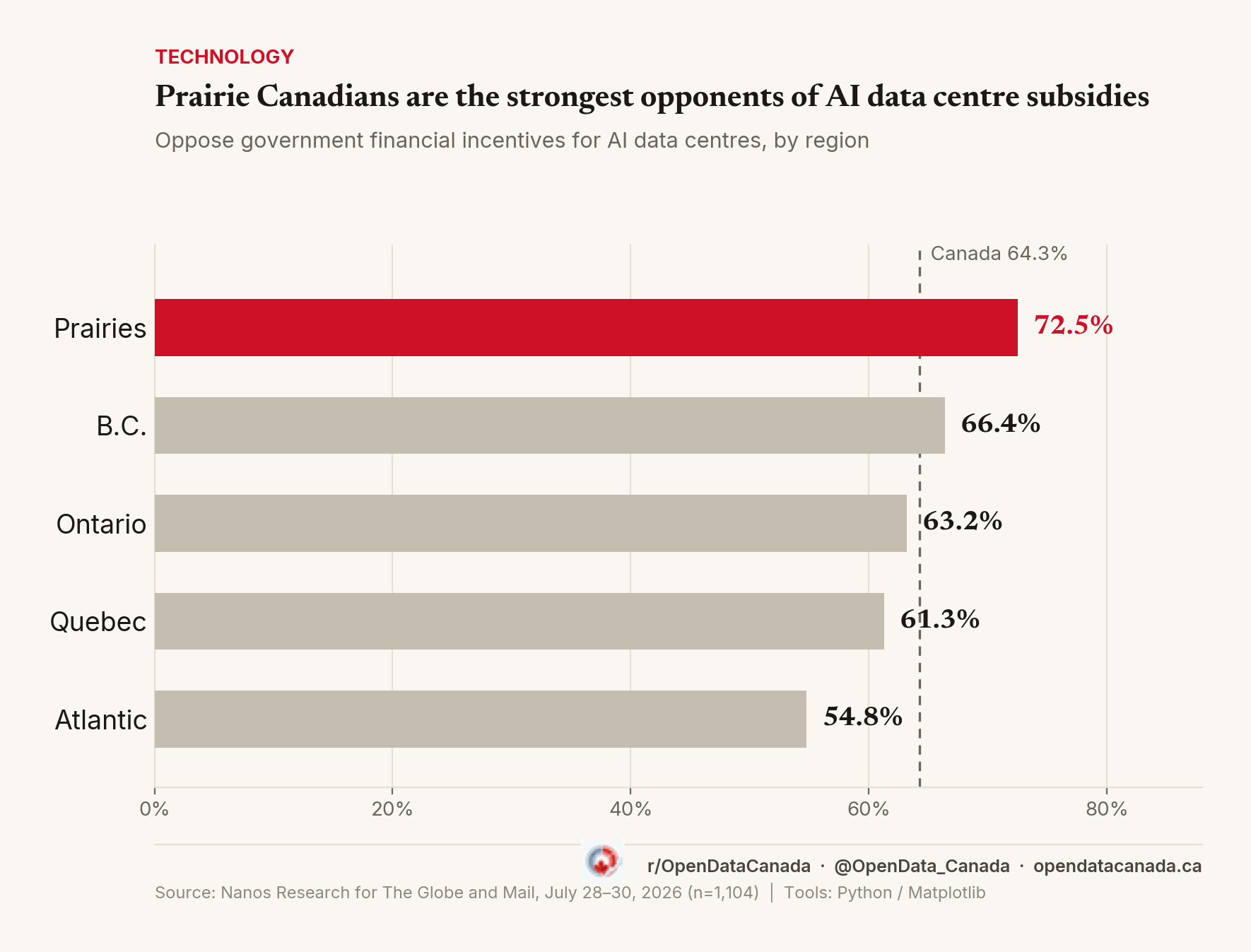
Region, not age, is where Nanos's own significance testing flags the strongest difference on the subsidies question. Prairie residents oppose subsidies at 72.5% combined, and 49.9% oppose outright, both the highest of any region and well above the 64.3% national average.