Article · Environment · 6 min read
Older Canadians are more worried about climate change than Gen Z
New StatCan survey data flips the usual climate-anxiety script. Canadians 65 and older report the highest concern of any age group, while 15-to-24-year-olds report the least.
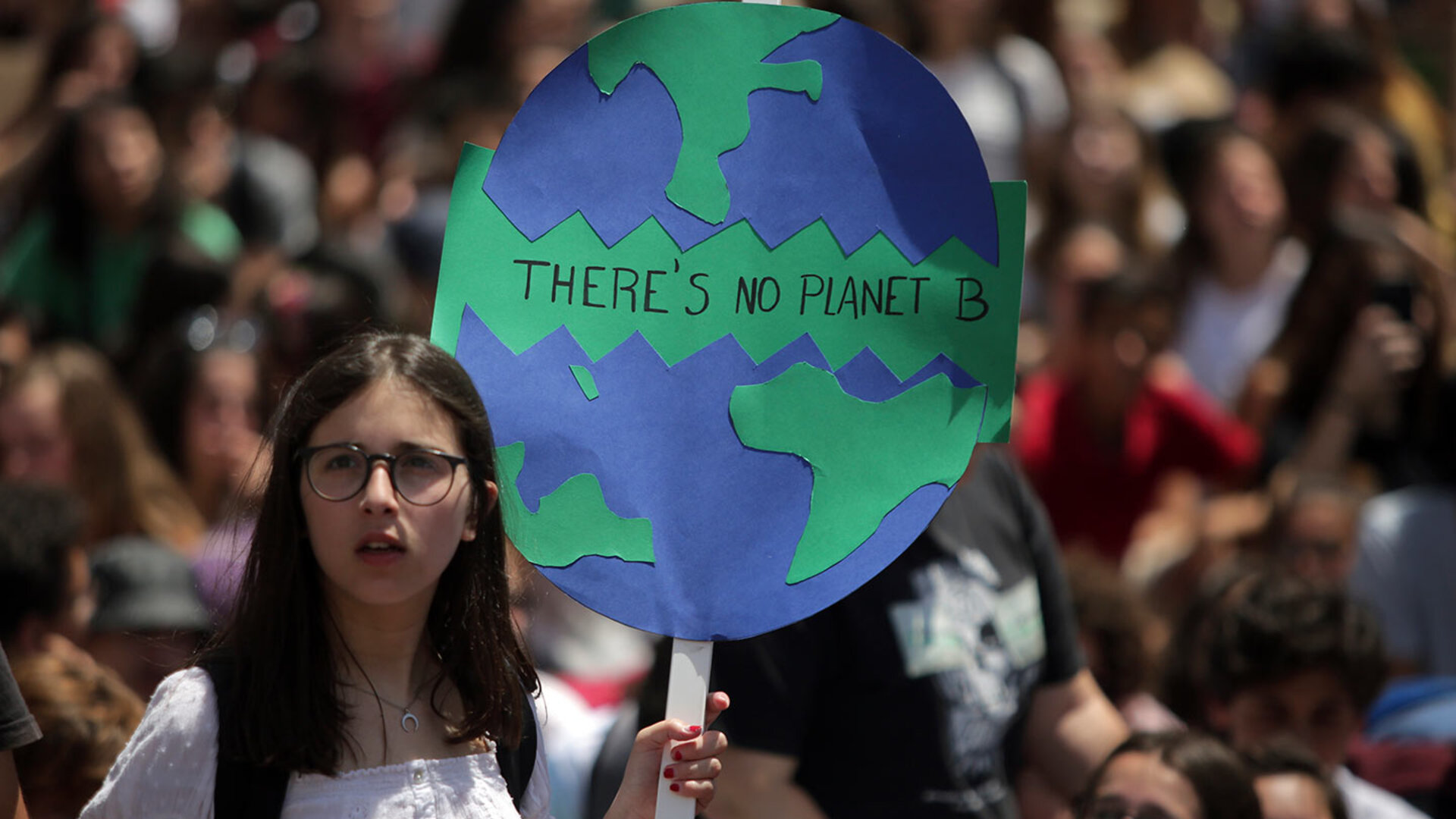
Picture climate anxiety in Canada and you probably picture a teenager: school strikes, a kid yelling at a podium. Statistics Canada's newest survey says that picture is wrong. Canadians 65 and older are the most worried age group about climate change. Fifteen-to-24-year-olds are the least worried.
The numbers come from the Canadian Social Survey's Quality of Life, Climate Change and Trust module, fielded April 25 to June 16, 2025 across the 10 provinces, with a 40.3% response rate. It's a representative sample, not a poll of activists or a headcount at a march.
The generational anxiety story doesn't hold up
Break "high concern" down by age and the pattern is close to a flat line with one clear outlier at the top:
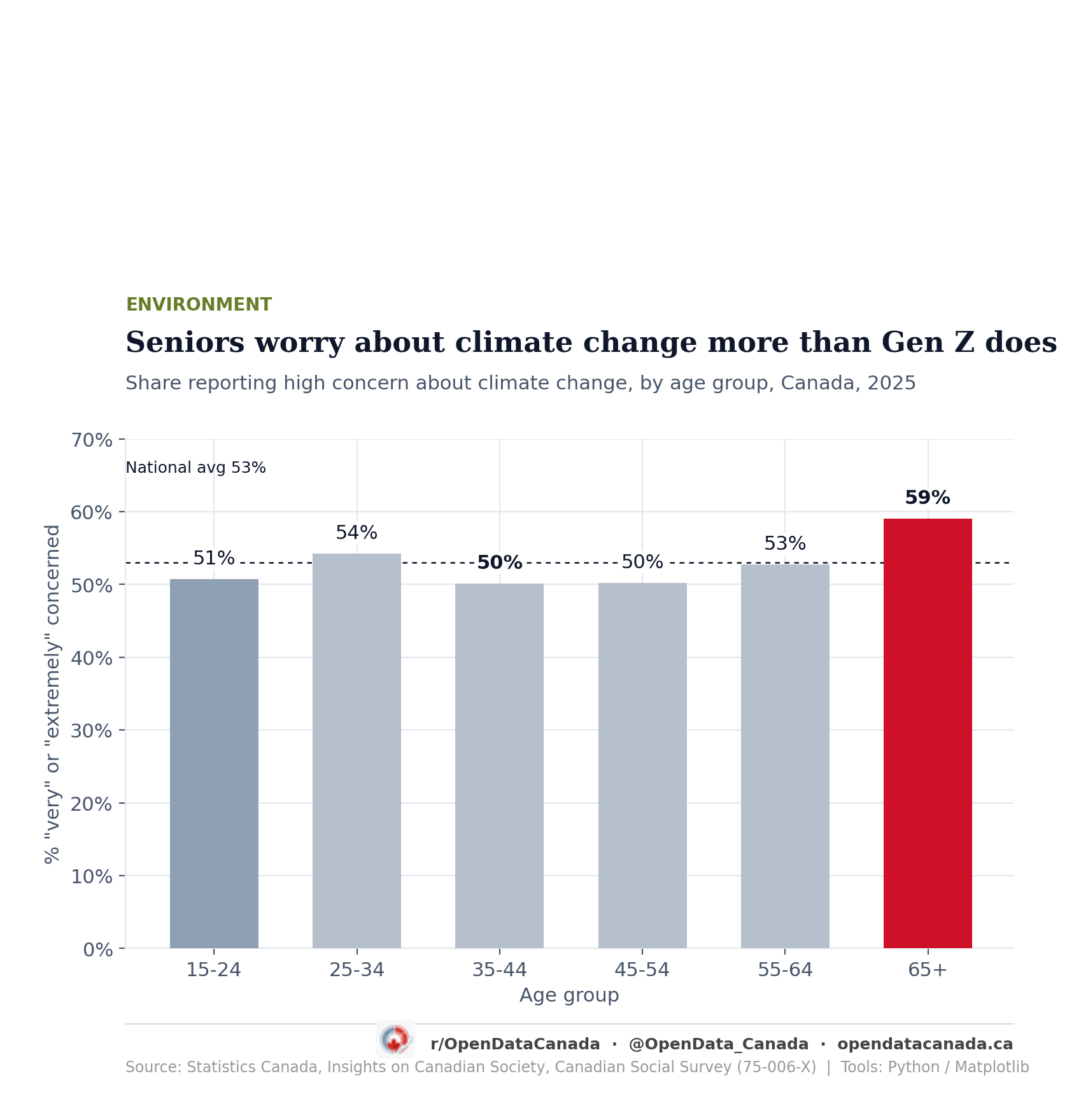
Every age group from 15 to 64 sits within a few points of the 53% national average. Concern jumps to 59% only among seniors, a wider gap than between any other two adjacent groups. 15-to-24-year-olds and 35-to-44-year-olds are effectively tied for last place, at 50.7% and 50.1%.
That's the opposite of what most "eco-anxiety" coverage assumes. The school-strike generation isn't the most worried one. The generation with the fewest years left to live through a warming climate is.
Concern isn't the same as stress, and that's where youth shows up
There's a catch that keeps this honest. Concern and stress are different questions in the survey, and they don't move together. Asked how often they feel stressed specifically about climate change, the age pattern flips:
| Age group | High concern | Feels stressed monthly+ |
|---|---|---|
| 15–24 | 50.7% | 32.5% |
| 25–34 | 54.2% | 34.1% |
| 35–44 | 50.1% | 29.4% |
| 45–54 | 50.2% | 24.3% |
| 55–64 | 52.7% | 27.0% |
| 65+ | 59.0% | 30.4% |
25-to-34-year-olds report the highest monthly climate stress of any group, narrowly ahead of seniors. 15-to-24-year-olds are a close third, despite reporting the lowest overall concern. Fewer young Canadians cross the line into "very" or "extremely concerned," but the ones who do feel it more often. Older Canadians are more likely to say they're worried. Younger adults who are worried are more likely to say it's actively stressing them out. Neither pattern matches the "youth are uniquely anxious" story that usually runs.
Where the rest of the gap comes from
Age isn't the only divide in the data. It might not even be the biggest one. Gender, education and geography all move the concern number more than age does:
- Gender: 58.6% of women report high concern versus 47.9% of men, an 11-point gap, roughly the same size as the entire age-group spread.
- Education: 60.1% of university graduates versus 45.7% of Canadians without a high school diploma.
- Urban vs. rural: 54.4% versus 45.5%.
- Province: Nova Scotia is highest at 61.2%, Alberta is lowest at 41.8%, a 19-point spread that's the largest gap in the entire dataset.
- Immigration status: concern rises with recency of arrival, from 51.3% among non-immigrants to 57.7% among immigrants to 61.1% among non-permanent residents.
That provincial spread is wide enough to be worth mapping on its own:
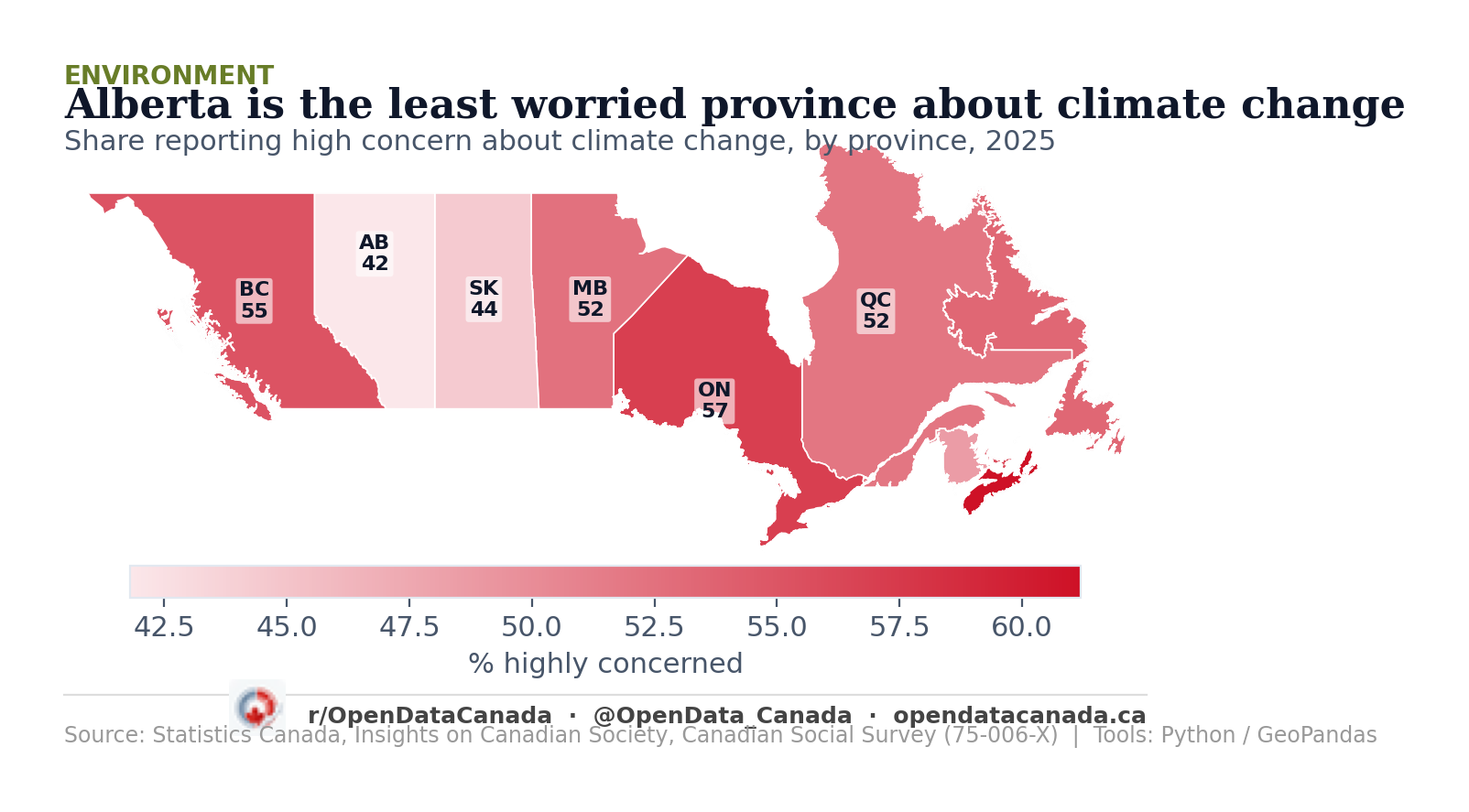
Nova Scotia tops the list at 61.2%, followed by Prince Edward Island at 55.9% and British Columbia at 55.2% (both provinces are too small to carry a printed number on the map above, but their fill colour reflects the value). Alberta and Saskatchewan are the only provinces more than five points below the national average, at 41.8% and 44.4%. New Brunswick, at 48.6%, trails its Atlantic neighbours by a wide margin.
Age matters. But it's a smaller factor than where you live, how much education you have, or your gender.
More concern, more action
The survey also asked what people actually do. Whatever the demographic split, the relationship between concern and behaviour holds up: the more concerned and stressed someone is, the more likely they are to act.
| Action | Low concern | High concern, less than monthly stress | High concern, monthly+ stress |
|---|---|---|---|
| Reduce food waste | 52.9% | 71.9% | 79.3% |
| Reduce energy use | 44.5% | 64.4% | 72.6% |
| Transit / carpool / bike / walk | 24.3% | 32.8% | 46.1% |
| Avoid air travel | 8.8% | 14.3% | 23.3% |
Nationally, 65% of Canadians say they reduce food waste and 57% reduce energy consumption for environmental reasons. Only 32% regularly use transit, carpool, bike or walk instead of driving, and just 14% avoid air travel. The gap between the least and most concerned groups is widest for the highest-friction actions: avoiding flights (2.6 times more likely) and changing how you commute (1.9 times). It's narrowest for low-effort habits like cutting food waste (1.5 times). Concern doesn't just predict more action. It predicts the biggest jump in the actions that cost people the most convenience.
Why this matters
Climate campaigns, and a lot of climate journalism, run on a youth-anxiety frame. Not without reason: young people led the school strikes that made climate protest visible in Canada. But StatCan's numbers point somewhere else. The demographic with the most measured concern also votes at a higher rate, has more savings and property exposed to climate-linked costs like insurance and flood risk, and shows up least in the imagery used to cover the issue. If concern predicts behaviour change, and the action data above says it does, a 59% concern rate among seniors is a bigger lever than a 51% rate among a smaller, younger cohort. Young Canadians aren't indifferent. The group that's already most engaged, and easiest to reach through existing institutions, is older than the coverage assumes. We also looked at how Canadians' views of AI data centres split by age.