Technology · Public opinion
Young Canadians Are the Most Pessimistic About What AI Will Do to Jobs
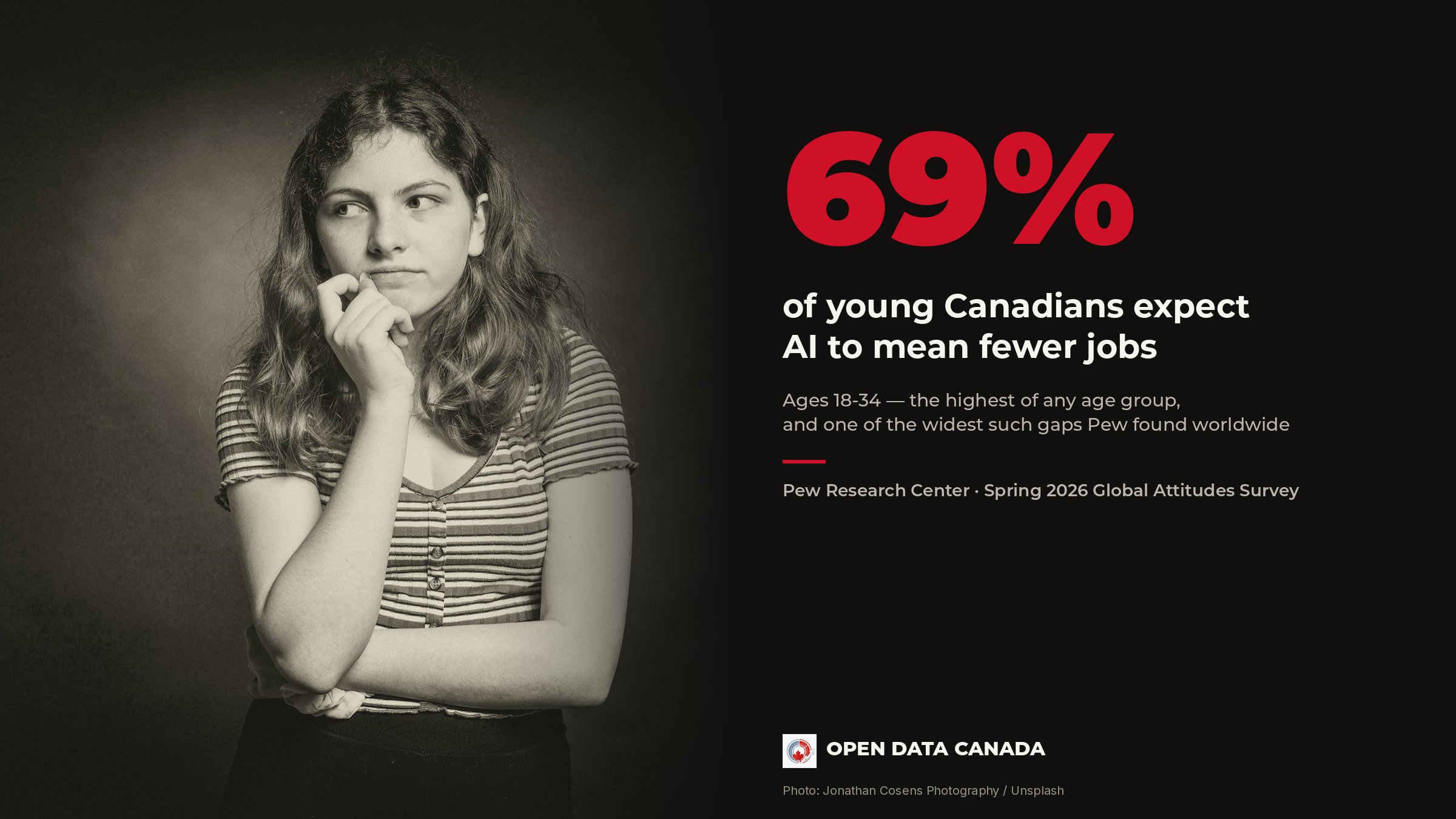
69% of Canadians aged 18-34 expect AI to mean fewer jobs in Canada over the next 20 years — more than any older age group, and one of the larger such generational gaps Pew found anywhere in the world.
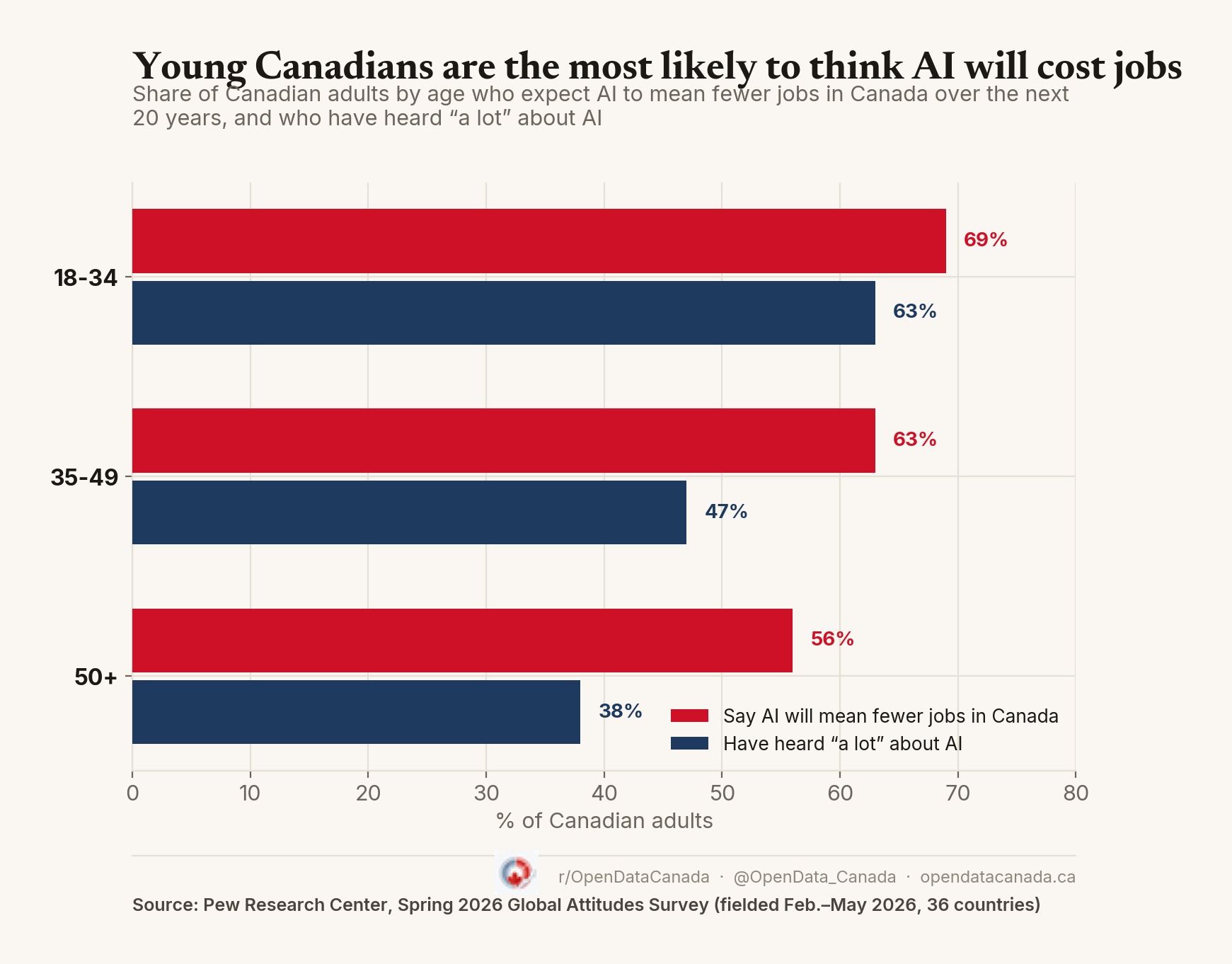
Ask Canadians what AI will do to jobs over the next 20 years, and the youngest adults are the most convinced it's bad news. In a Pew Research Center survey fielded this spring, 69% of Canadians aged 18 to 34 said AI will mean fewer jobs in Canada. Among 35-to-49-year-olds, that drops to 63%. Among Canadians 50 and older, it's 56%.
That's a 13-point gap between the youngest and oldest adults — a real generational split on one of the biggest questions about where the economy is headed.
Pew asked this question in 36 countries, and in most of them, age doesn't move the answer much. Canada is one of just four where it does: alongside France, Singapore and Sweden, the gap between young and old is wide enough to be statistically meaningful. Everywhere else, younger and older adults see AI's effect on jobs about the same way. In Canada, they don't.
The worry goes beyond jobs
It's not only jobs. Pew also asked whether AI will widen the gap between rich and poor, and 41% of Canadians said yes — one of the higher shares among the countries surveyed. Younger Canadians are again more likely to hold this view than older ones, a pattern Pew also saw in Australia, Poland and Singapore. Pew didn't break out Canada's exact numbers by age on this question, but in the U.S., where it did, adults under 35 were far more likely than those 50 and older to expect AI to widen the wealth gap — 56% versus 38%.
They're also the most exposed to AI
That worry isn't coming from a group that says it knows little about AI. Young Canadians are actually the most likely to say they've heard a lot about it: 63% of 18-to-34-year-olds, compared with 47% of 35-to-49-year-olds and 38% of those 50 and older. The people most worried about AI costing jobs are also the people who say they follow it most closely, which cuts against the idea that this is a fear born of unfamiliarity.
Canada is among the more worried countries
Zoom out to all Canadian adults, not just the young, and 61% expect AI to mean fewer jobs, behind only Australia (76%), South Korea (76%), the U.S. (71%) and Greece (68%) among the 36 countries surveyed. Richer countries tend to be more pessimistic on this question generally: Pew found a 0.60 correlation between a country's GDP per capita and the share expecting job losses, and Canada, as a high-income country, fits that pattern.
That doesn't mean young Canadians are down on AI across the board. Pew's broader international data actually finds younger adults tend to have more mixed or upbeat feelings about AI in daily life than older ones. Pew didn't publish Canada's age breakdown on that particular question, so what this survey shows is more specific than "young Canadians are pessimists": they are, specifically, the age group most worried about what AI will do to jobs.