Immigration
Canada could grant a record 580,000 people permanent residence in 2027. Most already live here.
The regular target stays at 380,000. A one-time measure adds up to 200,000 more for people already in the country. The number arriving from abroad without a Canadian permit is set to be the smallest since the pandemic.
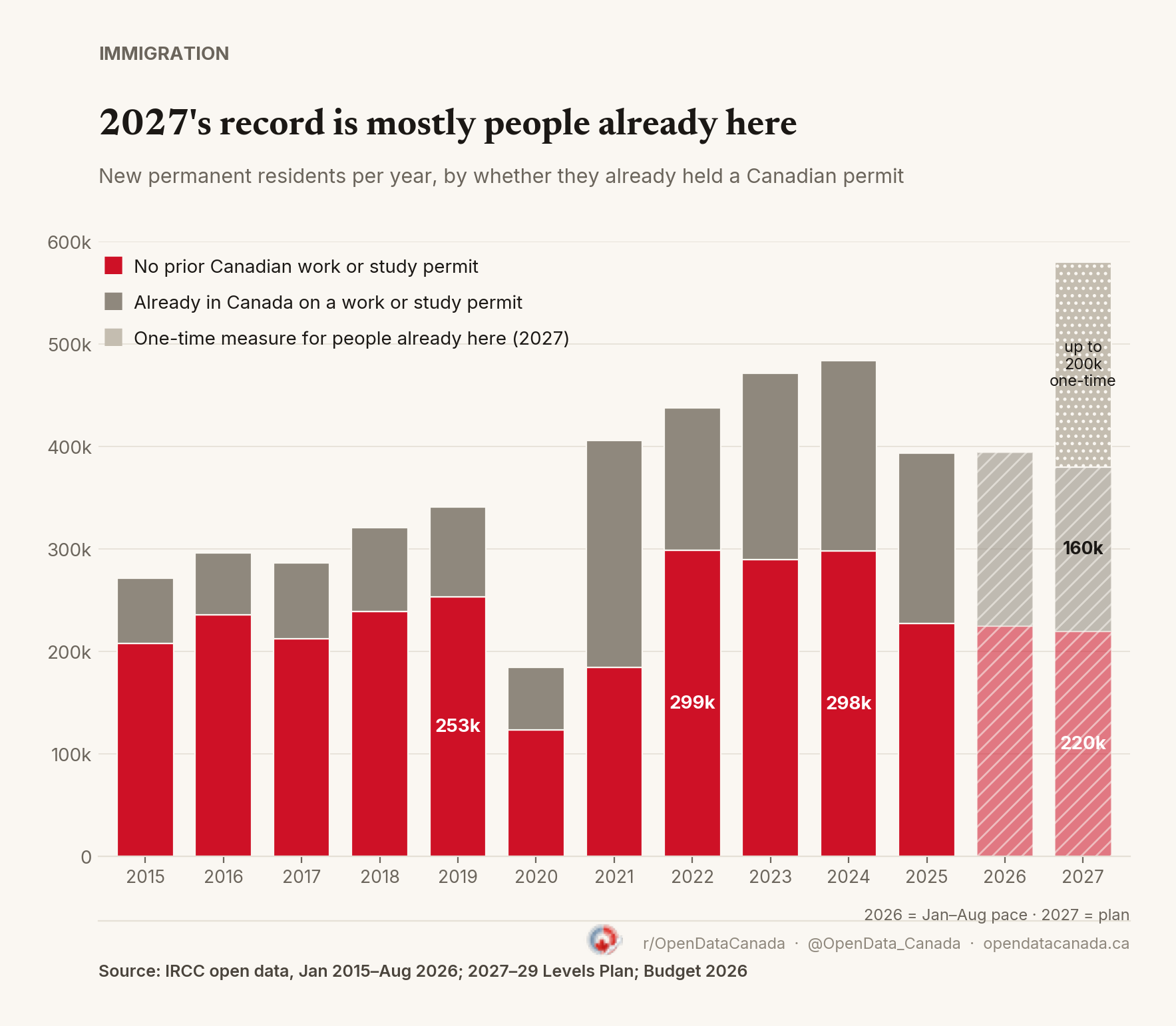
A chart doing the rounds since Thursday's budget shows 2027 towering over every year on record: about 650,000 new permanent residents, against a previous high of 483,655 in 2024. The past bars are right. They match the admissions data from Immigration, Refugees and Citizenship Canada (IRCC). The question is what the 2027 bar is made of.
Two plans stacked on top of each other
The 2027-2029 Immigration Levels Plan keeps the regular target at 380,000 new permanent residents a year. On top of that, the budget opens a one-time door: "Up to 200,000 temporary residents already in Canada would have the opportunity to become permanent residents by the end of 2027."
Half of those spots go to workers who qualify for Express Entry or a provincial nominee program. The other half go to people "who are already in Canada and have been waiting for many years" on humanitarian grounds.
IRCC says these transition measures come "in addition to the targets in our Immigration Levels Plan." That puts 2027 at up to 580,000. Two smaller measures from last year's budget, for protected persons and work permit holders already here, also run into 2027.
Who is actually new
IRCC publishes how many new permanent residents already held a Canadian work or study permit. Take them out and what's left is the most that could have come straight from abroad.
 Download chart · Download data (CSV)
That share keeps climbing. In 2022, 32 percent of new permanent residents already held a permit. By 2025 it was 42 percent, and so far in 2026 it is 43 percent.
The other group, people with no prior permit, peaked at about 299,000 in 2022 and held near 298,000 in 2024. It fell to about 227,000 in 2025 and is on pace for roughly 225,000 this year.
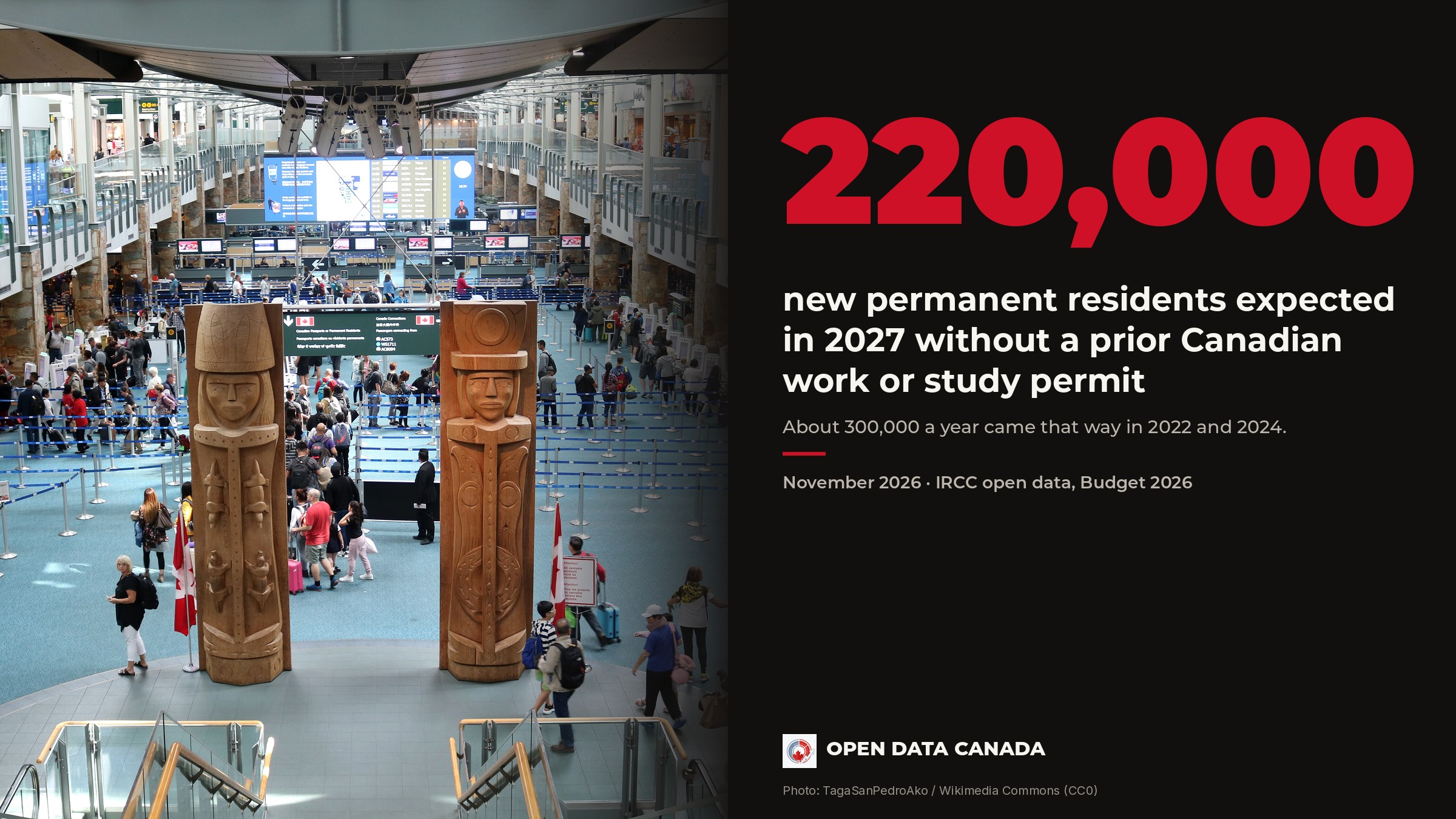
If 2027 follows the same split, about 160,000 of the 380,000 regular spots go to people already here and about 220,000 to everyone else. Add the one-time measure and the total could pass 580,000, yet the group arriving without a Canadian permit would be the smallest since 2021, when pandemic border rules were still in place. Even that 220,000 includes refugees and spouses who were already in Canada, so true arrivals from abroad will be lower.
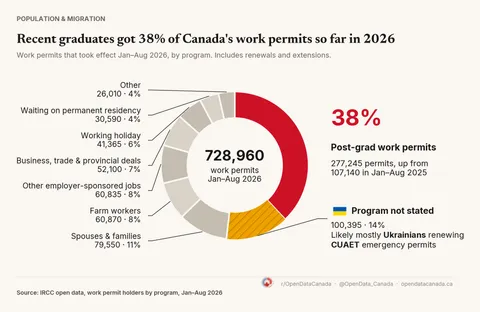
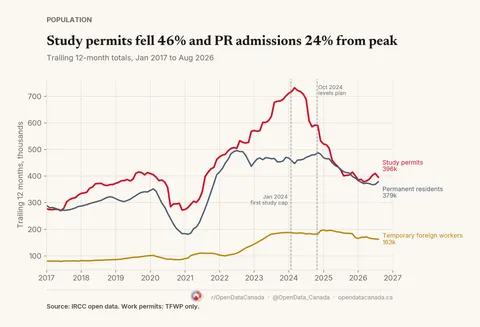
Temporary arrivals are shrinking too. The plan caps them at 370,000 a year. New foreign workers arriving from January to August 2026 were down 57 percent from the same months of 2024, and new asylum claims were down 68 percent.
Where Ukrainians fit
About 2.78 million temporary residents were in Canada on July 1, according to Statistics Canada. Among them are Ukrainians who came under the emergency travel program known as CUAET. Their open work permits can be extended for up to three years if they apply by March 31, 2027. An extension is not permanent status.
That is where the new measure matters. CUAET holders who are working are temporary residents already in Canada, so they could become permanent residents through its worker half, if they qualify for Express Entry or a provincial nominee program. The plan doesn't single them out; they compete on the same terms as other work permit holders.
Who has stayed under CUAET, and why, is covered in an earlier piece.
A bigger number, fewer arrivals
The 580,000 is a count of people getting permanent status, not people getting off planes. Ottawa is turning residents it already has into permanent ones while letting fewer new people in. The tall bar on the viral chart is mostly the first of those.