Language · Explainer · 5 min read
29% of Canadians can speak French, and Ontario has 1.56 million of them
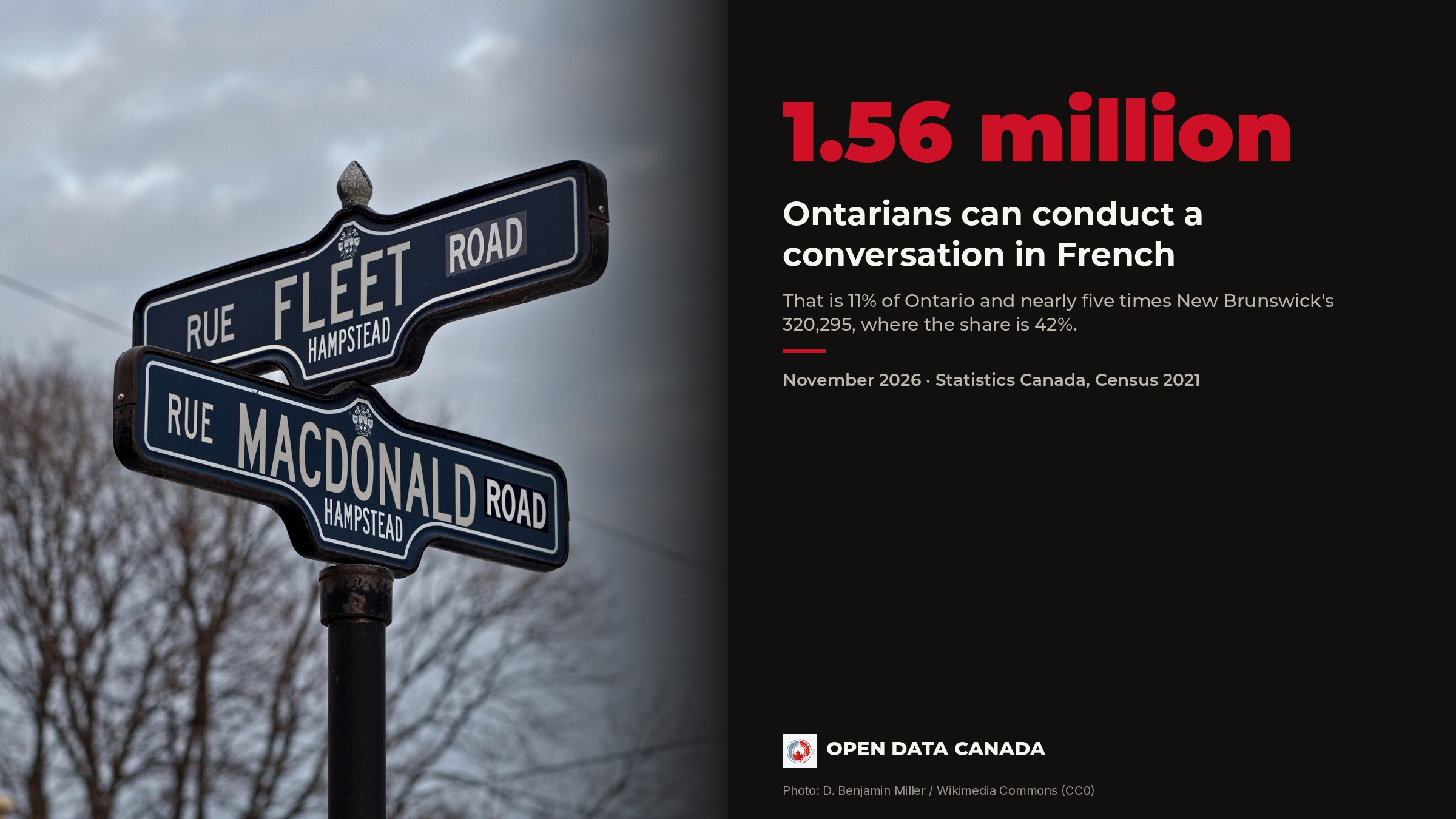
Nearly three in ten Canadians can hold a conversation in French, 10.67 million people in the 2021 Census. Quebec is at 93.7%. Outside Quebec, 9.9% of residents can converse in French, but Ontario alone has 1.56 million, nearly five times New Brunswick.
Key facts
- 10,669,570 people, 29.1% of the population, could conduct a conversation in French in the 2021 Census.
- Quebec is at 93.7%. The rest of Canada is at 9.9%.
- New Brunswick is at 41.9%. No other province or territory is above 14.5%.
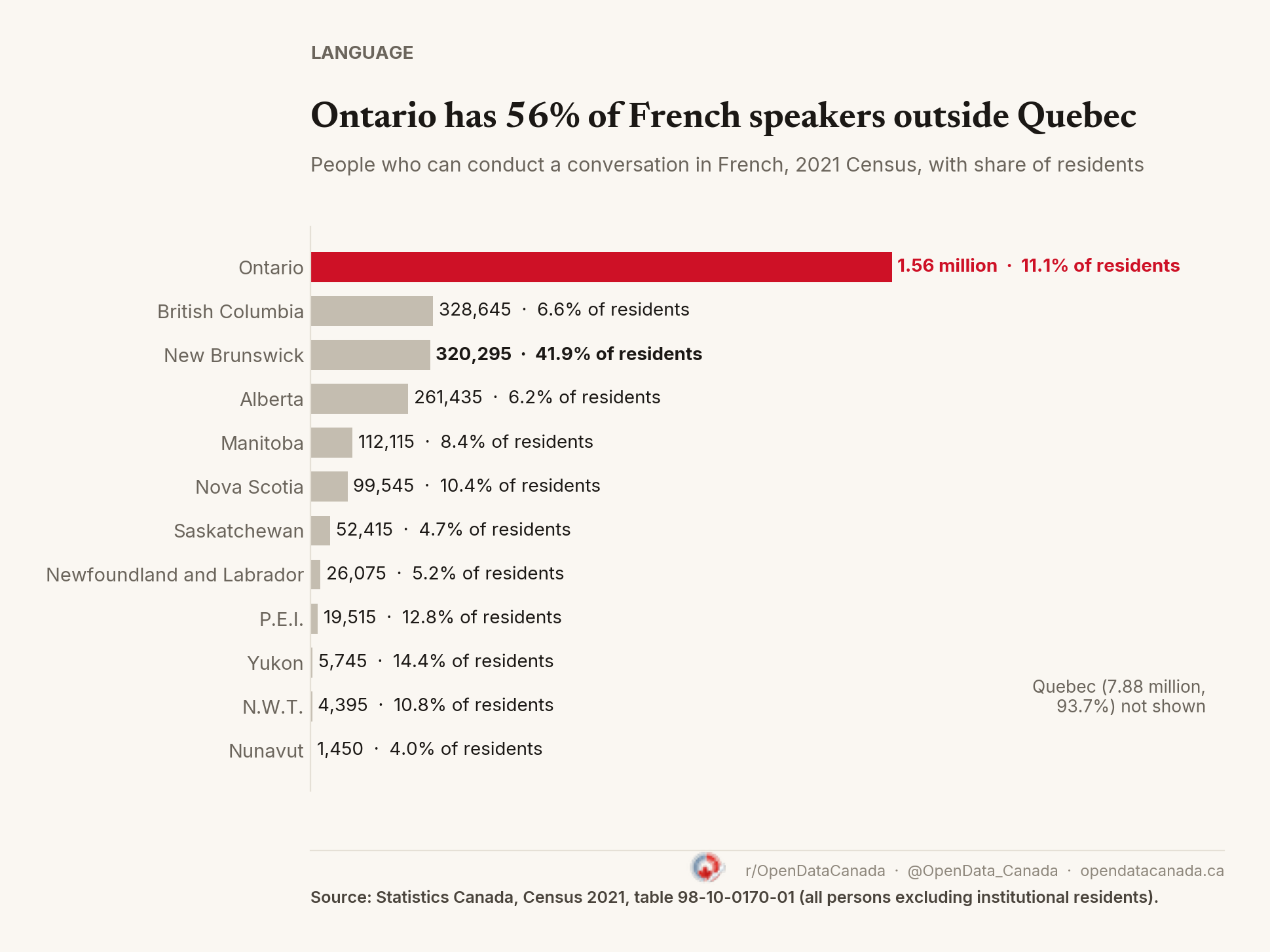
- Ontario has 1,558,675 French speakers at 11.1%, nearly five times New Brunswick's 320,295.
What percentage of Canadians speak French?
About 29%. The 2021 Census counted 10,669,570 people who could conduct a conversation in French, out of 36,620,955 residents. That count leaves out people living in institutions such as care homes and prisons. Of those, 4,087,890 could do it in French only and 6,581,680 in both official languages. The 6.58 million bilingual speakers are 18.0% of the population.
"Speak French" here means the census question on knowledge of official languages, which asks whether a person can carry on a conversation in English, French or both. Answers are self-reported. The measure is broader than mother tongue or the language spoken at home, which would give smaller counts.
Where do they live?
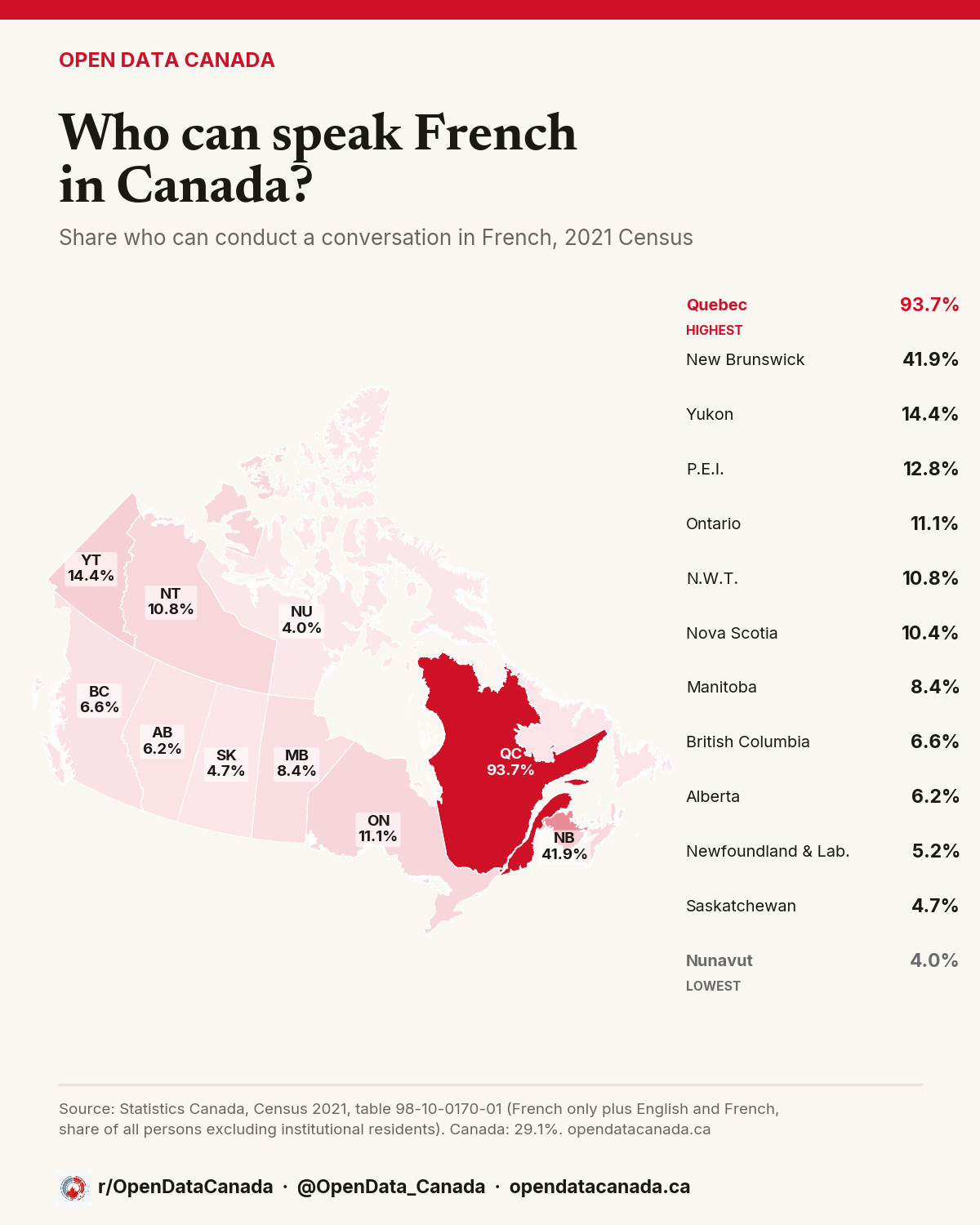
Quebec has 7,879,255 French speakers, 74% of the national total. Outside Quebec, the count is 2,790,315 of 28,214,050 people, or 9.9%.
New Brunswick, the country's only officially bilingual province, is at 41.9%. Every other province and territory is below 15%, from 4.0% in Nunavut to 14.4% in Yukon, which has about 40,000 residents. P.E.I. is at 12.8%, Ontario at 11.1%, Nova Scotia at 10.4%. Without Quebec and New Brunswick, the rest of the country is at about 9.0%.
Which province has the most French speakers outside Quebec?
Ontario, by a wide margin. Its 1,558,675 French speakers are 56% of all those outside Quebec. New Brunswick, the only officially bilingual province, has 320,295. British Columbia has 328,645, slightly more than New Brunswick, and Alberta has 261,435.
Ontario trails New Brunswick on share and leads on headcount because the provinces differ so much in size. Ontario has about 14.1 million people, so a small share still adds up to a large number. New Brunswick has about 765,000, so its much larger share covers far fewer people. Nearly all of Ontario's French speakers, 1,519,365 of them, speak English as well.
The census measures ability, not use. People who can conduct a conversation in French are a larger group than those whose first official language is French or who speak it regularly at home, and some language policies use those narrower definitions. Ontario's 1.56 million is a count of ability.
Why this matters for French-language policy
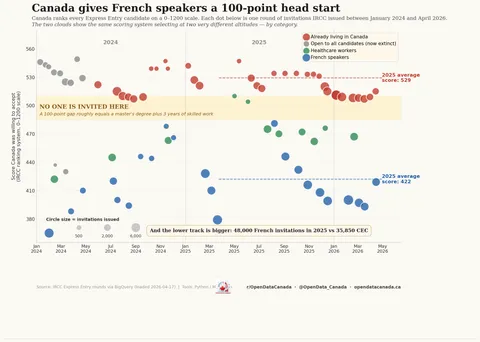
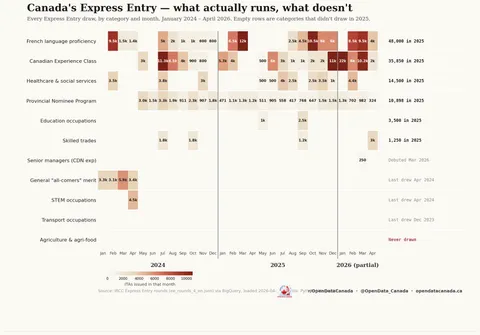
Federal rules that favour French, such as the bonus points in Express Entry, are aimed at communities outside Quebec. Those communities are small in share almost everywhere and large in number only in Ontario. In 2025, French-only Express Entry draws closed about 107 points below Canadian Experience Class draws on average, a gap explained in a separate article.
The 2026 Census results will show whether these patterns have changed. Until then, 2021 is the latest full count.