Immigration · 3 min read
Canada added 219,350 new citizens in eight months, 13% more than 2025 but 20% fewer than 2024
Citizenship grants rebounded in 2026 after a sharp 2025 slump. India, Nigeria and Afghanistan account for three-quarters of the gain.
From January to August 2026, 219,350 people became Canadian citizens, according to Immigration, Refugees and Citizenship Canada (IRCC) data published on 1 October. The same eight months of 2025 produced 193,955. In 2024 they produced 275,845.
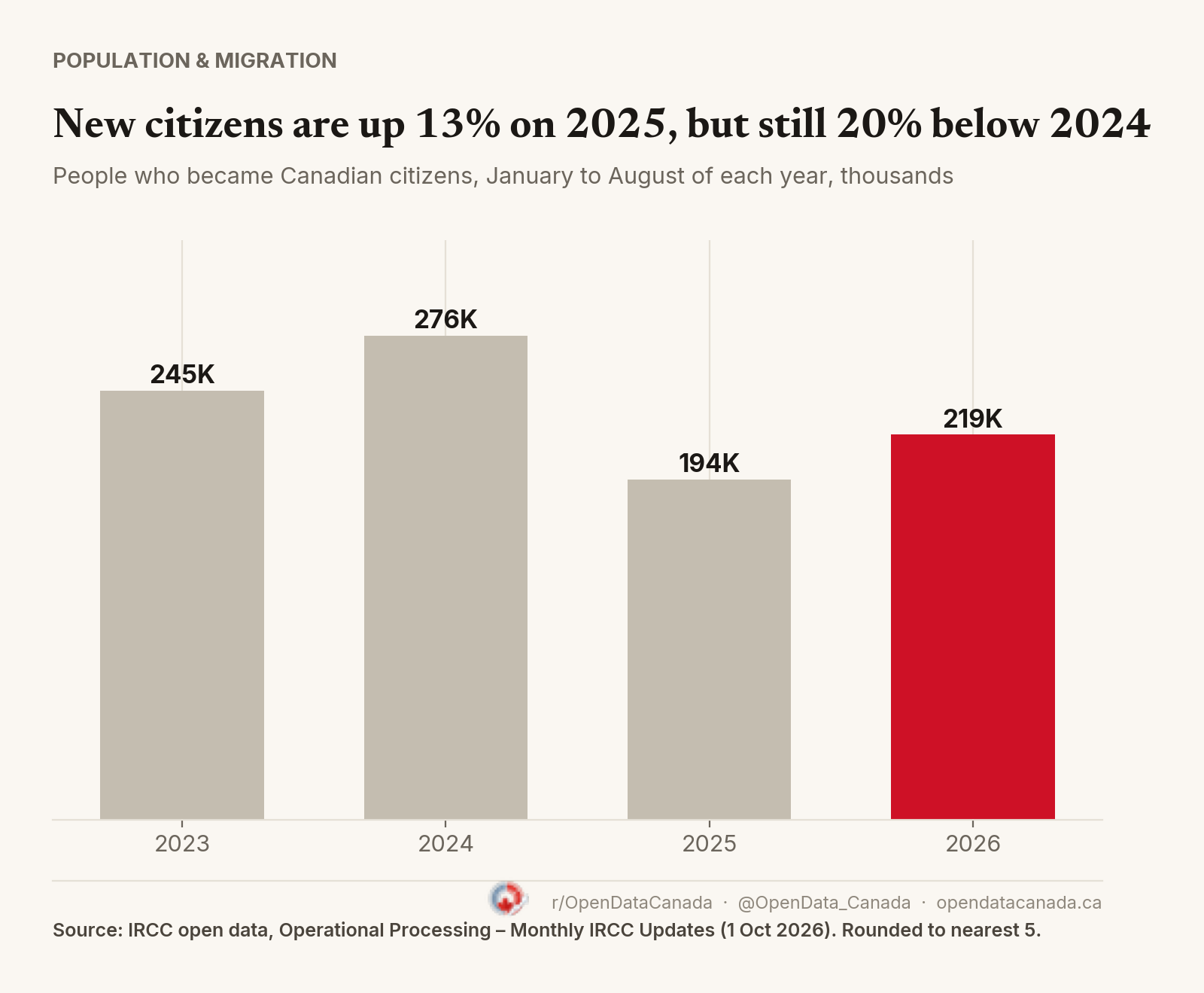
2025 was the low point, and 2026 has recovered about a third of the drop
All of 2025 added 294,170 citizens, down from 375,480 in 2024. Monthly grants fell as low as 17,730 in August 2025. This August the figure was 26,020, up 47 percent on a year earlier. Every month of 2026 has been above 23,000, and March (31,115) and June (30,050) were the busiest.
2025 ran about 82,000 citizens behind 2024 over the same eight months, and 2026 has made back about 25,000 of that. It is still about 56,000 short of 2024. The IRCC data do not explain the 2025 drop.
Three birth countries supply most of the gain
The eight-month total is 25,395 higher than in 2025. India alone accounts for 10,015 of that, Nigeria for 5,270 and Afghanistan for 3,940: 19,225 together, or 76 percent of the rise.
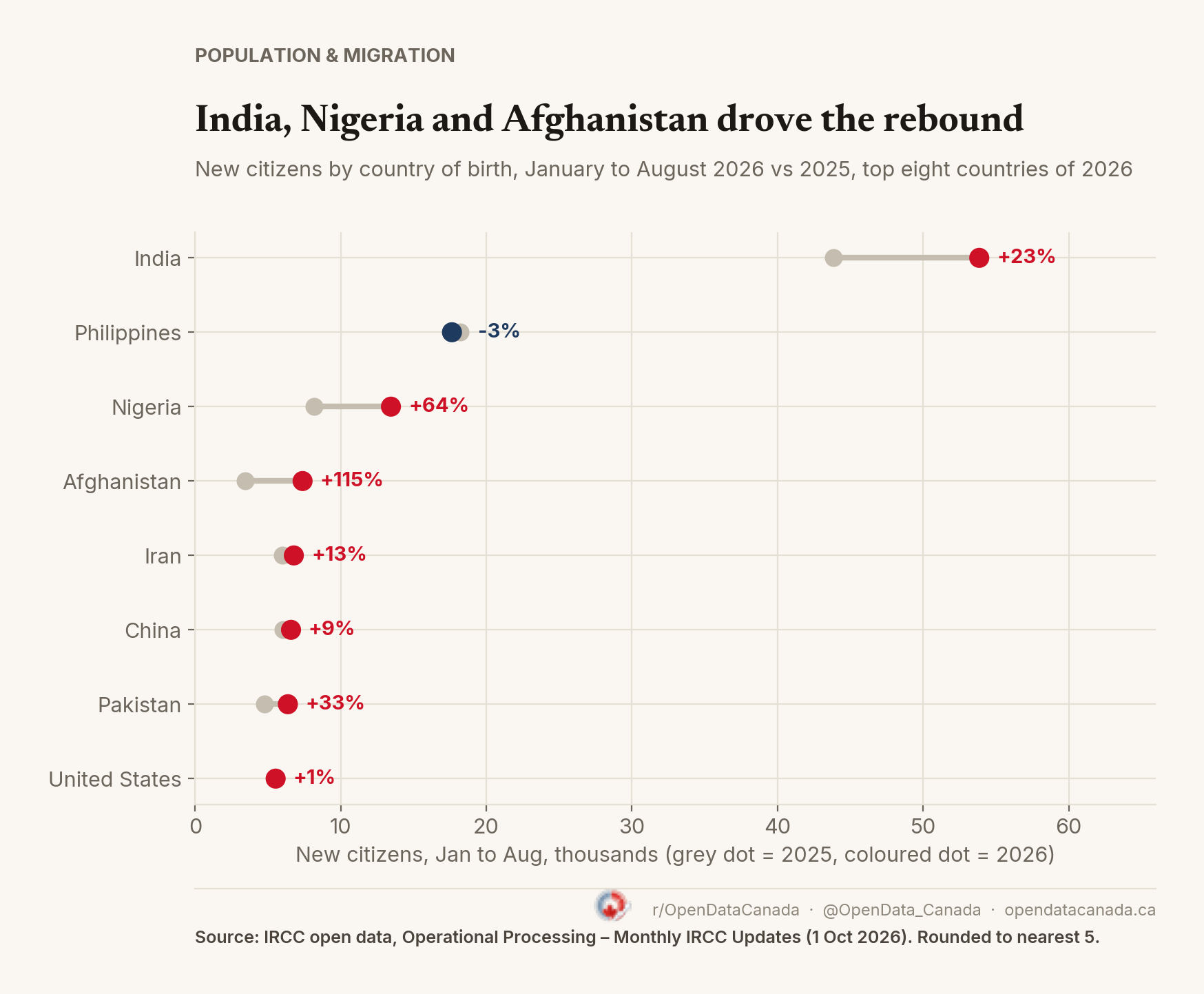
India's 53,860 new citizens are 24.6 percent of the 2026 total, up from 22.6 percent a year earlier. The Philippines, the second-largest source at 17,640, is the only one of 2026's top eight that fell (down 3 percent). France, fourth in 2025, fell 20 percent and dropped out of the top eight. Afghanistan more than doubled, from 3,440 to 7,380.
These are citizens' countries of birth, not the permanent residents currently arriving. Applicants need three years of physical presence as permanent residents within the previous five, so the mix partly reflects earlier admissions. For the other end of the pipeline, see how India became Canada's biggest source of permanent residents and how 2026 admissions compare with the levels plan.