Economy
The last pandemic mortgages are renewing at higher payments
About 12 per cent of outstanding Canadian mortgages are five-year loans signed at historically low rates during the pandemic, and they renew over the next 12 months. The Bank of Canada estimates their payments will rise by about 15 per cent on average.
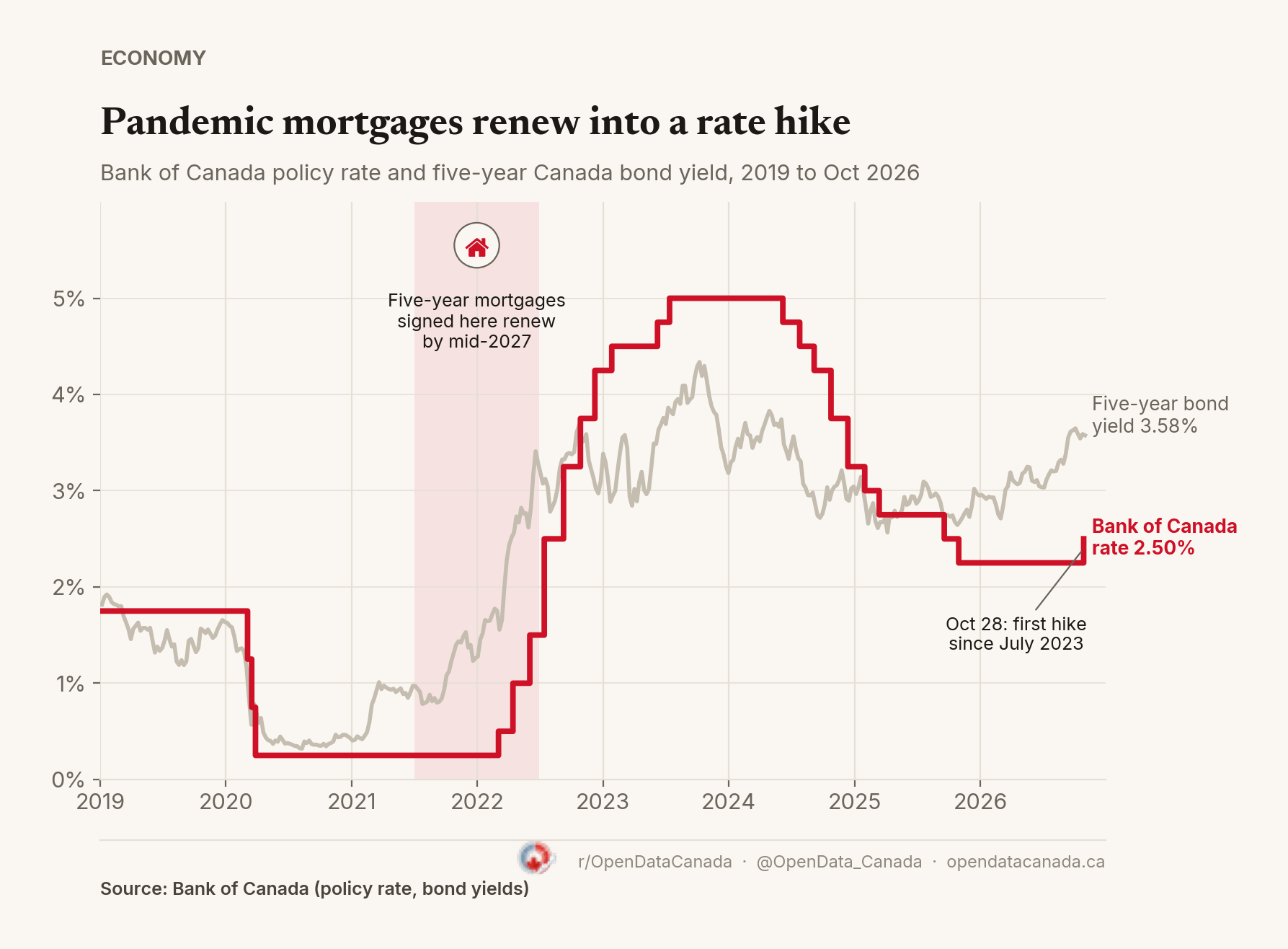
The Bank of Canada lifted its overnight rate by a quarter point, from 2.25 to 2.5 per cent, on October 28. It had held at 2.25 per cent for a year. The reason is oil. The war in the Middle East is in its eighth month, fuel prices are high, and the Bank now expects inflation to reach about 3.5 per cent by the end of the year and average 3 per cent in 2027. Governing Council said it "could be a need to increase the policy rate further."
For most households the hike itself is small. The bigger question is how much room households renewing now have to absorb higher payments, and why some borrowers, particularly in the Toronto area, face tighter refinancing limits than others.
The last of the cheap five-year loans
The overnight rate stayed at 0.25 per cent until March 2022, when the Bank began raising it; by June it was 1.5 per cent. Meanwhile, the five-year Government of Canada bond yield rose as markets anticipated tighter policy. That yield, rather than the overnight rate itself, is the more direct benchmark for five-year fixed mortgage pricing. Between July 2021 and June 2022 it averaged 1.7 per cent. On Tuesday it closed at 3.57 per cent, more than double that average.
Those loans are coming due now. According to this year's Financial Stability Report from the Bank, the last of the five-year, fixed-payment mortgages taken out during the pandemic renew over the next 12 months. They make up about 12 per cent of all outstanding mortgages, and the Bank estimates their payments will rise by about 15 per cent on average.
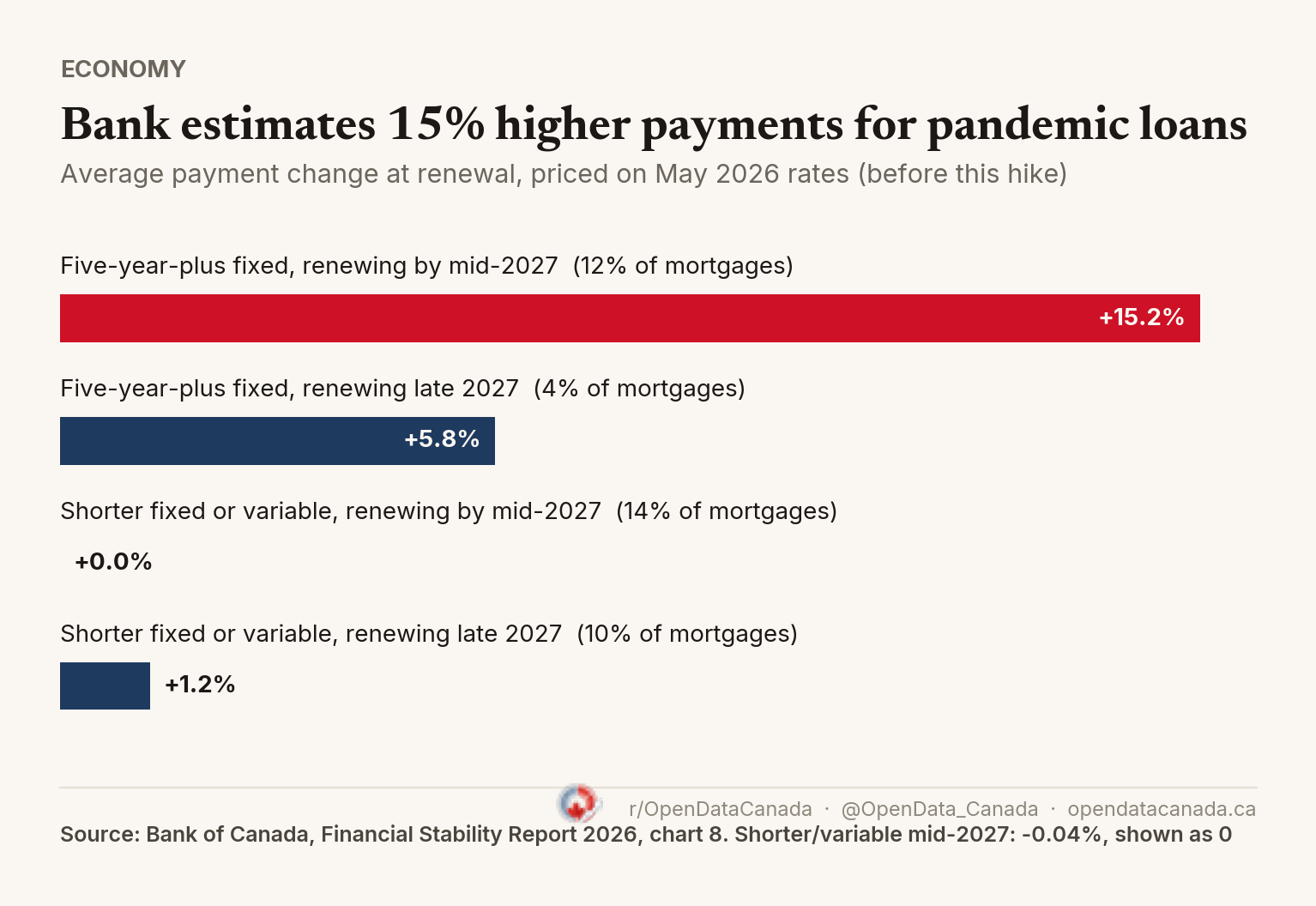
The Bank calculated the 15 per cent estimate using market rate expectations from May 19, 2026, before Wednesday's hike. It is not an updated forecast, and the rate increase does not translate directly into an equivalent change in five-year fixed mortgage rates.
Everyone else renewing is in a different position. The other 14 per cent of mortgages up for renewal in the next year are variable loans or shorter fixed terms signed after rates had already risen in 2022 and 2023. On average their payments barely move.
Most of the pandemic group should cope. According to the Bank, average nominal household disposable income grew about 16 per cent between 2021 and 2025, before adjusting for inflation, and more than 90 per cent of people who renewed in the past year did so at a rate below the one they were stress-tested at when they first borrowed. Some also stretched their amortization to keep payments down.
Where the strain already shows
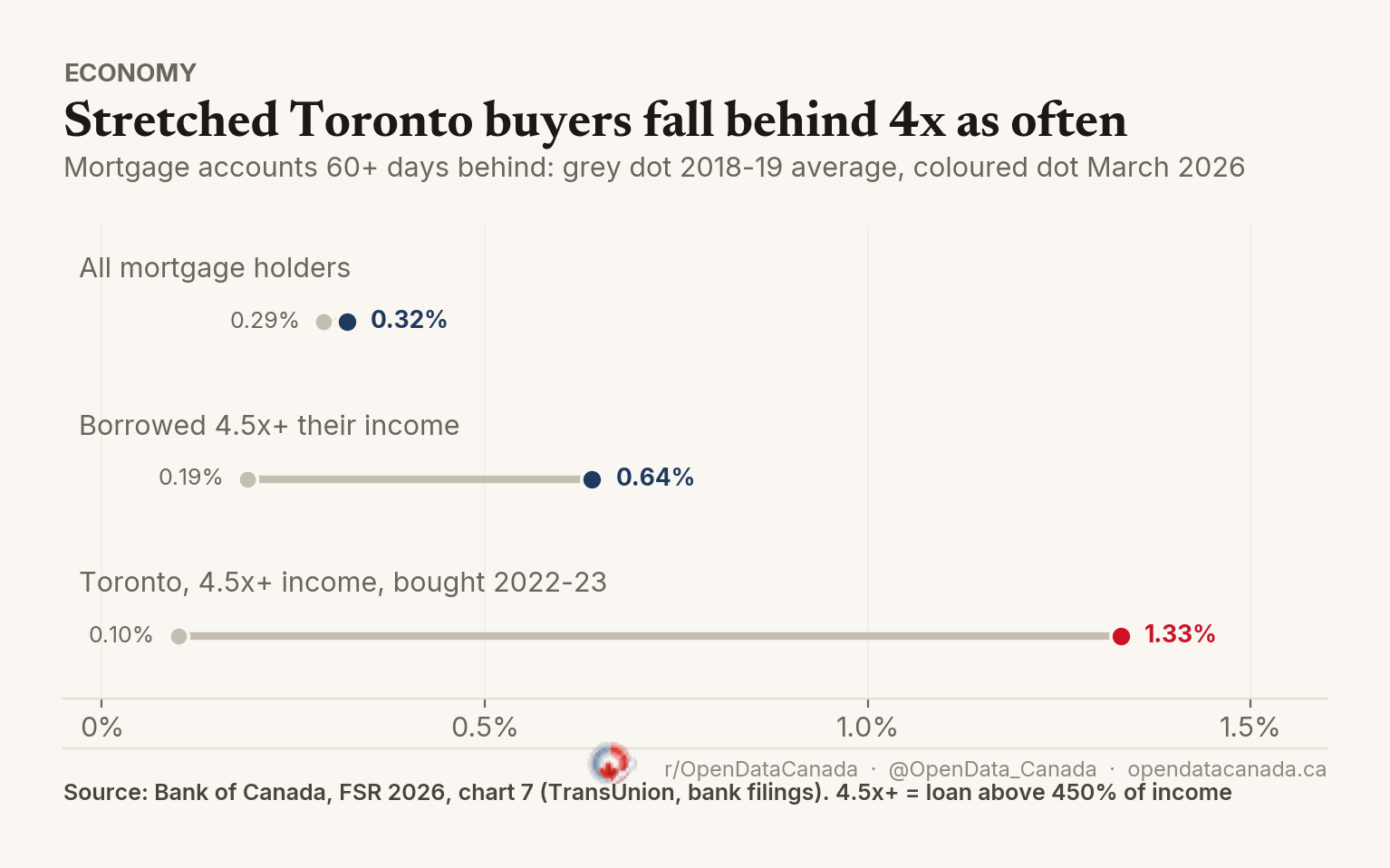
National mortgage arrears remain low, but stress is concentrated among highly indebted borrowers. Only 0.32 per cent of mortgage accounts were more than 60 days behind in March 2026, close to the 2018-19 average of 0.29 per cent.
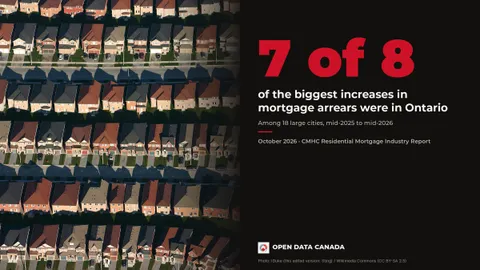
Look at people who borrowed more than four and a half times their income, though, and the picture changes. That group holds about 17 per cent of outstanding mortgage balances, and its late-payment rate has more than tripled from the pre-pandemic level. In Toronto, among people who borrowed that much in 2022 and 2023, near the top of the market, it reached 1.33 per cent, four times the rate for all mortgage holders. Newer figures from Canada Mortgage and Housing Corporation show where late payments are climbing fastest: missed mortgage payments are rising most in Ontario cities.
Falling home prices make the squeeze worse. The typical Canadian home is down about 5 per cent over the past year and 20 per cent from its 2022 peak, with the biggest drops in Ontario and British Columbia. Less equity means less room to refinance. At current prices the Bank estimates about 4 per cent of borrowers renewing in 2027 would not qualify to refinance, rising to about 9 per cent in the Toronto area. If prices fall another 10 per cent, those shares rise to about 7 and 12 per cent.
Being unable to refinance does not necessarily mean being unable to renew. Eligible borrowers who renew with their existing lender can generally avoid requalifying under the stress test, but may have fewer options to extend amortization or access additional borrowing.
A hike aimed at containing broader inflation
Strip out gasoline and inflation is not far from the Bank's 2 per cent target. In September, consumer prices were up 3.1 per cent from a year earlier. Excluding gasoline, they were up 2.2 per cent.
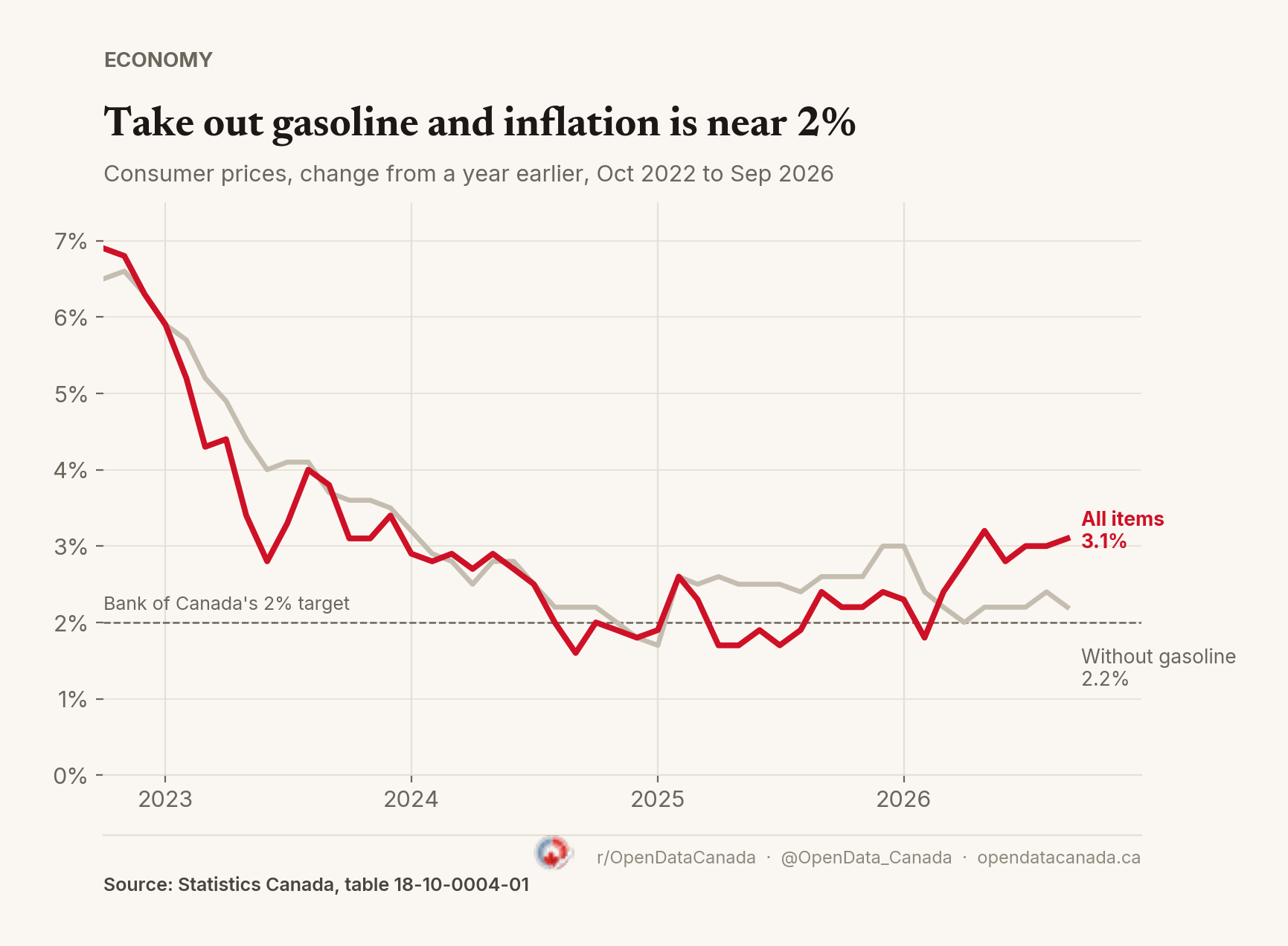
The Bank's argument is that this won't stay contained. High fuel costs raise the cost of making and shipping almost everything, and its business surveys suggest more of those costs will be passed on to customers over the next year. Near-term inflation expectations among households and businesses have risen. The hike is meant to stop an oil shock from turning into broad price growth.
That is a defensible call. But a rate increase does nothing to the price of oil, and a quarter point won't make gas cheaper. Its effect on households comes mostly through borrowing costs, and the borrowers most exposed right now are the ones the Bank's own report flags: pandemic buyers renewing at much higher payments, and stretched Toronto owners with little equity left.
The Bank's next decision is December 9. For the last of the pandemic mortgage holders, the rates they lock in over the coming months will set their payments for the next five years.