Economy · Explainer
407 ETR toll rates 2027: price per km and how much tolls are going up
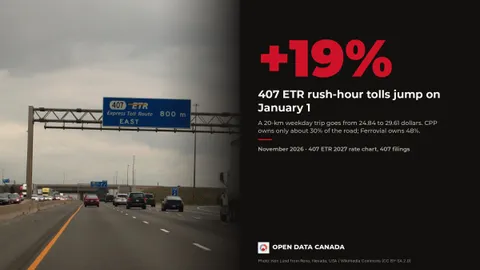
Every 407 ETR per-kilometre toll for cars goes up on January 1, 2027, by 10% to 20%. The biggest increases land on weekday rush hours on the busiest stretches, where the top rate reaches 143 cents a kilometre. Overnight trips cost about 56 cents a kilometre.
New 407 ETR toll rates take effect on January 1, 2027. Every per-kilometre rate for cars, vans, SUVs and small pickups goes up, in every zone, direction and time of day. This guide covers what each kilometre will cost, when the 407 is cheapest, and what changes if you drive without a transponder.
How much are 407 tolls going up in 2027?
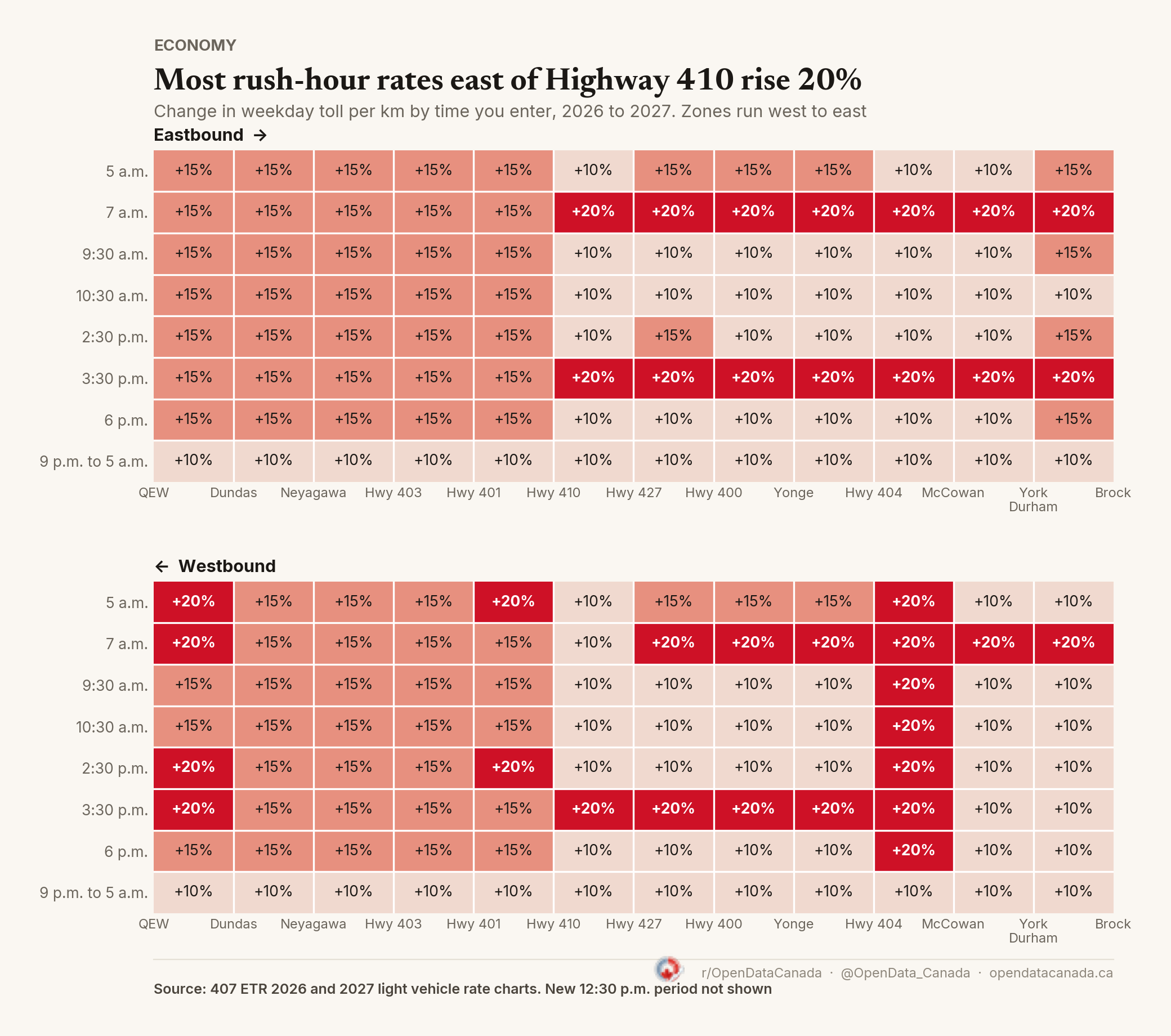
Every rate rises by 10% to 20%. Across the 288 rates that can be matched to a 2026 rate for the same zone, direction and time, the simple average increase is 13.4%. That counts each rate once, so it isn't the average increase on a driver's bill. About half rise by 10%, a quarter by 15%, and one in five by 20%, mostly at weekday rush hours and weekend daytime. Consumer prices in Canada rose 3.1% in the 12 months to October 2026.
Here is how that plays out on an example 20-km trip, using the rate for that stretch:
| 20-km trip, eastbound between Highway 427 and Highway 404, with a transponder | 2026 | 2027 | Change |
|---|---|---|---|
| Weekday, 3:30 p.m. | 24.84 dollars | 29.61 dollars | +19% |
| Weekday, after 9 p.m. | 11.11 dollars | 12.12 dollars | +9% |
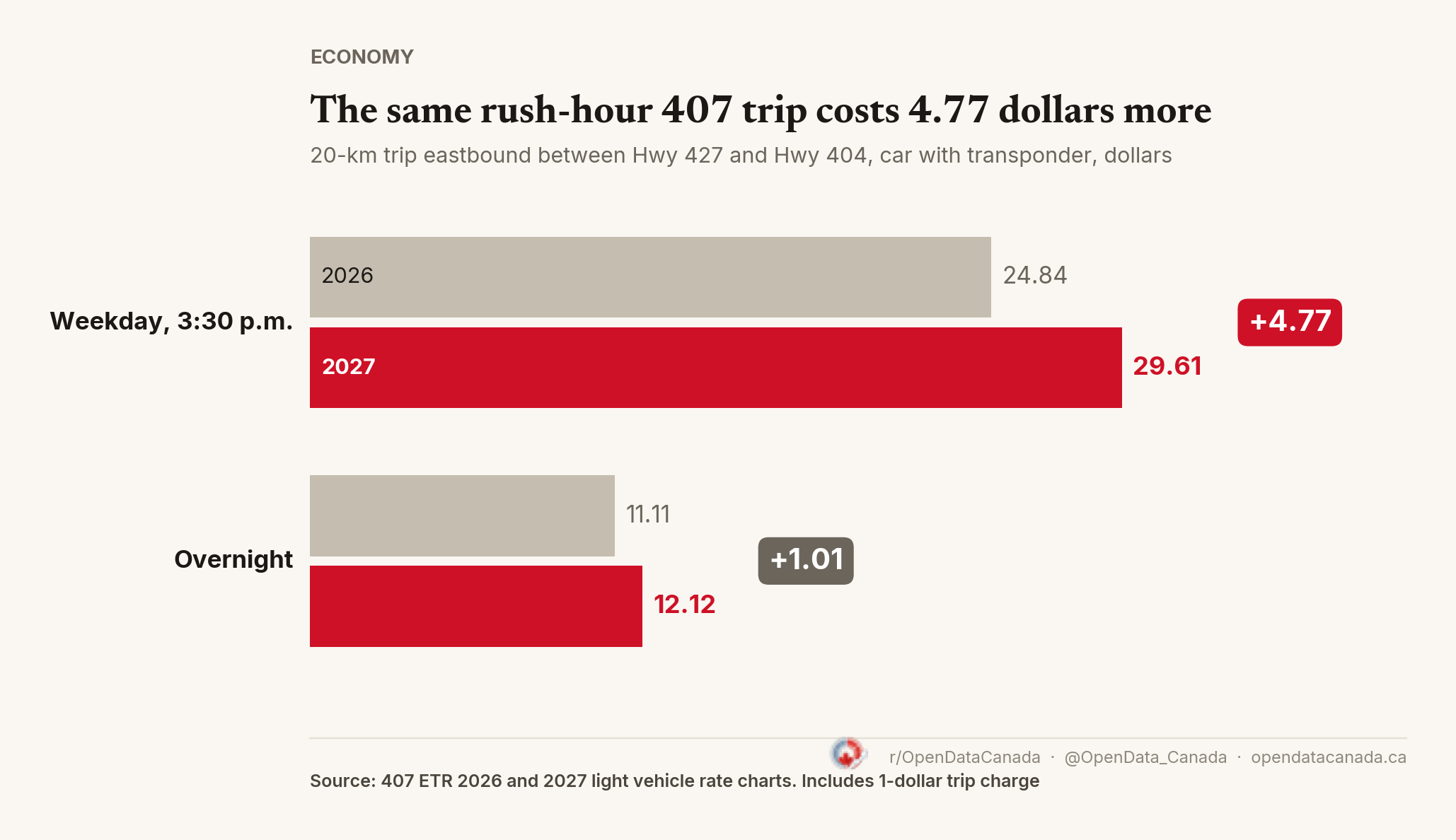
Both trips include the 1-dollar trip charge, which isn't changing. That's why the totals rise slightly less than the per-kilometre rates.
407 ETR has its own estimate of the impact on monthly bills. It says transponder customers who take fewer than 12 trips a year will see their monthly bill rise by 3.28 dollars on average. Customers making up to 16 trips a month, mostly at rush hour, will pay about 11.68 dollars more a month.
This is the fourth increase in a row. After a four-year freeze from February 2020, 407 ETR raised rates in February 2024, January 2025, January 2026 and now January 2027.
What does the 407 cost per km in 2027?
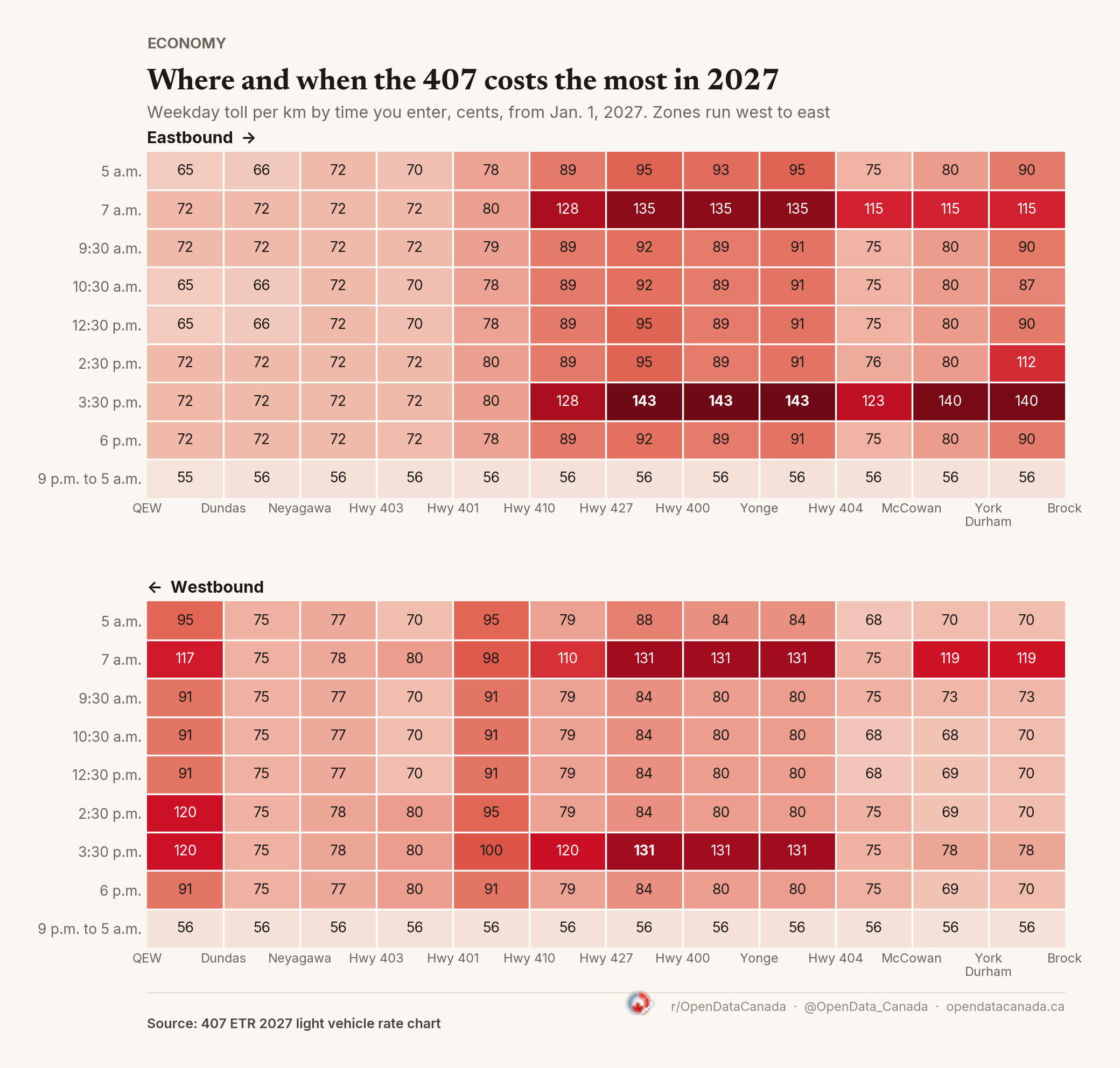
The rate depends on three things: which of the highway's 12 zones you're in, which direction you're going, and the time you enter the highway. The time you exit doesn't matter.
Weekday rates per kilometre from January 1, 2027, in cents, from the cheapest to the most expensive of the 12 zones:
| Time you enter | Eastbound | Westbound |
|---|---|---|
| 5 to 7 a.m. | 65 to 95 | 68 to 95 |
| 7 to 9:30 a.m. | 72 to 135 | 75 to 131 |
| 9:30 to 10:30 a.m. | 72 to 92 | 70 to 91 |
| 10:30 a.m. to 12:30 p.m. | 65 to 92 | 68 to 91 |
| 12:30 to 2:30 p.m. | 65 to 95 | 68 to 91 |
| 2:30 to 3:30 p.m. | 72 to 112 | 69 to 120 |
| 3:30 to 6 p.m. | 72 to 143 | 75 to 131 |
| 6 to 9 p.m. | 72 to 92 | 69 to 91 |
| 9 p.m. to 5 a.m. | 55 to 56 | 56 |
The 12:30 p.m. period is new for 2027. In 2026, one midday rate ran from 10:30 a.m. to 2:30 p.m.
Weekend and Ontario statutory holiday rates per kilometre, in cents:
| Time you enter | Eastbound | Westbound |
|---|---|---|
| 8:30 to 10 a.m. | 55 to 86 | 56 to 86 |
| 10 a.m. to 7 p.m. | 55 to 105 | 56 to 105 |
| 7 to 9 p.m. | 55 to 86 | 56 to 76 |
| 9 p.m. to 8:30 a.m. the next morning (5 a.m. Monday) | 55 to 56 | 56 |
Every zone, weekdays:
When is the 407 most expensive?
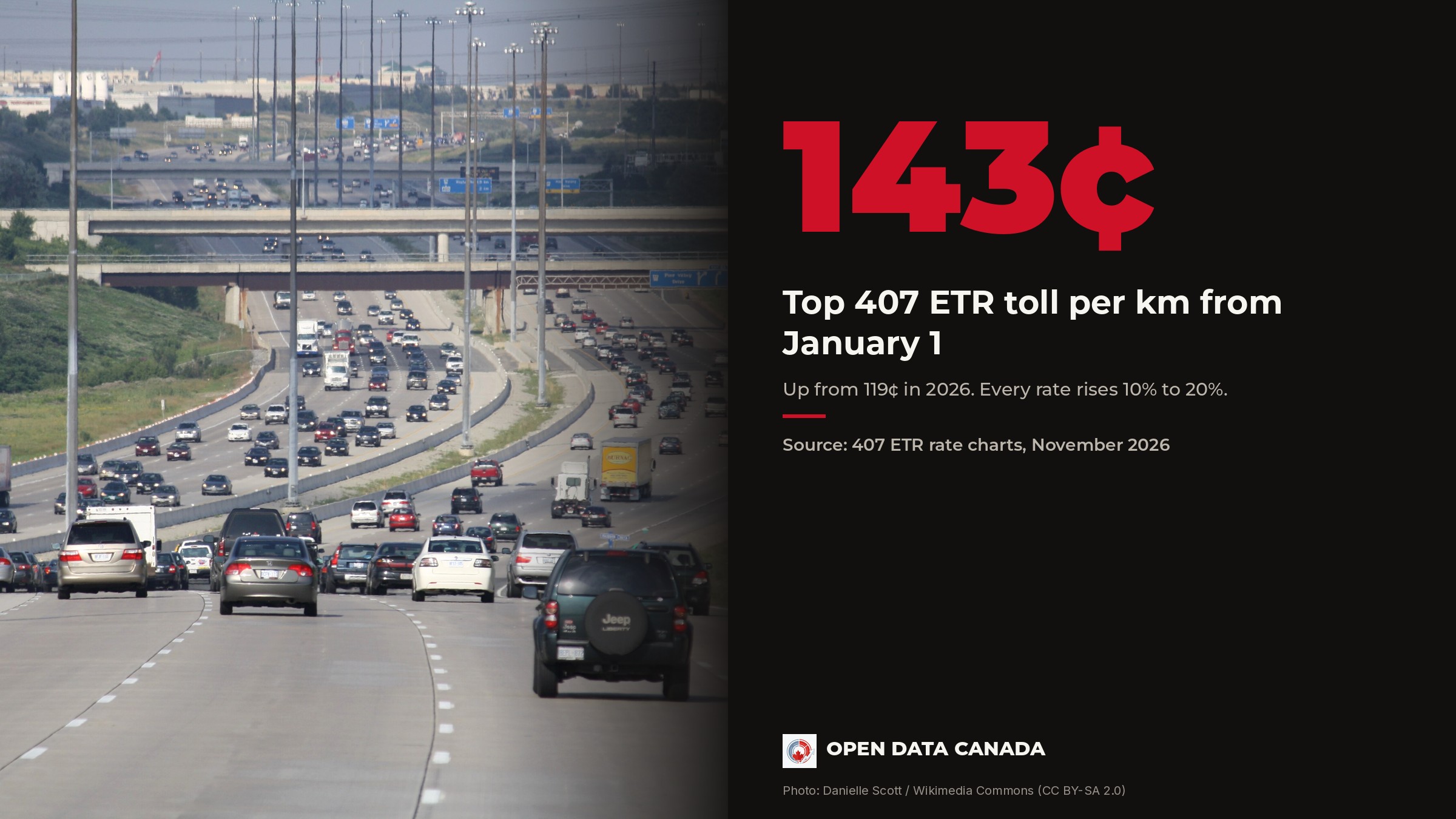
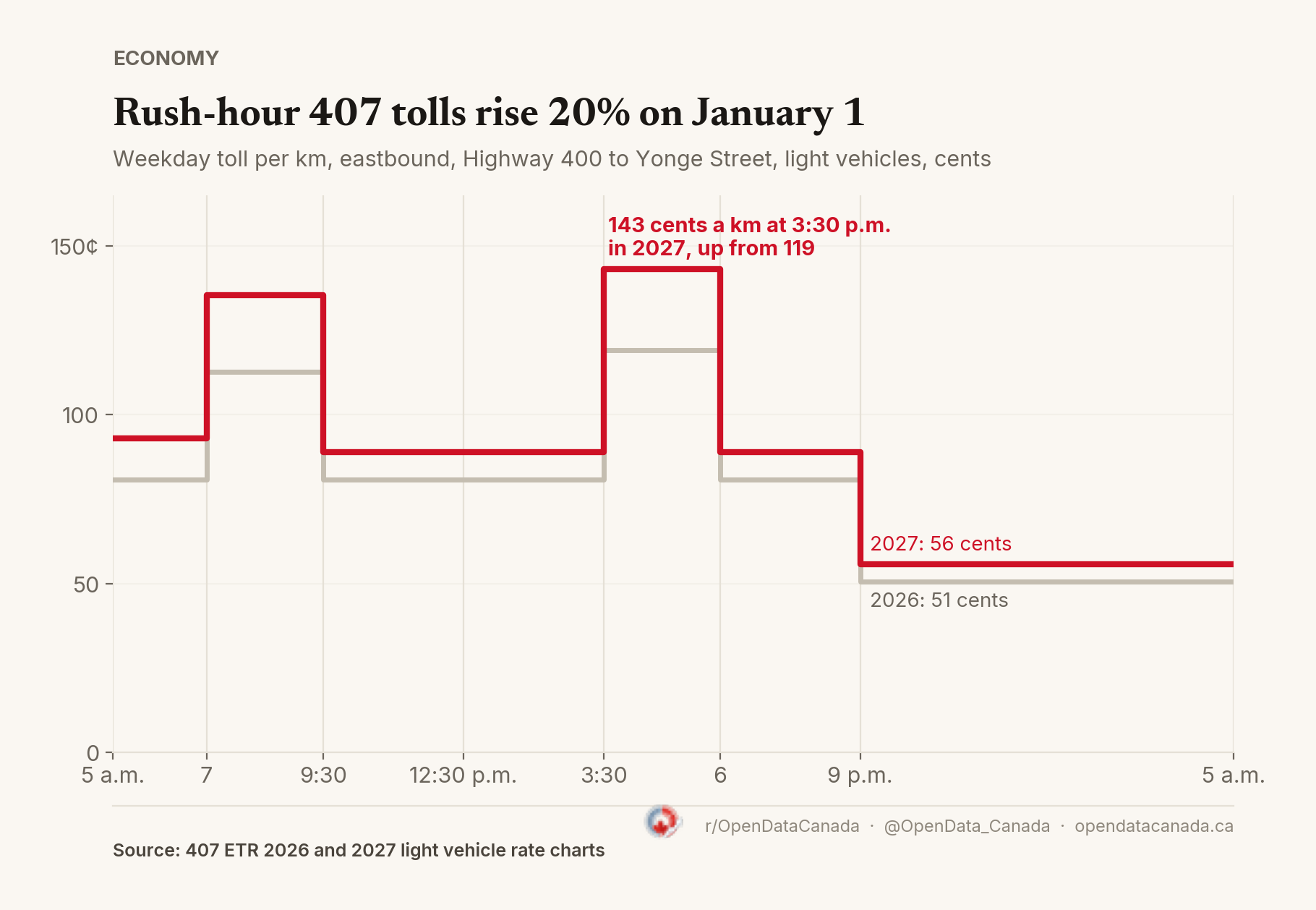
The priciest stretch is the middle of the highway, from Highway 427 to Highway 404, in the weekday rush hours. Eastbound, entering between 3:30 and 6 p.m., it costs 143 cents a kilometre in 2027, up from 119. Westbound, the top rate on the same stretch is 131 cents, in both the morning and afternoon rush.
The cheapest time is overnight. After 9 p.m. on weekdays, and from 9 p.m. to 8:30 a.m. on weekends, every zone costs 55 to 56 cents a kilometre, up 10%.
Is the 407 cheaper with a transponder?
The per-kilometre rate is the same with or without a transponder. The difference is in the fees:
| Fee | With transponder | Without transponder |
|---|---|---|
| Trip charge, every trip | 1 dollar (unchanged) | 1 dollar (unchanged) |
| Camera charge, every trip | none | 5.40 dollars (was 5.30) |
| Transponder lease | 5.10 dollars a month (was 5), or 32.50 dollars a year (was 31.50) | none |
| Account fee | none | 5.10 dollars a month (was 5) |
The monthly and yearly leases are two ways to pay for the same transponder, not two charges. Either lease is charged no matter how many trips you take.
Without a transponder, the 3:30 p.m. trip above costs 35.01 dollars instead of 29.61, before the monthly fee. 407 ETR says a transponder pays for itself after three round trips a year.
The rates in this article are for light vehicles: cars, vans, SUVs and small pickups under 5,000 kilograms. Towing a trailer with a van, pickup or SUV moves you into the medium-vehicle rates.
Where the toll money goes
The highway is run by 407 International, and its owners are paid through dividends. Ferrovial, a company founded in Spain and now based in the Netherlands, owns 48%. Filings list 44% under CPP Investments, which controls how those shares vote, but the Canada Pension Plan's own share of the money is about 30%. Other investors partnered with it hold about 15%, and the federal public service pension fund, PSP Investments, owns 7.5%. In the first nine months of 2026, 407 International paid its shareholders 1.05 billion dollars.