Ontario elections 2026 · Polls vs results
How accurate were the Toronto mayor polls? They missed by 10 points
Every final poll underestimated Olivia Chow, and three of seven had Brad Bradford ahead. Betting favourites lost or trail in 6 of 19 Ontario mayor races, close to what their own odds implied.
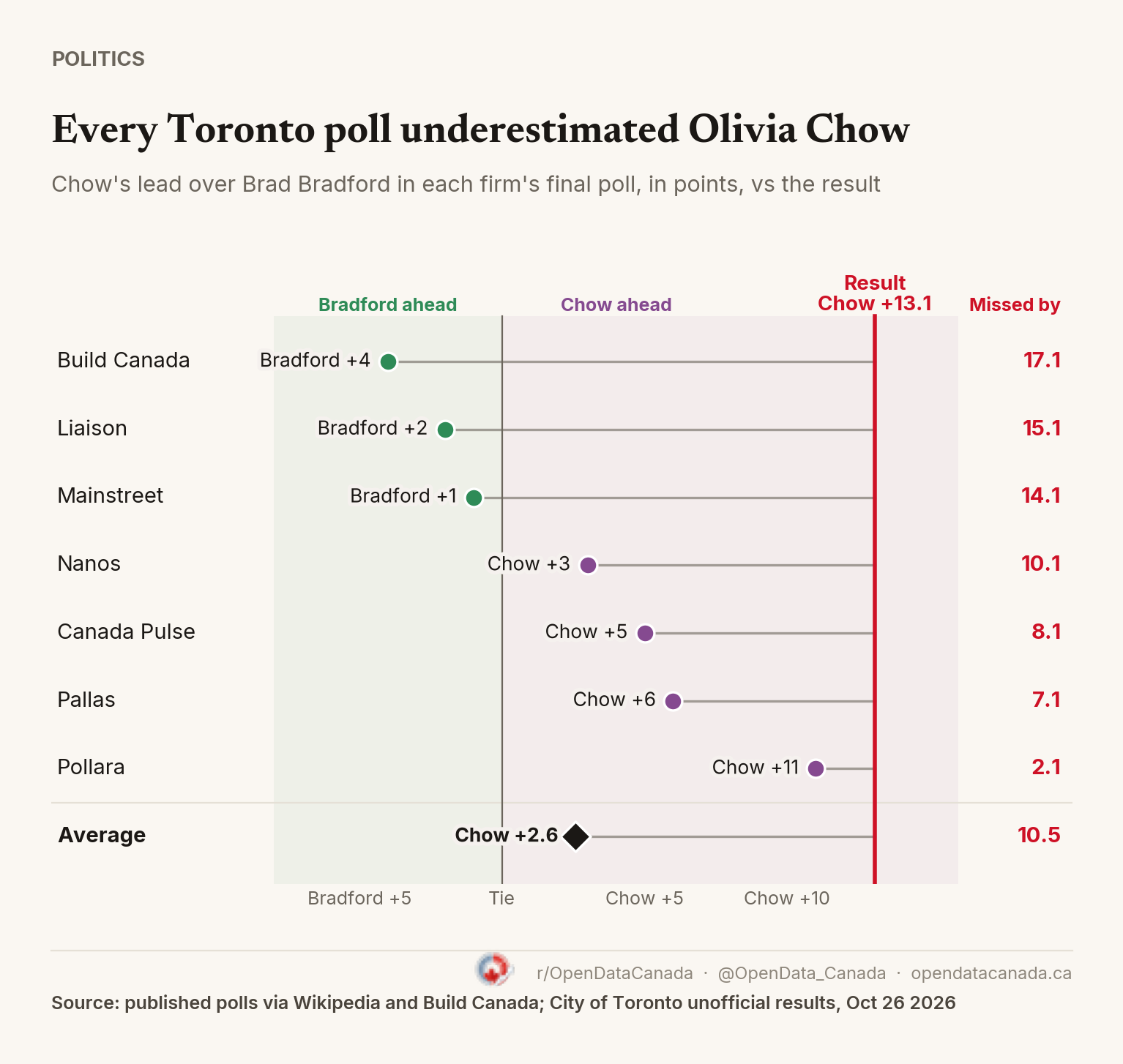
Going into Monday, Toronto's mayor race looked close. The last poll from each of seven firms put Olivia Chow ahead of Brad Bradford by 2.6 points on average, and three of them had Bradford in front.
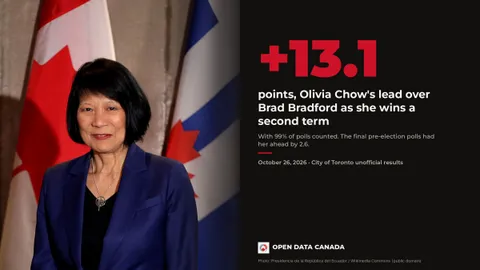
Chow won by 13.1 points, 54.2% to 41.1%, with 1,428 of 1,431 polls counted. The polls missed the margin by 10.5 points.
Every firm missed in the same direction
The miss wasn't random. All seven firms had Chow's lead too small. On average the polls had Chow at 49.6% and Bradford at 47.0%, so they put Bradford about 6 points too high and Chow about 5 points too low.
Pollara came closest, with Chow up 11 in a poll of 1,094 people taken October 16 to 21. Build Canada was furthest off, with Bradford up 4. Mainstreet and Liaison, which both poll by automated phone calls, had Bradford narrowly ahead.
Toronto polls have overshot before, but not by this much. In 2014 the final polls had John Tory's lead 3.8 points too large. In the 2023 by-election they had Chow's lead over Ana Bailão 5.0 points too large. Both times they picked the right winner. This time the average still did, but it called the race close when it wasn't, and the miss was more than twice the size.
The betting markets were roughly as right as they claimed to be
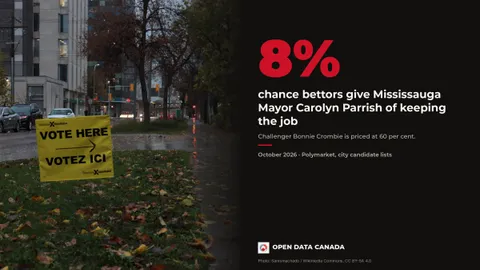
Polymarket, a prediction market, had Chow at 86% to win on election morning, up from about 62% the afternoon before. The market couldn't say by how much she'd win, but it was far more confident than the polls made the race look.
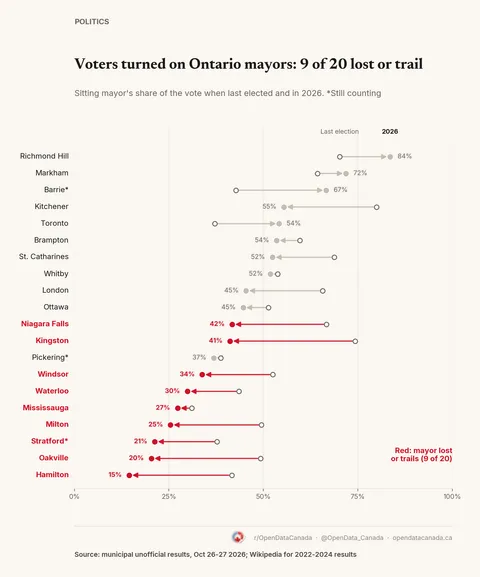
Most Ontario cities have no public polling at all, so betting odds were the only forecast available in 18 other races. The favourite lost or trails in 6 of the 19 races with results.
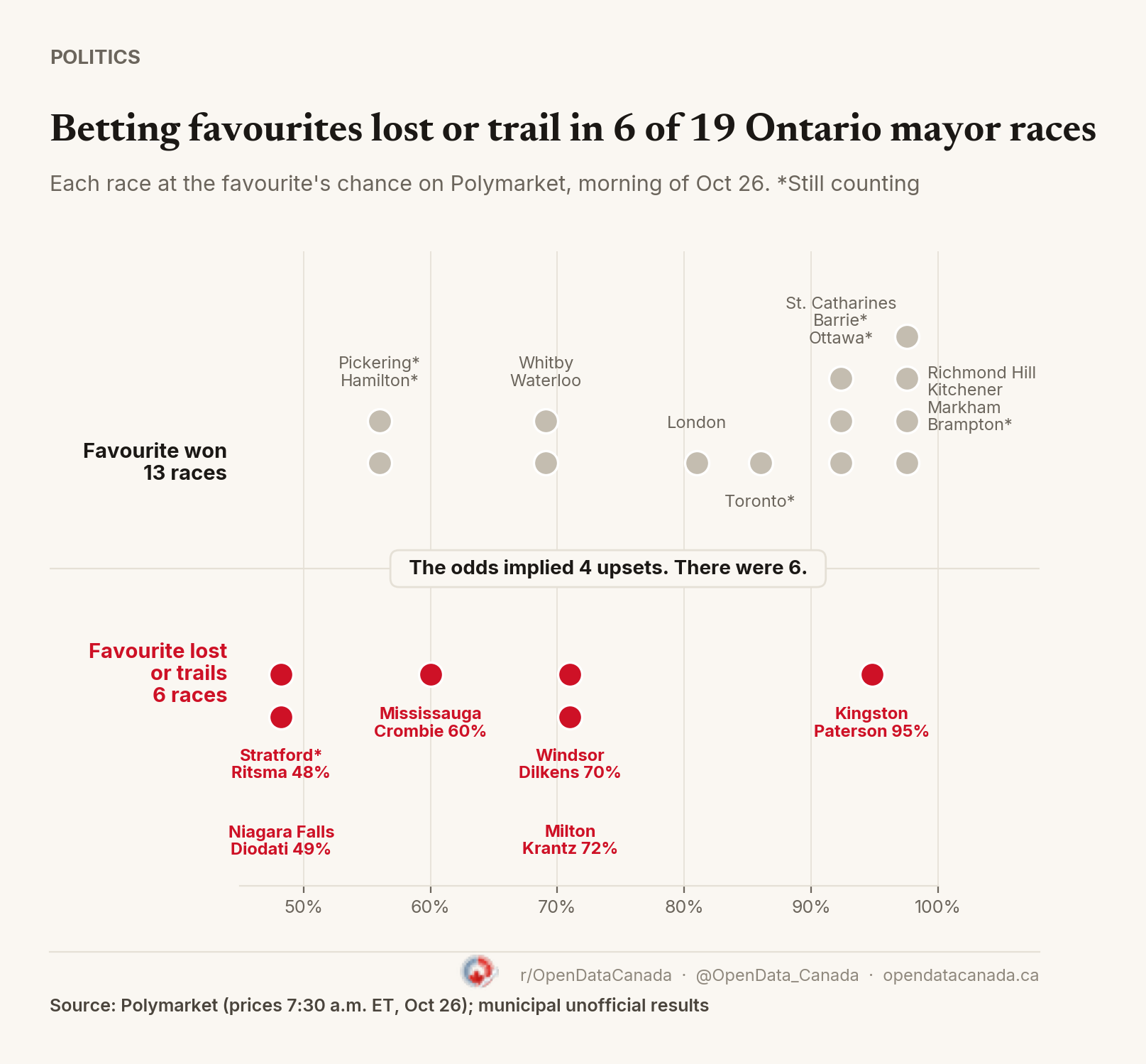
That sounds bad, but a 70% favourite should lose about three times in ten. Adding up the odds across all 19 races, the markets implied about 4 upsets. There were 6. If the odds were exactly right, 6 or more upsets would happen about one time in five, so the result is unlucky for bettors but not a sign the odds were broken.
The one real shock was Kingston. Mayor Bryan Paterson was given a 95% chance and lost to Conny Glenn by 793 votes. Elsewhere the upsets came where the market already saw a contest: Drew Dilkens in Windsor and Gord Krantz in Milton were each about 70% favourites, and Mississauga and Niagara Falls were close to coin flips.
Many of these markets were also small. Toronto's had more than 800,000 US dollars traded; St. Catharines and Niagara Falls had less than 3,000 each.
The polls were the bigger failure. Seven firms, more than 6,000 interviews, and the average still had the race as a near tie that Chow won by 13 points.