Housing · News
56% of Canadians Who Don't Own a Home Don't Expect to Ever Own One — More Than Double the Global Average
Canada has the highest share of the 22 countries in Habitat for Humanity's 2026 survey. Canadians aren't cutting back harder than people elsewhere, but house prices here have pulled further ahead of incomes than in most other OECD countries.
Habitat for Humanity's global housing survey, released Monday, leads with a number about sacrifice: three in four people across 22 countries say they cut back on something in the past year, from food to savings, to keep a roof over their heads.
Canada comes in below average on that measure. It stands out on a different one.
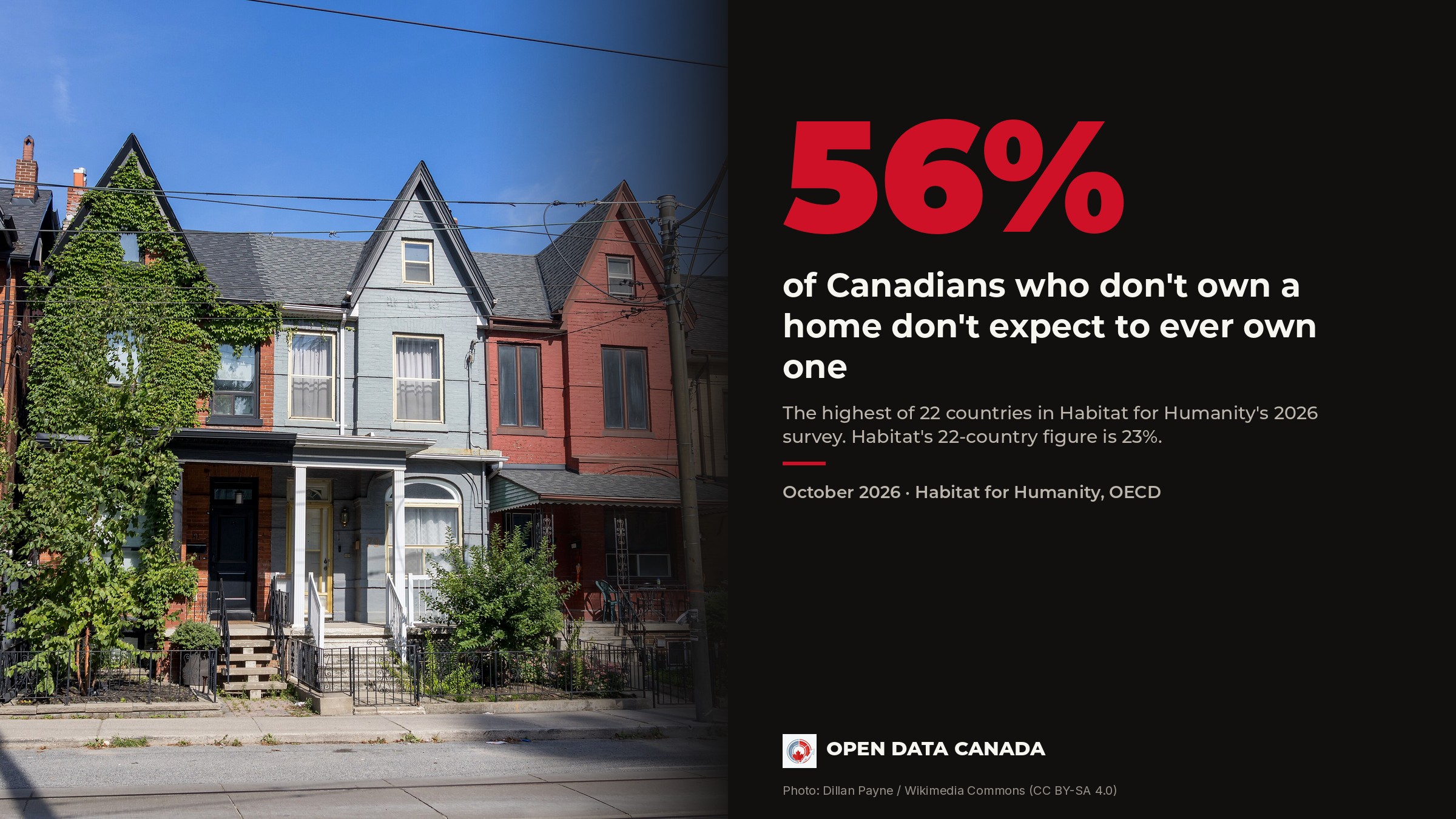
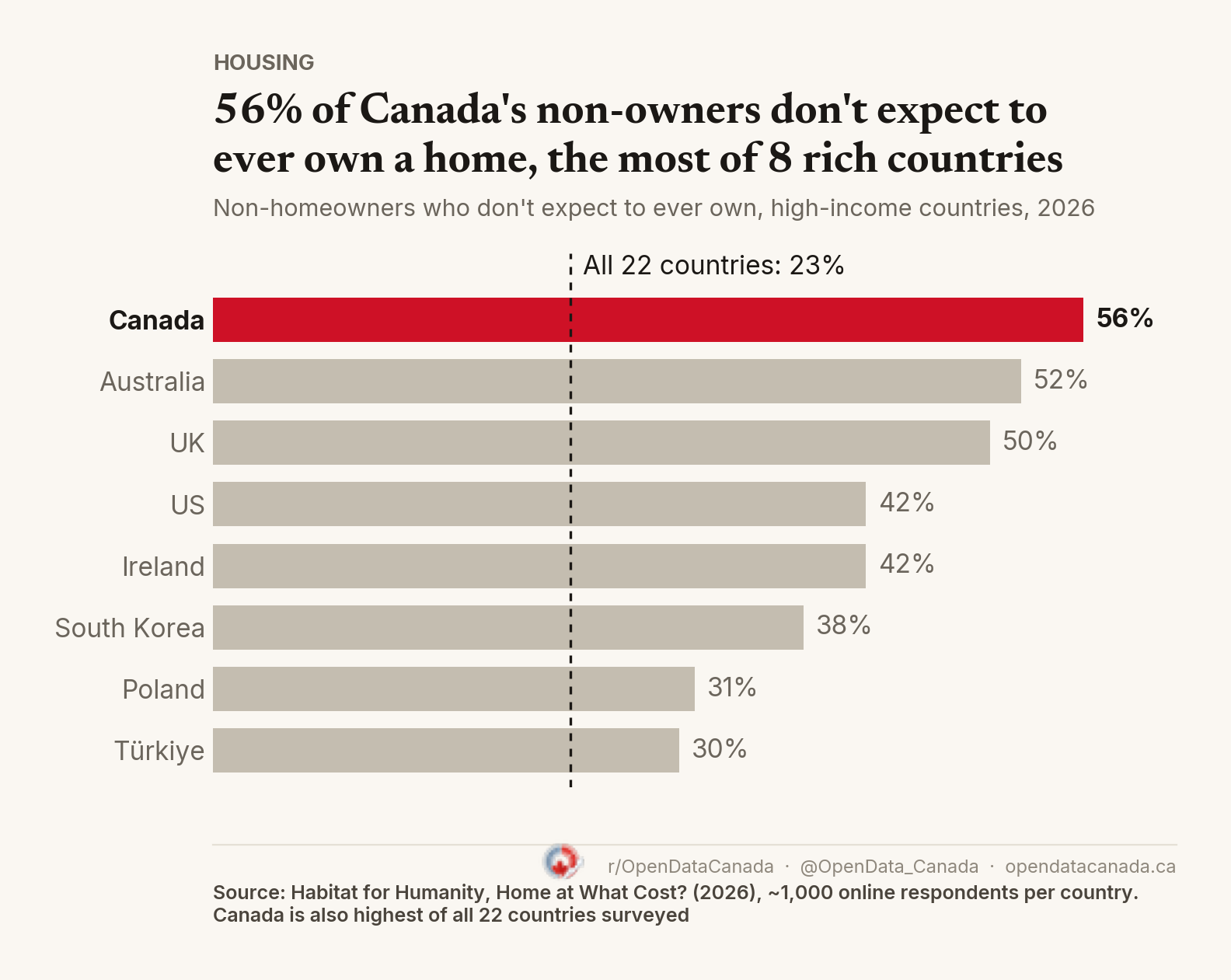
Among Canadians who don't own a home, 56% say they don't expect to own one in their lifetime. That is the highest share of any country surveyed: 56% in Canada, compared with 52% in Australia, 50% in the United Kingdom and 42% in the United States. It is more than double Habitat's 22-country figure of 23%.
Canadians are squeezed less than most
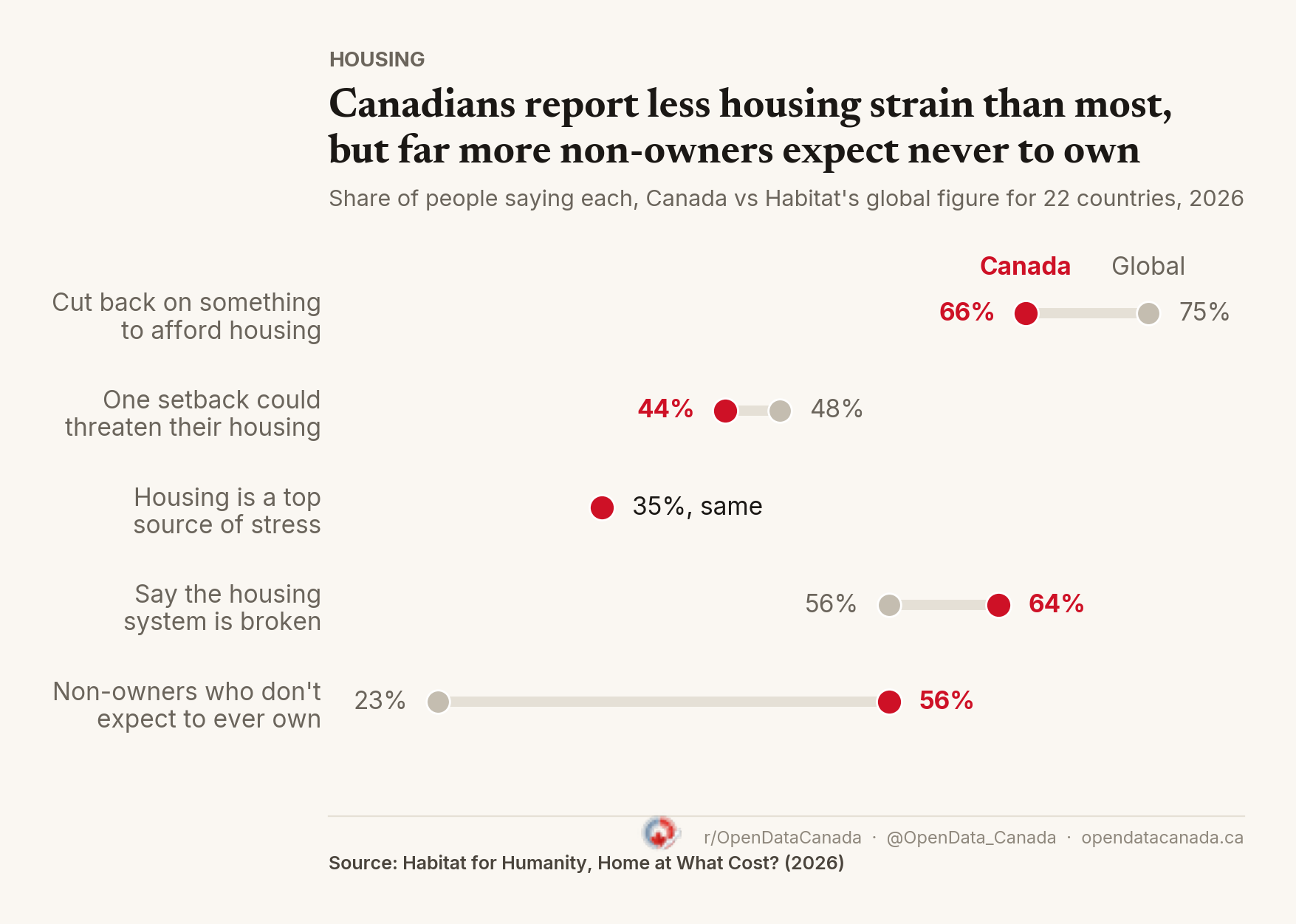
On the everyday measures, Canada sits at or below the average of the 22 countries. Two in three Canadians (66%) say they cut back on at least one expense to afford housing, against 75% globally. Some 44% say one unexpected setback could threaten their ability to stay housed, against 48%. And 35% call housing one of the biggest sources of stress in their lives, the same as the global figure.
Those are not small numbers. But they put Canada in the lower half of the 22 countries, alongside the United States (68% cutting back) and Australia (69%). The highest shares are in Ethiopia (91%), Kenya (89%) and Nepal (88%).
Canada is gloomier about the system, and far gloomier about the future. Nearly two in three Canadians (64%) say their country's housing system is broken or doesn't work, against 56% globally, though four countries are higher. On ownership, the gap is 33 points, far wider than on any of the other four measures, and no country is higher.
Canada's ownership rate doesn't explain it
One easy explanation would be that Canada simply has fewer homeowners. That doesn't fit: in the latest OECD comparison, 69% of Canadian households owned their home, close to the 70% average across the Organisation for Economic Co-operation and Development (OECD), a group of mostly wealthy countries. Ownership is lower in the United States (65%), Australia (63%) and South Korea (58%), yet non-owners there are less likely than Canadians to say they don't expect to ever own.
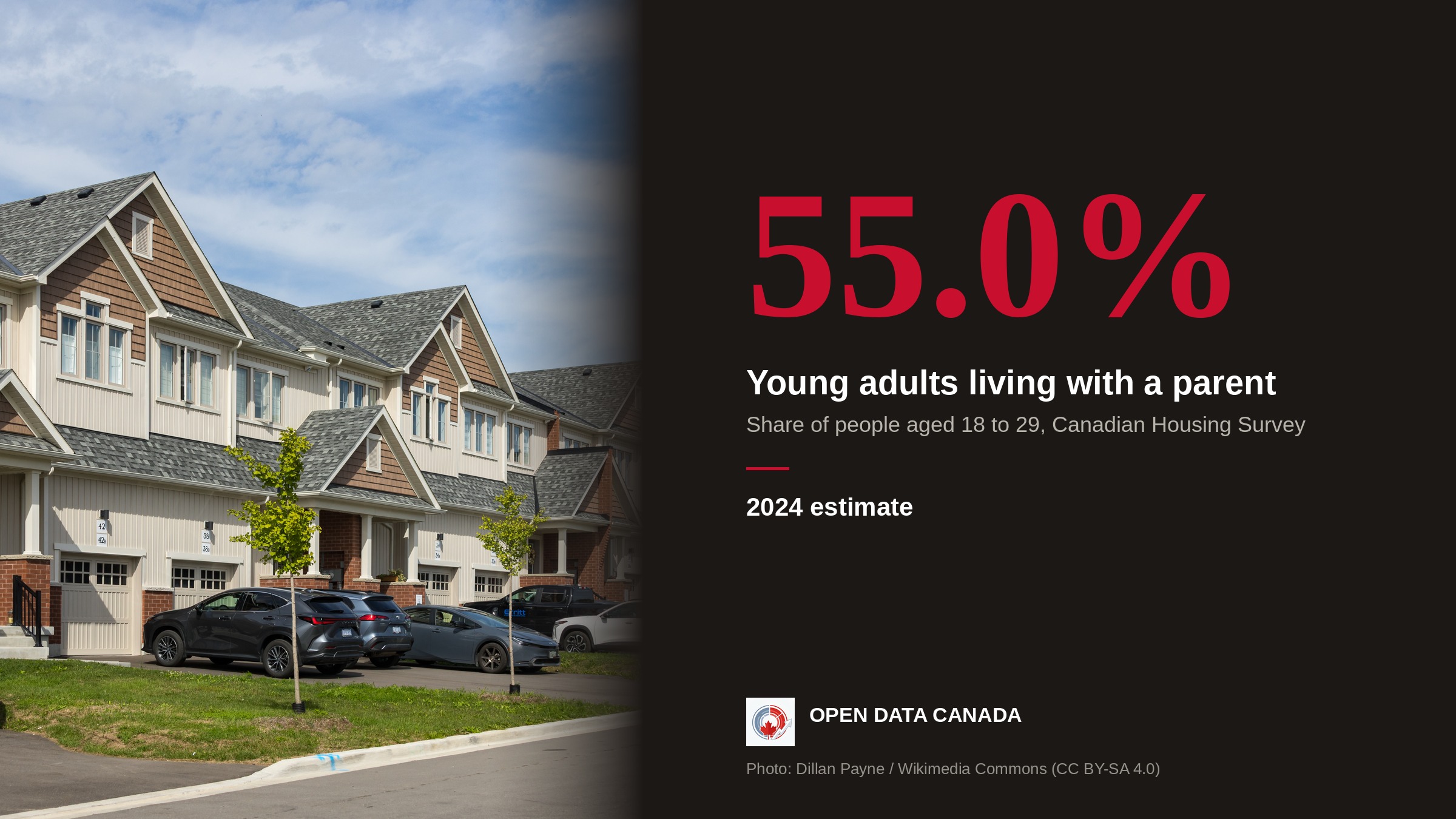
The bigger shift is among the young. Ownership among Canadians aged 25 to 29 fell from 44.1% in 2011 to 36.5% in the 2021 Census. Statistics Canada found that, not counting those living with their parents, millennials owned at a lower rate at ages 25 to 39 than baby boomers or Gen X did at the same age: 49.9%, against 55.9% and 56.2%. And 55% of Canadians aged 18 to 29 lived with a parent in 2024.
Where Canada does stand out: prices against pay
The OECD tracks the ratio of house prices to household income per person in each country and compares it with that country's own long-run average, set at 100.
Canada's ratio averaged 150 in 2025. Homes cost about 50% more, relative to what people earn, than they have on average over the long run. That was the highest of any country the OECD reports, narrowly ahead of Australia at 148. The UK was at 116 and the United States at 112. Canada's figure has eased from 168 in 2022, and Australia has since moved ahead: in the first quarter of 2026, the latest with figures for both, Australia stood at 154 and Canada at 145.
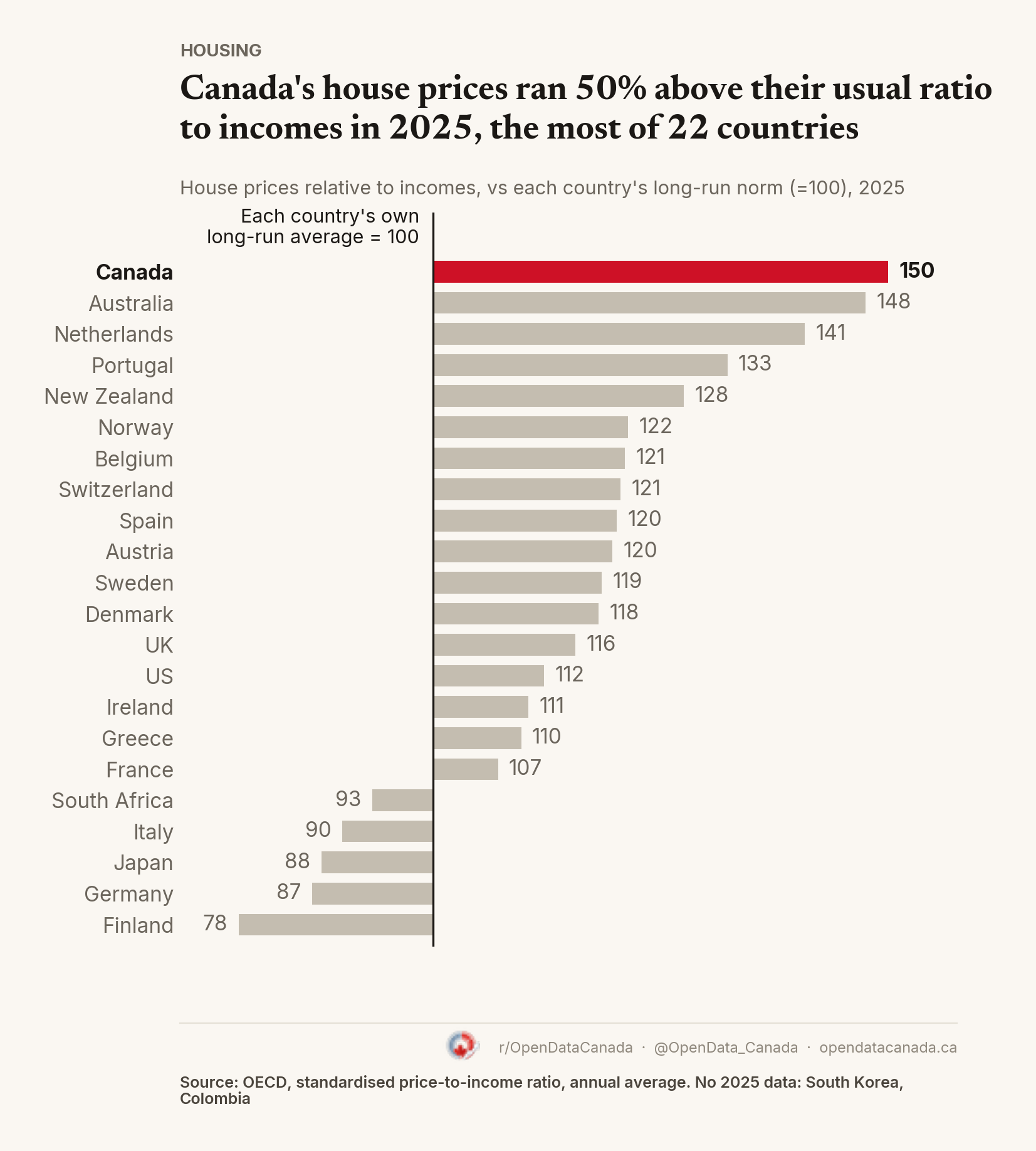
Canada and Australia are also the two countries at the top of Habitat's survey. That doesn't prove one causes the other. It is the pattern you would expect if people judge their odds of owning by what homes cost against what they earn, not by how many of their neighbours own.
"We cannot accept a future where people have to lower their expectations for what a home should provide," said Jonathan Reckford, chief executive of Habitat for Humanity International, in the release.
How much weight the 56% can carry
The main survey was run online by Edelman Intelligence, with about 1,000 nationally representative respondents in each country. Habitat added extra low-income and informal-housing samples, which are not used in the country figures. The ownership question went only to people who don't own, a subset of each country's sample, so the 56% could be several points higher or lower. Canada, Australia (52%) and the UK (50%) are effectively tied at the top. The gap with the United States, 14 points, is substantial. Habitat itself says the country results should not be read as a ranking of national housing systems, and that owning is not the only desirable outcome. The fairer comparison is with the other high-income countries in the survey, and Canada is still at the top of that group.
By global standards, Canada's housing squeeze today is ordinary. Its loss of hope about tomorrow is not.