Article · Government · 5 min read
Ottawa is spending 4.2 billion dollars to replace Phoenix — its own auditor says two-thirds of the errors aren't the system's fault
Canada is rushing a new payroll system in to replace Phoenix. But its own Auditor General told a committee that most of the remaining pay errors aren't the software's fault at all — which raises an awkward question about what the 4.2 billion dollars is actually buying.
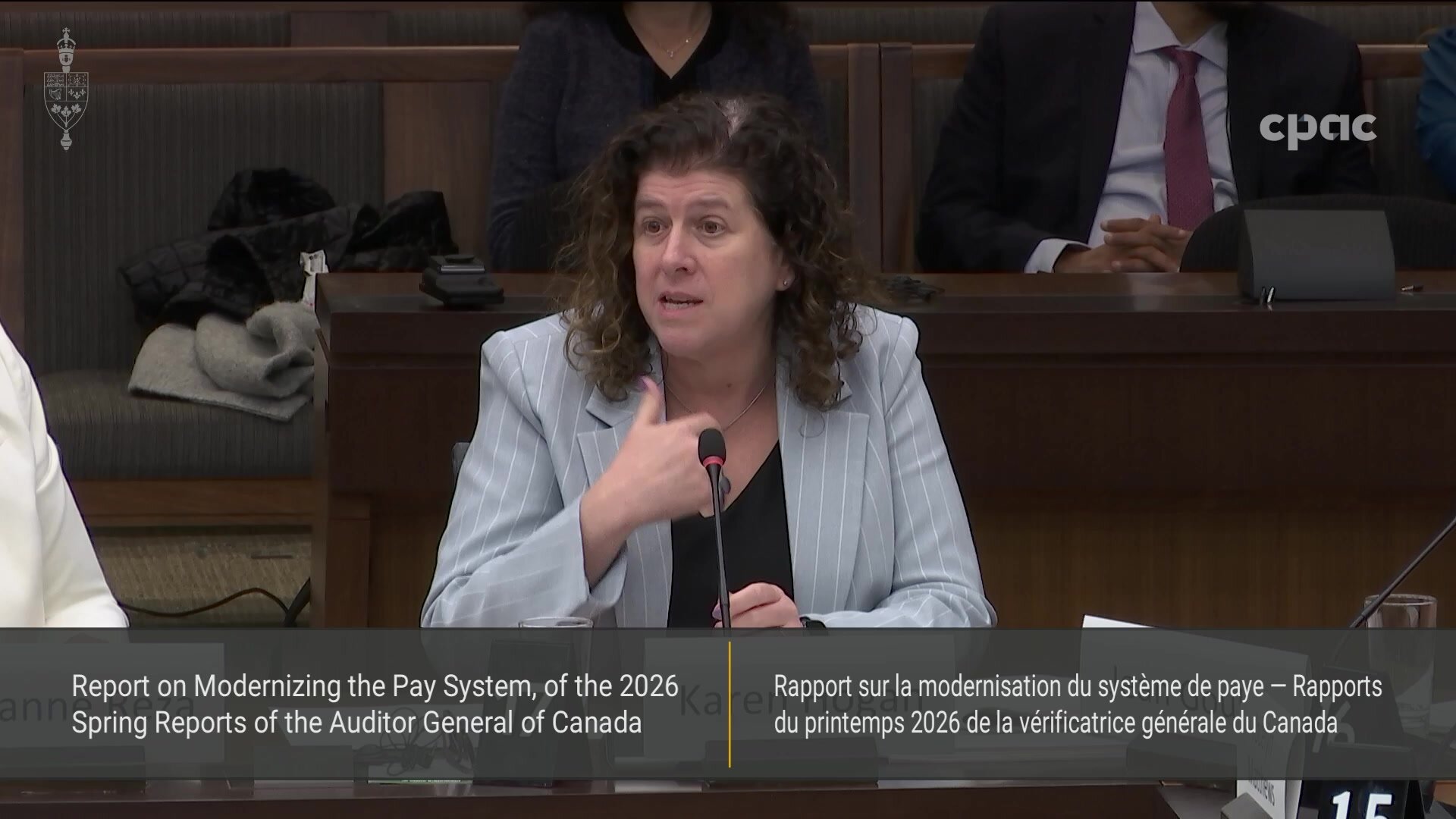
When the Auditor General's pay-system report reached the news in spring 2026, the headlines were about the price: a Phoenix replacement now estimated at 4.2 billion dollars. That part has been well covered. The part that hasn't is what Karen Hogan said when MPs pressed her at a Public Accounts Committee hearing on 6 May — that the money may be aimed at the wrong target.
The errors aren't the software anymore
Hogan has audited Phoenix since 2016. The crucial thing she told MPs is that the nature of the failure has changed — it's no longer the computer getting the math wrong:
"Two-thirds of the pay errors that we were still seeing were data entry errors… it's no longer the box not calculating, but now we've got delays in entry. So a third of the errors were because of that, and two-thirds were linked to data entries."
Read that again. The system mostly calculates pay correctly. The errors now come from the human "HR-to-pay" process upstream — information entered late, or wrong, before it ever reaches the software. A new piece of software does not fix a data-entry problem. And if those upstream habits aren't fixed first, they carry straight into the replacement.
So what is the 4.2 billion buying?
The replacement system, Dayforce, is "currently estimated to cost approximately 4.2 billion dollars," Hogan testified — and she was blunt that even that number is incomplete:
"This cost estimate is missing… the cost that it will take for departments and agencies to transition… Every organization that uses that system has an associated cost."
So the headline figure leaves out what individual departments will spend to switch — a cost nobody has published. More telling, the government is spending to work around its own complexity rather than remove it:
"Public Services and Procurement Canada is customizing Dayforce to work without simplified pay rules at an estimated additional cost of almost 4 million dollars per year." — Auditor General Karen Hogan
The tangle of pay rules that helped sink Phoenix still hasn't been simplified. Rather than fix the rules, Ottawa is paying — every year, indefinitely — to build custom software around them. That is the pattern in miniature: money going to the software layer, while the actual sources of error (data entry, unsimplified rules) are left in place.
Rushing it, with the backlog still open
In January 2026, the department cut three years off the timeline to finish the switch. Speed was the pressure that broke Phoenix the first time — and the cleanup from that one isn't finished. Hogan flagged the cases that worry her most:
"What's concerning for me is about the 16,000 cases that have been there for six years or more… that all needs to be cleared before a transition happens."
Deputy Minister Arianne Reza, who runs the file, didn't soften the human side — her staff, she said, are "going into a burning house every day… we're dealing with people's lives." As one MP put it: "it's not as important to do things quickly as it is to do things well."
The gap
Publicly, Dayforce is "modernization on track." The Auditor General's testimony describes something else: a project spending billions on new software while the root causes — upstream data entry, unsimplified rules, an unresolved backlog — go unaddressed, on a timeline that was just compressed. Those are the same conditions that produced Phoenix. Ottawa is changing the system. It hasn't yet changed what actually goes wrong.